










We have all been there: balancing a laptop on a stack of coffee table books while trying to look professional on a video call. When your dining table becomes a permanent desk, the lines between work and rest blur, and your living area suddenly feels like a corporate cubicle. Creating a functional diy office space at home is not just about buying a desk; it is about reclaiming your living space. In this guide, I will walk you through how to carve out a dedicated work zone that actually looks intentional, supports your posture, and flows with your existing architecture.
Quick Decision Guide
- Prioritize natural light: Position your desk perpendicular to a window to reduce screen glare while keeping your face illuminated.
- Measure your clearances: Leave at least 36 inches behind your desk chair so you can push back and stand up comfortably without hitting a wall.
- Anchor with a rug: Use a small area rug to visually separate your workspace from the rest of a multi-purpose room.
- Invest in ergonomics: Never compromise on seating. A beautiful vintage dining chair will ruin your lower back during a 40-hour work week.
Space Planning: Finding the Right Footprint
Most North American homes were not built with remote work in mind. If you do not have a spare bedroom, you have to get creative with your square footage and rethink transitional spaces.
The Closet Conversion
Converting a standard reach-in closet into a workspace is a classic move for a makeshift home office. By removing the hanging rod and installing a floating desk at 29 to 30 inches high, you create a dedicated zone that can literally be shut away at the end of the day. The trick here is negative space. Keep the shelving above the desk shallow—no more than 10 to 12 inches deep—so you do not feel claustrophobic while typing.
Claiming the Living Room Corner
If you are setting up in an open-concept living area, position the desk behind a floating sofa or tuck it into an unused alcove. Avoid facing the wall if possible; floating the desk facing into the room gives you a command position and makes the area feel like a purposeful diy home office design rather than an afterthought.
Integrating Style and Function
A workspace should not look like a sterile cubicle dropped into the middle of your cozy living room. The goal is visual cohesion with the rest of your house.
Layering Textures and Decor
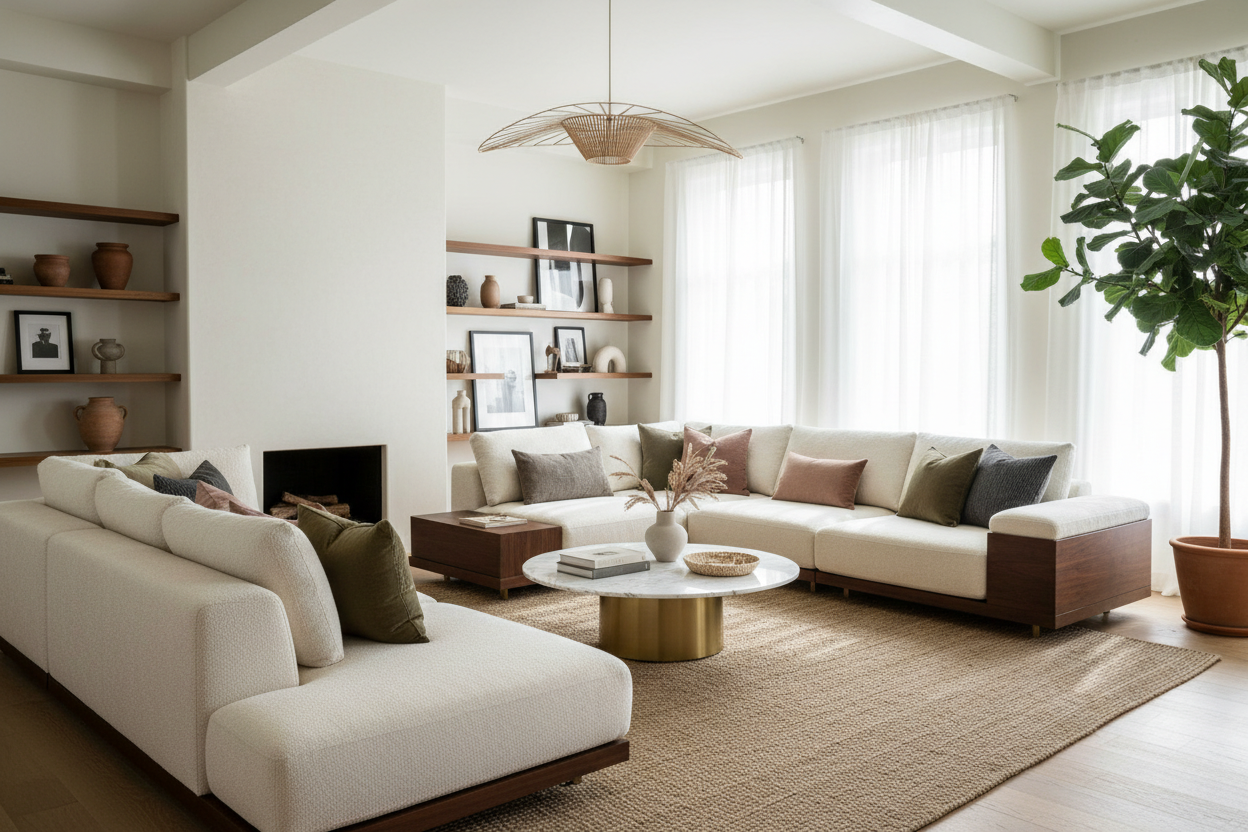
When brainstorming diy work office decorating ideas, pull colors and materials from the surrounding room. If your living room features warm walnut wood and brass accents, choose a desk and task lamp that echo those materials. Hide the ugly tech. Use cable management boxes and route cords along the back legs of your desk. Thoughtful diy home office decor—like a textured ceramic planter or a framed piece of art leaning against the wall—softens the hard lines of monitors and keyboards.
Designer's Honest Take
Over the last decade, I have designed dozens of home workspaces, and I have made my fair share of mistakes in my own home. A few years ago, I fell in love with a stunning mid-century modern teak desk. It had incredible lines and fit my aesthetic perfectly. I paired it with a rigid, architectural dining chair because I hated the look of standard rolling office chairs.
Within two months, I was at the chiropractor. The desk was actually 31 inches high—just an inch taller than standard, but enough to wreck my shoulder ergonomics. The chair had zero lumbar support. I learned the hard way that you can fake a lot of things in design, but you cannot fake ergonomics. I eventually swapped the chair for a highly adjustable ergonomic model. It is not the prettiest piece in my house, but I draped a nice sheepskin throw over the back to soften the visual weight. Sometimes, function just has to win.
Frequently Asked Questions
How much space do I need for a DIY office?
At minimum, you need a footprint of about 4 by 5 feet. This accommodates a standard 48-inch wide desk and gives you the necessary 36 inches of push-back clearance for your chair.
How can I hide my computer cords?
Mount a cable management tray under the rear edge of your desk to hold power strips and bulky adapters. Run a single cord down the desk leg using zip ties or a neoprene cable sleeve to keep things visually clean.
What is the best lighting for a home workspace?
Layer your lighting. Rely on ambient room light, but add a dedicated task lamp on the desk to reduce eye strain. If you are on video calls frequently, position a soft ring light or a lamp with a frosted shade behind your monitor to illuminate your face evenly.

Leave a comment
This site is protected by hCaptcha and the hCaptcha Privacy Policy and Terms of Service apply.