










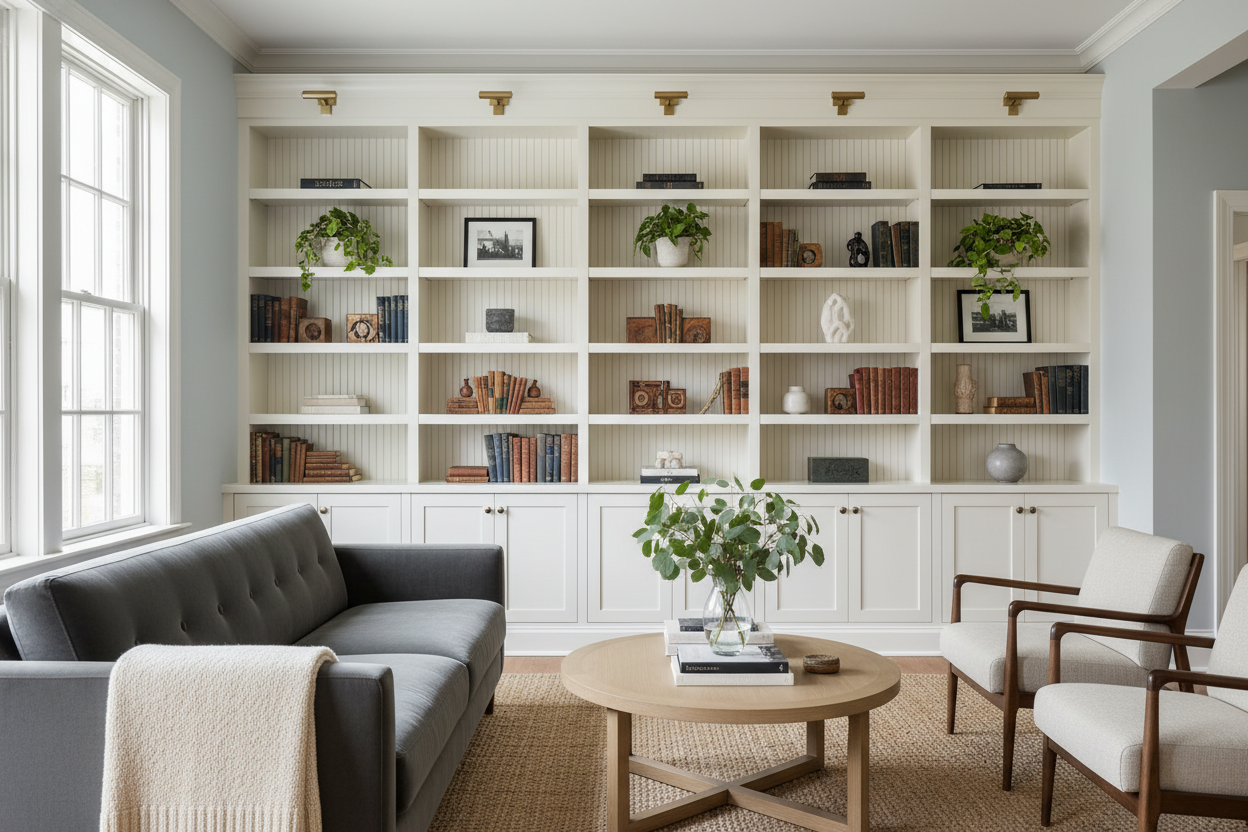
I’ve spent way too many Saturdays staring at my living room wall, wondering why my 'custom' shelves looked like they belonged in a college dorm. I had the paint color right, the wood was solid, but something was missing. It felt flat, literally. I was missing that architectural soul that makes a house feel like a home.
That’s when I realized the secret isn’t the shelves themselves—it’s what’s behind them. Incorporating a beadboard built-in bookcase is the single most effective way to turn a basic storage unit into something that looks like it was original to a 1920s estate. It adds a layer of sophistication that drywall just can't touch.
- Beadboard adds physical depth that flat paint can’t replicate.
- Vertical grooves draw the eye up, making standard ceilings feel significantly higher.
- It is a lifesaver for hiding wonky, uneven drywall in older homes.
- The texture creates natural shadows, making your decor pop without extra lighting.
The Problem With Flat, Painted Shelf Backs
Most people think painting the drywall behind their shelves a dark, moody color is enough. I’ve done it, and I usually regret it. When you have a flat, painted surface behind open shelving, it often creates a 'black hole' effect. Light just dies back there, and your favorite vases or books seem to disappear into the shadows.
Without texture, your shelves look like they are floating in a void. It lacks the architectural heft that makes a built-in feel permanent and intentional. You want a background that plays with light, creating tiny vertical shadows that define the space, rather than a solid block of color that shows every single scuff and fingerprint.
Why Vertical Lines Instantly Look Expensive
There is a specific design psychology at play with vertical millwork. Those narrow grooves trick your brain into thinking a space is taller than it actually is. If you’re working with standard 8-foot ceilings, the repeating lines of a beadboard back act like a pinstripe suit for your walls, stretching the proportions of the room.
Before you start ripping out drywall, spend some time choosing the perfect bookcase and shelving for your specific room proportions. If your room is narrow, those vertical lines provide a much-needed sense of scale and rhythm that breaks up the monotony of a long, flat wall. It’s a classic look that never feels dated because it’s rooted in traditional craftsmanship.
The Hidden Bonus: Covering Up Wavy Walls
If you live in a house built before 1990, your walls are probably not straight. I once tried to install floating shelves on a plaster wall that had a 1-inch bow in the middle—it was a nightmare. Beadboard is the ultimate cheat code for this specific frustration.
Because the paneling is rigid enough to bridge small gaps but flexible enough to follow the general line of the wall, it hides the 'waves.' You shim the shelves, pop the beadboard over the mess, and suddenly everything looks perfectly plumb. It is significantly easier than trying to skim-coat a disaster of a wall or dealing with lumpy plaster.
How to Style Shelves So You Actually See the Texture
The biggest mistake I see? People spend three days installing millwork and then cover every square inch with books. If you can’t see the beadboard, you might as well have left it as drywall. You have to embrace the 'breathing room' rule to let that texture shine.
I always suggest using adjustable shelf storage so you can stagger the heights of your displays. Leave a few larger gaps where you only place one or two sculptural items. This lets the vertical lines of the backing frame your objects, making them look like curated art rather than just stuff you had nowhere else to put. Think of the beadboard as the matting for a piece of artwork; it needs space to do its job.
Not Ready for Carpentry? The Ready-Made Alternatives
Look, I love a DIY project, but I also know the pain of a brad nailer jamming at 10 PM on a Sunday. If you aren't ready to commit to the dust and caulk of a permanent installation, you can still get the look with high-quality standalone pieces that mimic that custom feel.
I’ve seen some incredible results from people faking a built-in bookcase with glass doors by using pre-made units and adding crown molding to the top. If you want something even more turnkey, a white arched 5-tier bookcase provides that same architectural interest and textured feel without requiring you to own a single power tool. It’s about the visual impact, not necessarily how many nails you hammered yourself.
Personal Experience: The Caulk Incident
The first time I tried to build a beadboard back, I didn't realize that real wood beadboard expands and contracts with the seasons. I jammed the panels in tight and caulked the edges immediately. Two months later, when the humidity dropped, the caulk cracked and looked like a total mess. Now, I always leave a tiny 1/16th-inch gap at the corners and use a high-quality flexible sealant. It's a small detail, but it's the difference between a project that lasts and one that looks like a DIY disaster by Christmas.
FAQ
Is beadboard hard to clean behind books?
Not really. A quick pass with a vacuum brush attachment every few months keeps the grooves clear. If you paint it with a semi-gloss or satin finish, dust won't stick nearly as much as it does to flat drywall.
Can I install beadboard over existing drywall?
Absolutely. Just use construction adhesive and a few finish nails into the studs. It’s thin enough (usually 1/4 inch) that it won’t eat up your shelf depth or require you to move your electrical outlets.
What color should I paint the beadboard?
I’m a fan of matching the shelf color for a seamless, high-end look. If you want more drama, go one shade darker than the shelves to really make that texture pop and give the unit more visual depth.

Leave a comment
This site is protected by hCaptcha and the hCaptcha Privacy Policy and Terms of Service apply.