










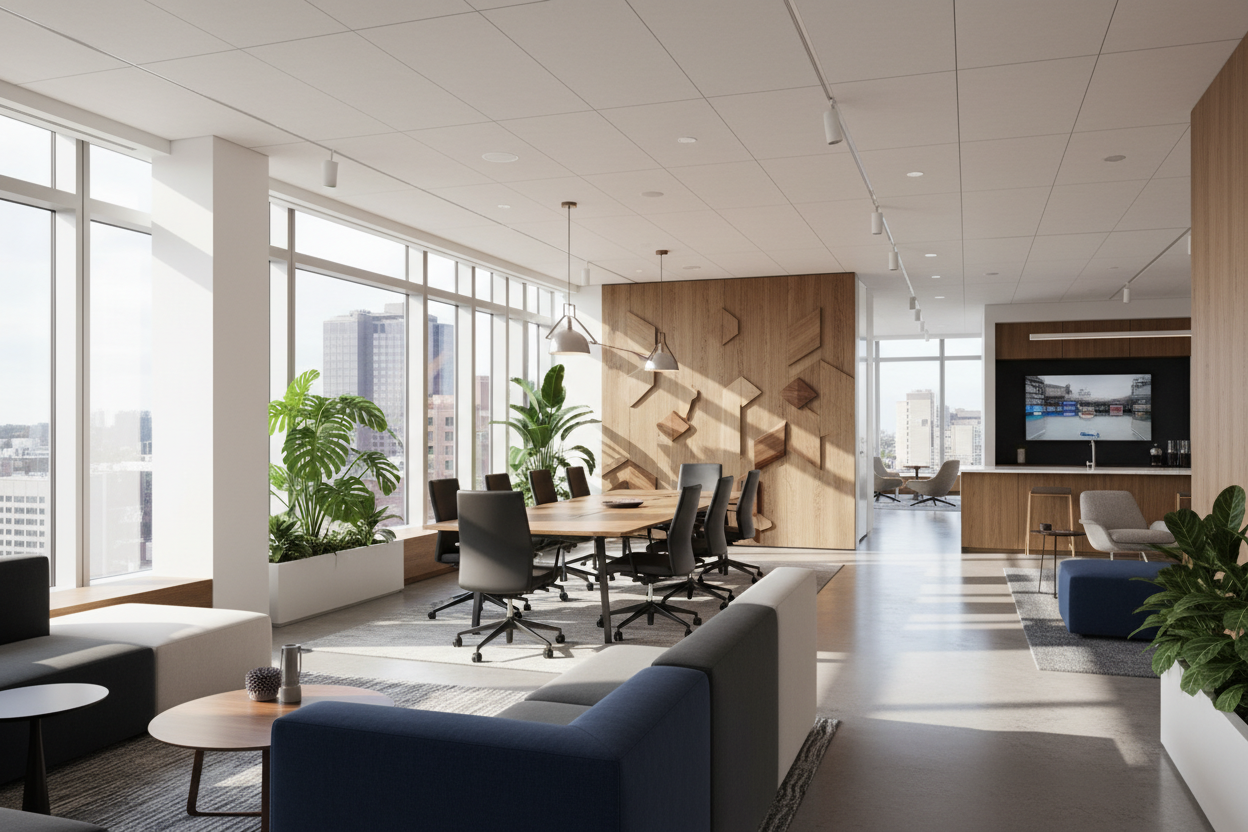
We have all walked into a workspace that feels drained of energy—rows of beige desks under harsh fluorescent hums. The dilemma facing most modern companies isn't just about fitting employees into a room; it is about creating an environment that retains talent and reflects your brand's ethos. Implementing strategic office design ideas for business is no longer a luxury; it is a capital investment in your team's productivity and mental well-being.
Key Elements for a Functional Workspace
- Acoustic Control: Integrating sound-absorbing materials like felt baffles or acoustic panels to reduce echo and distraction.
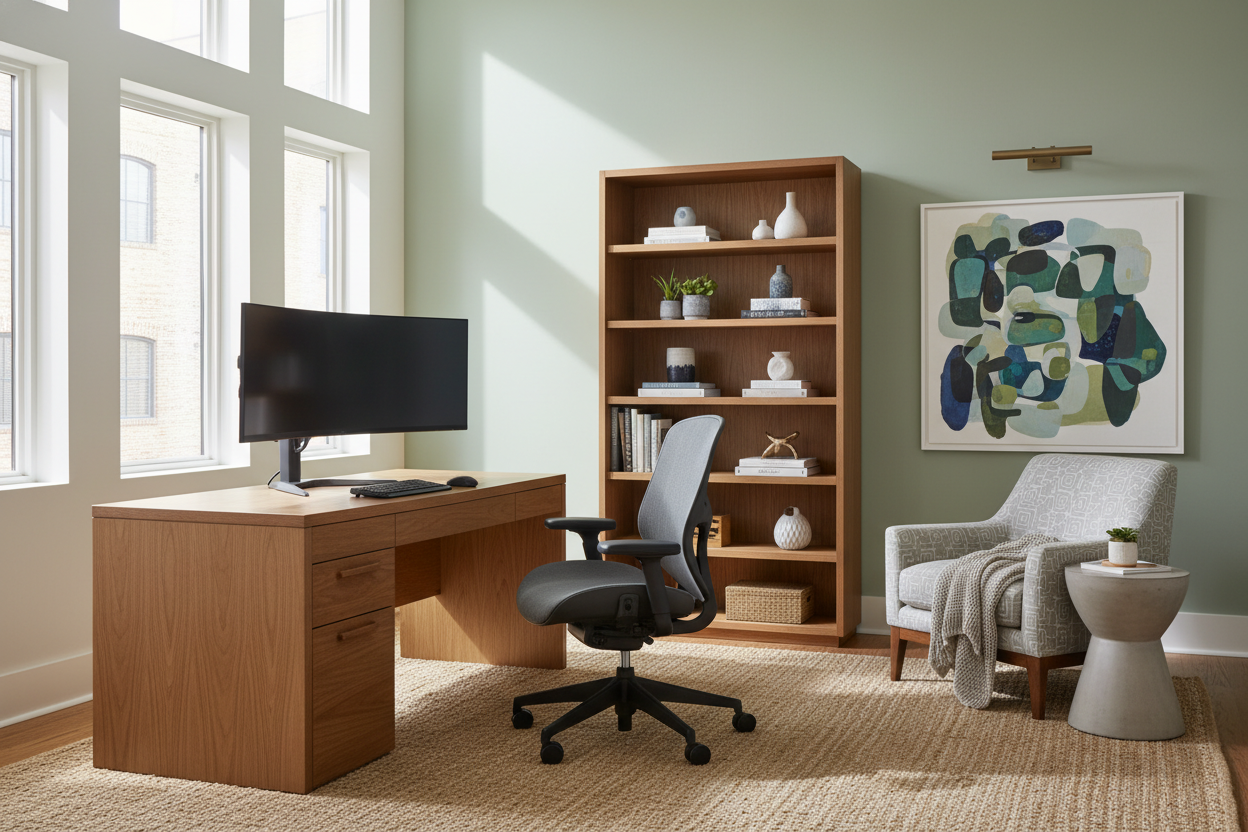
- Ergonomic Integration: Prioritizing chairs with lumbar support and sit-stand desks over purely aesthetic furniture.
- Lighting Hierarchy: Layering ambient, task, and accent lighting to reduce eye strain and set the mood.
- Spatial Zoning: Distinct areas for high-focus work versus collaborative brainstorming.
- Biophilic Elements: Incorporating live greenery and natural wood textures to lower stress levels.
Strategic Zoning and Layout Planning
When curating business office design ideas, the open-plan concept often gets criticized for being too noisy. The solution lies in "zoning." Rather than a sea of desks, think of your floor plan as a landscape. You need high-traffic avenues for collaboration and quiet cul-de-sacs for deep work.
For the collaborative zones, consider modular soft seating with higher backs. This creates a "room within a room" effect, offering visual privacy without building walls. Conversely, for focus areas, orient desks away from high-traffic visual distractions like elevators or kitchenettes. Good spatial flow allows movement without disrupting the workflow of others.
Materiality: Durability Meets Aesthetics
Choosing materials for business office design requires a balance between tactile luxury and commercial-grade durability. While a velvet sofa might look stunning in a residential setting, it rarely survives the high turnover of a reception area.
Flooring and Acoustics
Hard surfaces bounce sound. If you love the look of polished concrete or hardwood, you must counterbalance it with area rugs or acoustic ceiling clouds. In high-traffic corridors, Luxury Vinyl Tile (LVT) offers the visual warmth of wood but withstands the scuffs of dress shoes and rolling carts far better than natural timber.
Surface Finishes
For workstations, avoid high-gloss finishes. They create glare from overhead lighting and monitor screens, which causes eye fatigue. Opt for matte or satin laminates that resist fingerprints and diffuse light. When exploring business office ideas for executive suites, solid wood veneers convey authority, but ensure they are sealed with a commercial-grade polyurethane to prevent water rings from coffee cups.
Lighting: The Unsung Hero of Productivity
Lighting dictates the circadian rhythm of your workforce. Relying solely on overhead grid lighting is a common mistake in office design ideas for business office layouts. You need a layered approach.
Start with a color temperature between 3500K and 4000K for general areas—this is crisp and energizing without being sterile. Supplement this with task lighting at individual desks to allow employees control over their immediate environment. Finally, use warm accent lighting (2700K) in break rooms or lounge areas to signal a shift from "work mode" to relaxation.
My Personal Take on Office Design Ideas for Business
In my fifteen years of designing commercial spaces, I have learned that the smallest details often cause the biggest friction. I once specified a stunning, black glass conference table for a tech startup. It looked sleek, futuristic, and impressive in the renderings.
However, three weeks after installation, the client called me. The issue wasn't the look—it was the maintenance. Every single fingerprint, smudge, and dust mote showed up instantly. The office manager was cleaning it five times a day. Furthermore, optical mice didn't track well on the glass without mousepads, which ruined the clean aesthetic they wanted.
That experience changed how I approach surfaces. Now, whenever I advise on boardroom furniture, I steer clients toward "nano-texture" laminates or matte wood finishes. They hide the oils from our hands and allow technology to work seamlessly. Design must serve the user, not just the portfolio photo.
Conclusion
Transforming your workspace is about more than just buying new desks; it is about engineering an experience. By focusing on acoustics, appropriate materiality, and layered lighting, you create a space where people actually want to work. Invest in quality where your body touches the furniture, and let the layout serve the workflow.
Frequently Asked Questions
How do I calculate the right amount of space per employee?
Generally, modern office standards suggest 125 to 175 square feet per person when factoring in common areas, meeting rooms, and hallways. However, for the desk area alone, 40 to 50 square feet is standard for comfort and ergonomics.
Is open-plan or private office design better for business?
Neither is perfect on its own. The current best practice is the "hybrid" or "activity-based" layout. This provides open areas for collaboration but ensures there are enclosed "phone booths" or quiet rooms available for focused tasks and private calls.
What is the most durable fabric for office lounge furniture?
Look for fabrics with a high "double rub" count (over 50,000). Commercial-grade wool blends or solution-dyed acrylics (often used outdoors) are excellent choices because they resist fading, pilling, and staining while still feeling soft to the touch.

Leave a comment
This site is protected by hCaptcha and the hCaptcha Privacy Policy and Terms of Service apply.