










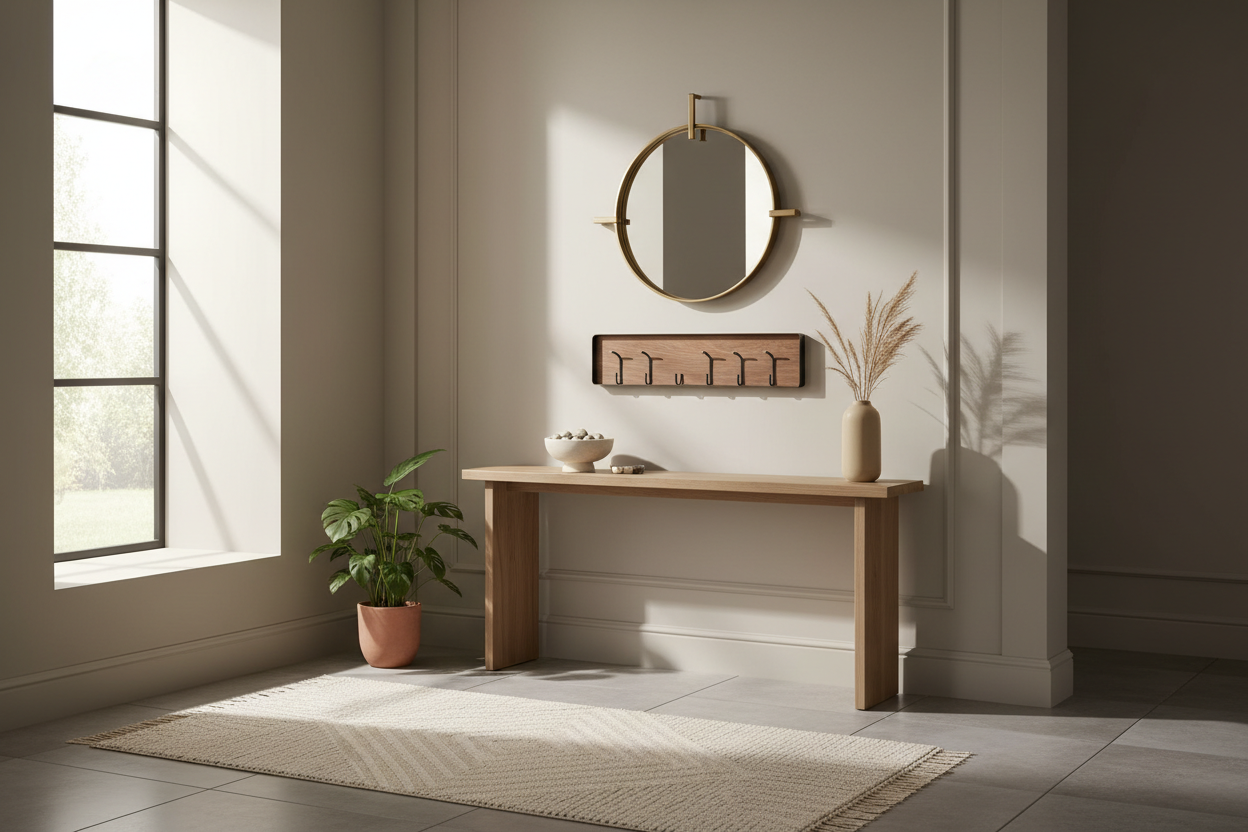
There is a specific kind of stress reserved for the morning scramble—the frantic search for car fobs or house keys just as you need to walk out the door. From a design perspective, scattered keys on a console table create visual noise that disrupts the serenity of your foyer. A dedicated, well-designed entryway key holder acts as an anchor, resolving the chaotic "drop zone" dilemma while establishing the tone for your home's interior.
Quick Decision Guide: Key Features to Look For
- Weight Capacity: Ensure hooks are anchored well enough to support heavy automotive fobs, not just single house keys.
- Depth & Projection: If choosing an entryway key shelf, aim for at least 3-4 inches of depth to accommodate bulky wallets or sunglasses without them sliding off.
- Backing Material: Look for a key holder for entryway use that includes a protective backing to prevent metal keys from scratching your wall paint or wallpaper.
- Mounting Hardware: Avoid adhesive strips for permanent fixtures; keyholes or French cleats provide the necessary stability for an entryway key organizer.
Assessing Your Space: Functionality Meets Form
Before purchasing, we must evaluate the spatial constraints of your foyer. In a grand foyer, a tiny rack looks lost in the negative space. Conversely, a bulky cabinet in a narrow corridor feels oppressive. The goal is to balance the visual weight.
The Multi-Functional Approach
For most clients, I recommend an entryway key and wallet holder combination. This "catch-all" approach prevents the migration of pocket clutter into the living room. An entryway shelf with key hooks offers a dual surface: hooks for the hardware, and a ledge for mail or décor. If you have a dedicated mudroom, a robust mudroom key holder with larger spacing between hooks is preferable to accommodate lanyards and kids' gear.
Solutions for Compact Areas
If you are working with limited square footage, a small entryway key holder with a vertical orientation draws the eye upward, saving horizontal wall space. A sleek entryway key rack without a shelf preserves the walkway width, ensuring no one bumps a shoulder against the unit. For tight corners, a hallway key holder mounted on the side of a wardrobe or cabinet can be a discreet solution.
Materiality and Aesthetic Cohesion
Your entrance key holder should converse with the existing finishes in your home. It does not need to match perfectly, but it should harmonize.
- Industrial & Modern: Look for matte black metal or brushed brass. An entryway wall organizer key holder in steel adds a sharp, architectural line to the wall.
- Organic & Scandi: A wooden entryway key holder with shelf introduces warmth. Oak or walnut finishes hide dust well and age beautifully.
- Eclectic: Vintage entryway key holder ideas often involve repurposing antique hardware. A key hook entryway piece made from reclaimed wood adds narrative and texture.
Advanced Organization: Beyond the Hook
The term entryway keys often implies a simple hook, but high-end design considers the entire sequence of entering the home. An entryway key holder and organizer might include a slot for mail or a magnetic strip for notes. When selecting an entryway key hanger, consider the tactile experience—does the hook have a lip to prevent keys from falling? Is the entryway key storage accessible without looking cluttered?
Even a standalone entryway key holder shelf requires styling. Avoid overcrowding it. Place a small succulent or a structural ceramic bowl on the shelf to soften the utilitarian nature of the entryway key zone.
My Personal Take on Entryway Key Holders
I learned a hard lesson about entryway organizer keys placement during a renovation project in a historic brownstone. I specified a beautiful, minimal brass rail without a backplate, mounting it directly onto expensive, hand-painted wallpaper. It looked stunning for the photoshoot.
However, three months later, I visited the client and noticed a distinct grey scuff pattern on the wallpaper right where the keys rested. The constant swinging of metal keys against the paper had ruined the finish. Since then, I always advise clients: if you buy an open entryway key hanger, either mount it on a durable surface (like wainscoting or tile) or choose a model with a built-in backing plate (wood or leather) to act as a buffer. It’s a small detail that saves your walls from inevitable wear and tear.
Conclusion
Investing in the right foyer key holder is about reclaiming your peace of mind. By selecting a piece that handles your specific load—whether it's just keys or a full wallet-and-mail drop—you create a seamless transition into your sanctuary. Measure your wall, check the hardware, and choose a finish that makes you smile when you walk through the door.
Frequently Asked Questions
What is the ideal height to hang an entryway key holder?
Ergonomically, the sweet spot is usually between 60 to 66 inches from the floor. This places the keys at eye level for most adults, making them easy to grab without stooping, while keeping them out of reach of small children.
How do I stop my entryway key shelf from looking cluttered?
The rule of three applies here. Limit the items on the shelf to the essentials: a small tray for loose change, a vertical element (like a small vase), and the keys themselves. If you have excess bulk, consider a unit with a hidden compartment or a drawer.
Can I use adhesive strips for a heavy key rack?
I generally advise against it. A fully loaded key ring can weigh more than you expect, and the repeated motion of grabbing and hanging creates torque that eventually pulls adhesive away from drywall. Always use screw-in anchors for longevity and safety.


Leave a comment
This site is protected by hCaptcha and the hCaptcha Privacy Policy and Terms of Service apply.