










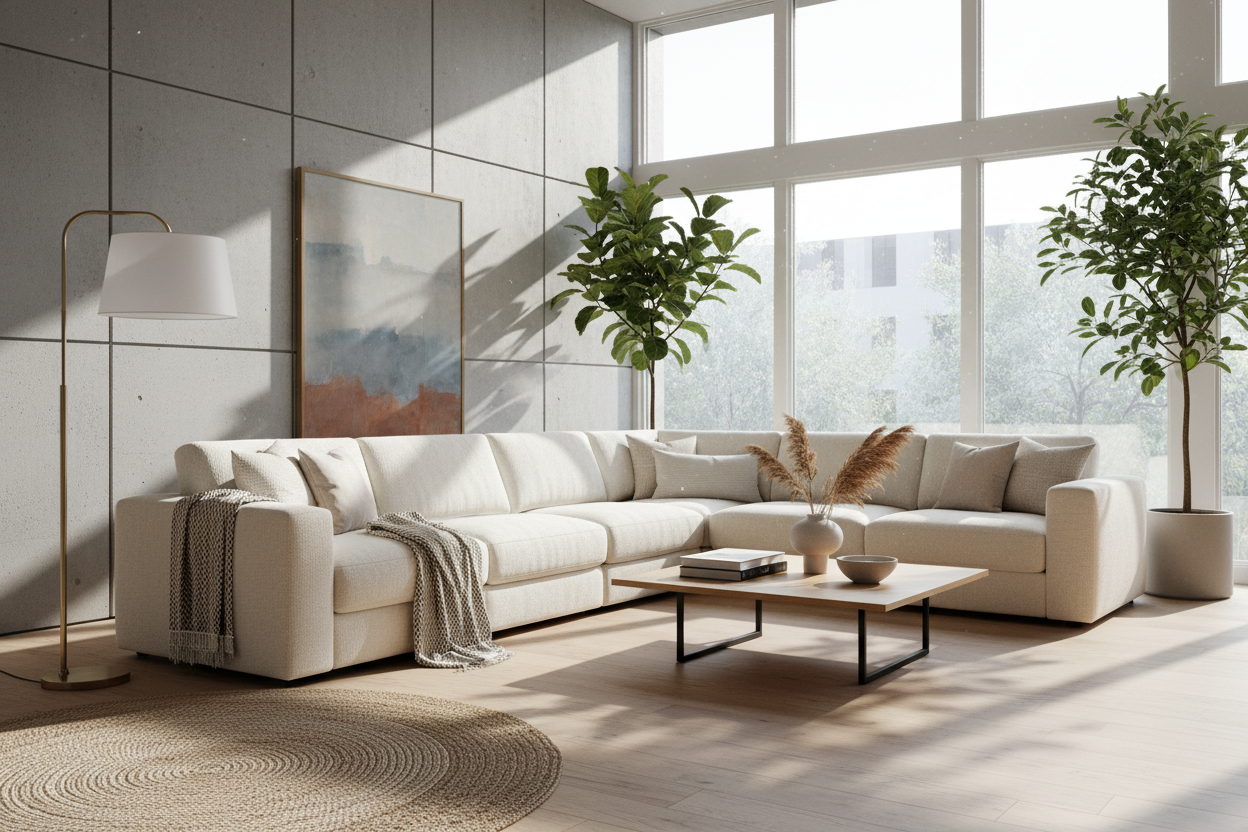
You have likely stared at a floor plan, wrestling with the classic dilemma: how do you maximize seating capacity without overwhelming the room's footprint? It is the most common challenge I see in urban apartments and cozy family rooms alike. The answer often lies in the versatility of a 3 seater sectional. Unlike a standard sofa, this piece anchors a room, defining the conversation area while offering that coveted chaise lounge for relaxation.
Quick Decision Guide: Key Features to Look For
If you are rushing to make a purchase, review these non-negotiable factors first. These are the specific elements that separate a piece that lasts five years from one that lasts twenty.
- Frame Construction: Look for kiln-dried hardwood or furniture-grade plywood. Avoid particleboard entirely.
- Orientation: Determine if you need a Left-Arm Facing (LAF) or Right-Arm Facing (RAF) return based on your room's traffic flow.
- Suspension System: 8-way hand-tied springs are the gold standard, but high-gauge sinuous springs are excellent for a modern 3 seat sectional sofa.
- Cushion Fill: High-density foam wrapped in down provides structure; 100% down requires daily fluffing.
Mastering Scale and Silhouette
When selecting a three seat sectional, visual weight is just as important as physical dimensions. In my design practice, I often see homeowners choose a sofa that is technically the right size but feels too heavy for the space. If your room is smaller, opt for a 3-seat sectional couch with raised legs rather than a skirted base. Seeing the floor beneath the furniture creates an illusion of more space.
Conversely, if you have high ceilings, a low-profile 3 seat corner couch might look lost. In these instances, look for a higher back profile or a design with substantial armrests to command the room.
Material Selection: Beyond Aesthetics
The upholstery you choose dictates the longevity of your 3 seat sectionals. For high-traffic areas, I steer clients away from delicate linens and towards performance velvets or crypton fabrics. These materials mimic the hand-feel of luxury textiles but repel stains and withstand the friction of daily use.
Leather vs. Fabric
A leather three seater sectional sofa develops a patina over time, adding character to industrial or mid-century modern spaces. However, be wary of bonded leather, which will peel. Top-grain leather is the minimum quality standard you should accept. If you prefer warmth, a woven fabric on a sectional 3 seat sofa offers texture, but ensure it has a rub count of at least 25,000 for residential durability.
Ergonomics and Comfort
A 3 person sectional must accommodate different sitting styles. The corner seat is often the most coveted spot, but it can also be a dead zone if the seat depth is too shallow. I recommend a seat depth of at least 24 inches for a lounge-worthy feel. If you plan to use the sectional for napping or hosting guests, test the firmness of the cushions. A mix of memory foam and down usually offers the best compromise between support and sink-in comfort.
Lessons from My Own Projects
I want to share a specific realization I had while installing a three seat sectional sofa for a project in a downtown loft. We selected a beautiful, modular piece that looked stunning on the architectural plans. However, the client had high-gloss polished concrete floors.
Within a week, the client called me. Every time someone sat down with a bit of force, the sections would drift apart, creating an annoying gap between the chaise and the loveseat portion. It turned a cozy seating arrangement into disjointed islands. The manufacturer's "alligator clips" (the metal brackets that hold the pieces together) were flimsy plastic.
I learned a hard lesson that day: always inspect the undercarriage hardware. Now, I personally check the connector brackets on every 3-seat sectional couch I specify. If they look weak, I immediately order heavy-duty, aftermarket metal brackets and non-slip rubber pads for the legs. It is a small, unglamorous detail that completely changes the user experience.
Conclusion
Investing in the right furniture changes how you interact with your home. A well-chosen sectional isn't just a place to sit; it is the architectural anchor of your living space. By focusing on the frame quality, fabric durability, and the correct orientation, you can secure a piece that offers style and comfort for years to come.
Frequently Asked Questions
How much space do I need for a 3 seat sectional sofa?
Ideally, you should allow for at least 30 to 36 inches of walking space around the perimeter of the sofa. Ensure the chaise portion does not block the natural pathway to other rooms.
Can I separate the pieces of a three seat sectional?
It depends on the design. Modular 3 seat sectionals are finished on all sides and can be separated. However, traditional sectionals often have unfinished sides where the pieces connect, meaning they must stay attached to look correct.
What is the difference between a sofa with a chaise and a true sectional?
A sofa with a chaise usually has a long cushion extending from one side, while a true 3 seat corner couch has a corner wedge and two distinct seating wings. The chaise option is generally better for lounging, while the corner wedge is better for seating multiple people for conversation.


Leave a comment
This site is protected by hCaptcha and the hCaptcha Privacy Policy and Terms of Service apply.