










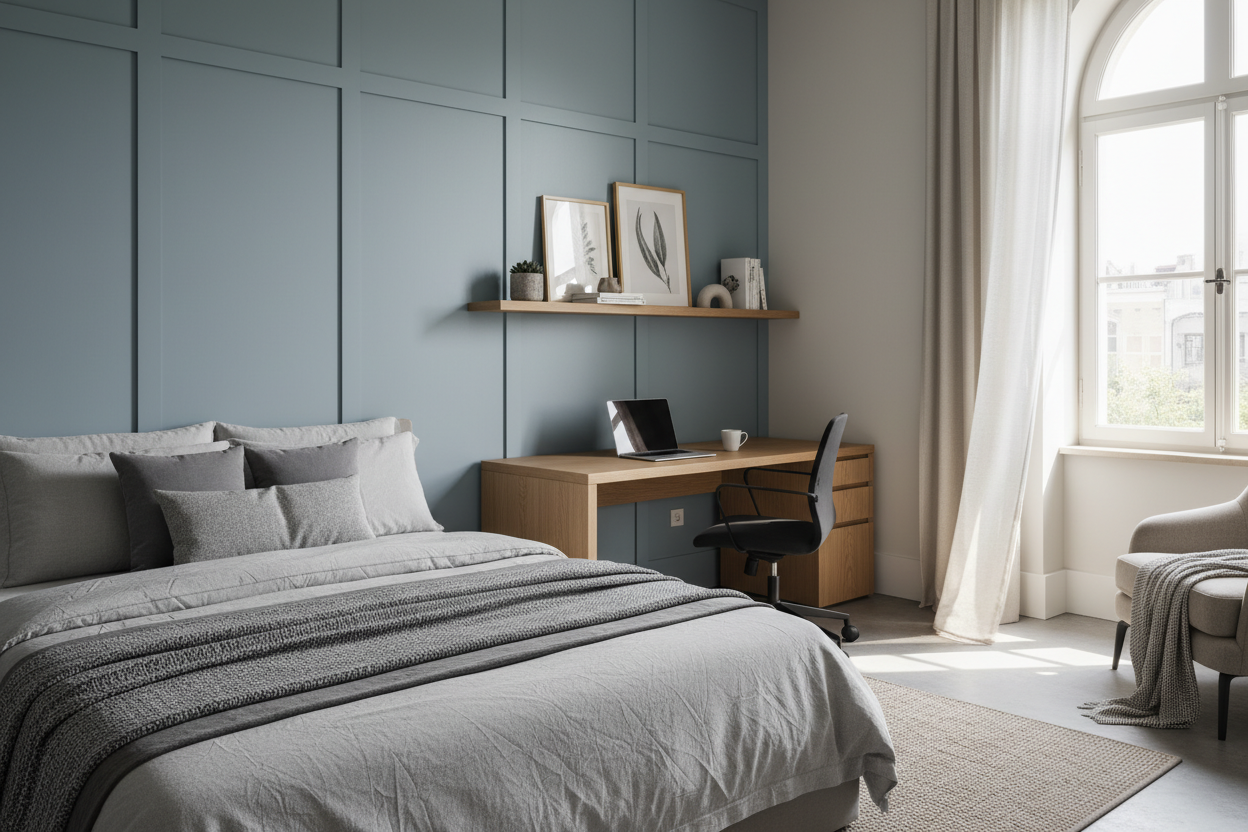
Merging the restorative nature of a sleeping quarter with the high-energy demands of a home office is one of the most delicate balancing acts in interior design. We often treat these zones as opposites, yet modern living frequently demands they coexist. The challenge isn't just squeezing furniture into a corner; it is selecting a working table in bedroom setup that respects the room's primary function: rest.
Key Features to Look For
Before committing to a purchase, consider these four critical elements to ensure your workspace enhances, rather than disrupts, your bedroom's ambiance:
- Visual Weight: Opt for desks with slender legs or floating designs to maintain an airy feel, especially in compact rooms.
- Material Warmth: Solid wood or matte finishes absorb light and feel cozy, whereas glass or high-gloss metals can feel too clinical for a bedroom.
- Concealed Storage: A clutter-free surface is non-negotiable for sleep hygiene; look for shallow drawers to hide laptops and cables.
- Profile Depth: A depth of 20-24 inches is usually sufficient for a laptop setup without encroaching on walking paths.
Mastering the Layout and Flow
The success of a bedroom with office desk layout relies heavily on sightlines. As a designer, my golden rule is simple: you should not be looking at your work while lying in bed, and ideally, you shouldn't be staring at your pillows while on a Zoom call.
Positioning for Mental Separation
If space permits, float the desk perpendicular to a window rather than pushing it flat against a wall. This creates a distinct "zone" and allows for natural light without screen glare. In smaller footprints, placing the desk beside the bed (replacing a nightstand) is a clever space-saver, provided the desk lamp creates warm, ambient light rather than harsh, cool task lighting.
Materiality: Choosing the Right Texture
When curating bedroom with computer desk ideas, the tactile experience is paramount. A laminate office desk belongs in a cubicle, not your sanctuary. I often steer clients toward natural materials like Walnut, Oak, or even leather-wrapped surfaces.
Solid wood brings an organic texture that grounds the space. If you prefer a modern aesthetic, consider a desk with a stone or ceramic top. These materials offer durability but maintain a level of sophistication that aligns with high-end bedroom furniture. Avoid cheap veneers that peel; the bedroom is an intimate space where flaws in furniture are easily noticed.
Styling and Visual Balance
Learning how to style a desk in a bedroom requires a shift in perspective. Treat the desk as a console table when it is not in use. Instead of a utilitarian plastic organizer, use a ceramic tray or a woven basket to corral stationery. Invest in a chair that looks like an accent armchair rather than a mesh-back office chair. Upholstered dining chairs or mid-century modern bucket seats often provide adequate support for short work sessions while softening the room's visual language.
My Personal Take on working table in bedroom
I learned a hard lesson about acoustics and materials early in my career while designing a master suite for a couple with different sleep schedules. I installed a stunning, architectural glass-top desk with metal legs. Visually, it was a masterpiece—it disappeared into the room.
However, two weeks later, the client called. Every time her husband set down his coffee mug or typed on his mechanical keyboard, the glass and metal reverberated a sharp, high-pitched sound that woke her up. It was a sensory disaster. We swapped it for a solid white oak desk with a leather writing blotter. The wood absorbed the sound, the leather dampened the clicking, and the room became peaceful again. It was a reminder that in a bedroom, how a piece sounds and feels is just as important as how it looks.
Conclusion
Integrating a workspace into your bedroom doesn't mean sacrificing serenity. By prioritizing natural materials, managing your sightlines, and selecting furniture that whispers rather than shouts, you can curate a space that supports your ambition during the day and cradles your rest at night.
Frequently Asked Questions
How do I separate work life from sleep in the same room?
The most effective method is "closing shop." Choose a desk with a roll-top, a secretary desk that closes, or simply designate a drawer where the laptop goes every evening. If the tech is out of sight, the mental switch to relaxation is much easier.
What is the ideal size for a bedroom desk?
For a secondary workspace, a width of 42-48 inches is the sweet spot. It offers enough surface area for a laptop and a notebook but isn't large enough to accumulate unrelated clutter.
Can I use a vanity table as a desk?
Absolutely. This is often the most stylish solution. Ensure the height is standard (around 30 inches) and that there is enough knee clearance (avoid vanities with center drawers that dip too low) to maintain ergonomic comfort.


Leave a comment
This site is protected by hCaptcha and the hCaptcha Privacy Policy and Terms of Service apply.