










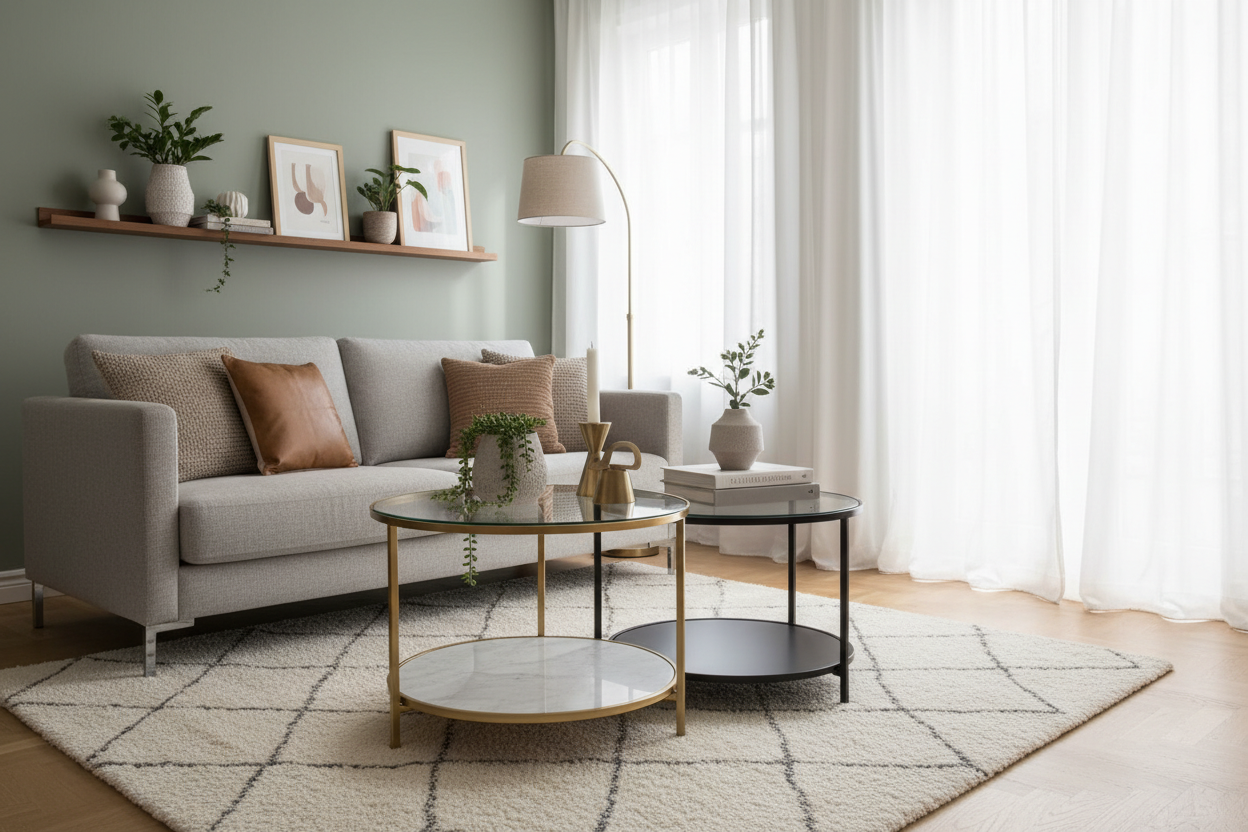
One of the most persistent challenges I encounter when designing compact urban apartments is the battle against "visual bulk." You need surface area for your coffee, books, and lamps, but traditional wooden furniture can quickly make a 12x12 living room feel claustrophobic. This is where the strategic use of ikea glass nesting tables becomes a secret weapon in the designer's toolkit. Unlike opaque materials that absorb light and block sightlines, these tables offer functionality while virtually disappearing into the room's aesthetic, maintaining that crucial sense of openness.
Key Features to Consider Before Buying
- Visual Weight: Glass surfaces offer zero visual weight, making them ideal for small or dark rooms where maximizing light flow is critical.
- Durability: IKEA typically uses tempered glass, which is stronger than standard glass but can still shatter under high-point impact.
- Frame Material: Look for powder-coated steel frames (common in the Vittsjö series) for rust resistance and structural stability.
- Versatility: The ability to un-nest tables allows for flexible layouts during parties, then re-nesting to save floor space.
The Design Theory: Why Transparency Works
In interior design, we talk a lot about "negative space." When you introduce a solid oak coffee table into a room, your eye stops at that object. With glass nesting tables, your eye travels through the object to the rug or floor beyond. This uninterrupted visual flow tricks the brain into perceiving the room as larger than it actually is.
Furthermore, the tiered silhouette of nesting tables adds architectural interest. Instead of a flat, static plane, you get dynamic levels. This layering effect allows for more sophisticated styling opportunities—placing a tall vase on the lower table and a stack of art books on the higher one creates depth without clutter.
Assessing Material Quality and Construction
The Glass
IKEA generally utilizes tempered safety glass for these units. From a safety perspective, this is non-negotiable; if it breaks, it crumbles into granular chunks rather than jagged shards. However, be aware that glass is inherently cold. It doesn't add warmth to a room, so you must counterbalance it with textured rugs, velvet cushions, or warm ambient lighting to avoid a "clinical" atmosphere.
The Metal Framework
The structural integrity of these tables relies on the metal chassis. In models like the Vittsjö or Granboda, the metal is lightweight. While this makes them easy to move—a plus for ergonomics—it means they can be prone to tipping if not positioned on a stable rug. When assembling, ensure the screws are tightened evenly to prevent a wobble, which is a common issue with flat-pack metal furniture.
Styling for a High-End Look
The beauty of the nesting design is adaptability. To achieve a luxury showroom look, avoid lining them up perfectly straight. Offset the smaller table slightly to create an asymmetrical composition.
For the styling atop the glass, remember the "Rule of Three." A small tray (to catch remotes and anchor the glass), a vertical element (like a candle or sculptural object), and a horizontal element (books) create balance. Because the glass is transparent, keep the area under the table clear. A cluttered floor visible through a glass table defeats the purpose of the design.
Lessons from My Own Projects
I want to share a specific detail regarding ikea glass nesting tables that rarely makes it into the product description, but I learned it the hard way during a project for a client in a downtown loft. We used the nesting set to keep the space airy, but within a week, the client called me about the noise.
Every time he set a ceramic mug down, or the metal remote hit the glass, it created a harsh, high-pitched "clank" that echoed. It made the furniture feel cheap and fragile.
The fix was simple but essential: I bought clear, self-adhesive silicone bumpers (higher quality than the ones provided in the box) and placed them not just under the glass pane where it rests on the frame, but also tiny ones on the bottom of his coasters. I also noticed that dust loves to settle in the tiny gap between the glass edge and the metal rim—a "dust moat." I now advise clients to use a can of compressed air (like for keyboards) to clean that crevice, as a rag just pushes the dust further in.
Conclusion
Choosing the right tables is about balancing form and function. IKEA glass nesting tables offer a brilliant solution for maintaining visual flow in tight quarters while providing adaptable surface area. By paying attention to styling and mitigating the minor acoustic drawbacks, you can curate a space that feels open, modern, and intentionally designed.
Frequently Asked Questions
Are glass nesting tables safe for households with toddlers?
While tempered glass is safer than standard glass, I generally advise against glass tables for toddlers just learning to walk. The corners are often hard, and glass shows every sticky fingerprint. If you must use them, corner guards are essential, though they ruin the aesthetic.
Can I spray paint the metal frames?
Absolutely. This is one of my favorite hacks. The powder-coated finish on IKEA tables takes spray paint very well if you prime it first. Changing a black frame to gold or matte bronze can instantly make the piece look three times more expensive.
How much weight can these tables actually hold?
They are designed for light decor—coffee cups, books, and lamps. Do not sit on them or place heavy sculptures (over 15-20 lbs) on the glass. The glass is strong, but the leverage on the lightweight metal frame can cause bending if overloaded.



Leave a comment
This site is protected by hCaptcha and the hCaptcha Privacy Policy and Terms of Service apply.