










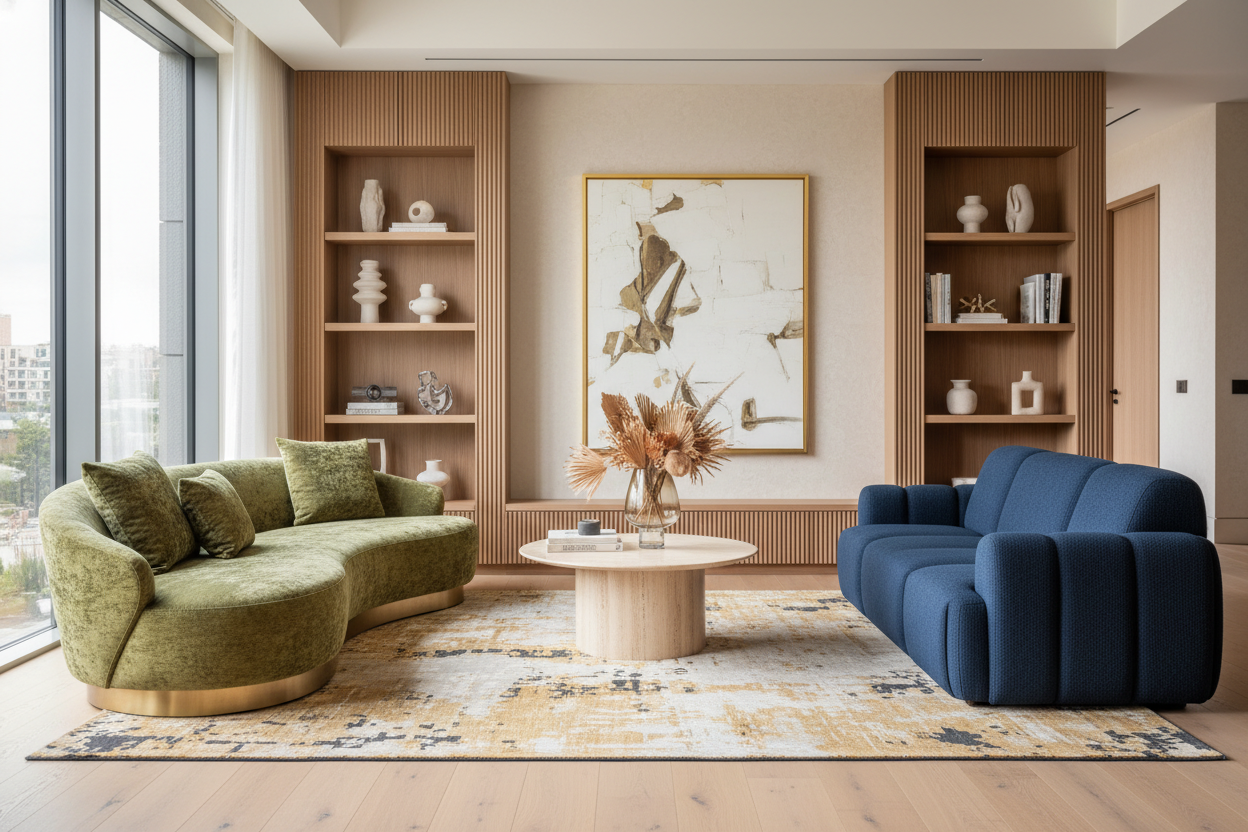
Walking into a home where the seating feels like an afterthought is a designer's biggest pet peeve. We often see homeowners settle for the safe option—the generic gray rectangle—because they fear a bold choice won't age well. However, the seating is the anchor of your design narrative; it dictates the flow and energy of the entire space. In this guide, we will explore how to select unique sofas for living room layouts that balance high-concept aesthetics with the practical demands of everyday life.
Key Features to Look For
- Structural Silhouette: Look for organic curves or asymmetrical backs that break the monotony of straight lines.
- Upholstery Durability: Check the Double Rub count (aim for 50,000+) to ensure the fabric withstands daily use.
- Suspension System: Verify if the piece uses eight-way hand-tied springs or sinuous springs for long-term shape retention.
- Scale and Proportion: Ensure the sofa depth allows for comfortable circulation (at least 30 inches of walking path).
Defining the Silhouette: Curves vs. Angles
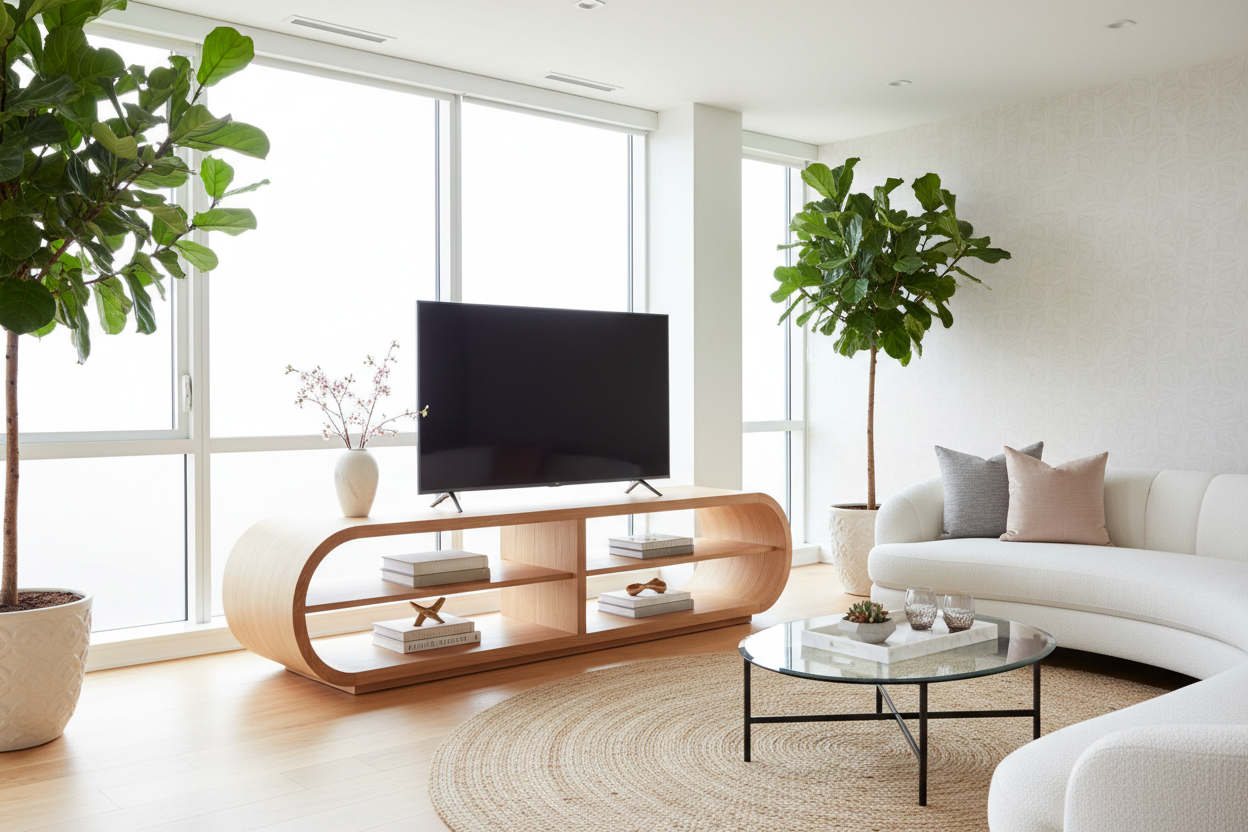
When moving away from standard designs, the silhouette is your primary tool for visual impact. Currently, we are seeing a shift toward biophilic design, where curved, kidney-shaped sofas soften the hard architectural lines of modern apartments. A curved sofa acts as a conversation circle, naturally encouraging social interaction.
Conversely, if you prefer a more architectural look, low-profile modular systems with deep seating offer a grounded, lounge-heavy aesthetic. When sourcing unique couches living room setups, consider how the back of the sofa looks. Since these pieces often float in the center of a room, the rear profile must be just as finished and compelling as the front.
Materiality and Texture
Fabric Selection
A unique shape requires a fabric that complements its form. Bouclé and high-pile velvets are excellent for curved sofas because they hide seams and stretch well over rounded corners. For more angular, geometric pieces, a tight-weave linen or aniline leather highlights the sharp lines. Be wary of patterns on highly sculptural pieces; often, a rich, solid texture reads more sophisticated than a busy print that competes with the sofa's shape.
The Internal Build
A sofa is only as good as its frame. Kiln-dried hardwood is the industry standard for preventing warping. If you are investing in a piece with an unusual cantilevered arm or a floating back, ask about the frame reinforcement. These unique structural elements put different stress points on the joinery compared to a standard four-legged couch.
Visual Balance and Layout Strategy
Placing a statement sofa requires a different approach to space planning. You rarely want to push a sculptural piece against a wall. These designs breathe better when they float. Anchor the arrangement with an appropriately sized rug—the front legs of the sofa should always sit on the rug to ground the composition.
Pairing is equally critical. If your sofa is heavy and voluminous, balance it with armchairs that have exposed legs and lighter frames. This prevents the room from feeling bottom-heavy and maintains a sense of airiness.
My Personal Take on Unique Sofas for Living Room
I learned a hard lesson early in my career regarding "sculptural" seating. I specified a stunning, low-slung Italian-style sofa for a client who loved the minimalist aesthetic in the showroom. It was undeniably beautiful—a piece of art.
However, six months later, the client called me. The issue wasn't the look; it was the "get-up" factor. The seat height was a mere 15 inches (standard is usually 17-18 inches). While it was perfect for lounging with a glass of wine, actually standing up from such a deep, low position became a chore for her husband, who had minor back issues. Furthermore, the velvet fabric, while luxurious, had a "nap" that permanently looked messy because it trapped distinct imprint marks every time someone sat down.
The takeaway: Always check the seat height relative to your own knees, and if you are Type A about cleanliness, perform a "hand swipe" test on velvet to see how much the shade changes when brushed against the grain.
Conclusion
Choosing a statement sofa is an act of bravery in interior design. It transforms a functional room into a curated experience. By focusing on the interplay of silhouette, material integrity, and ergonomic reality, you can secure a piece that doesn't just look good in a photo but feels like home every time you sit down.
Frequently Asked Questions
How do I maintain a sofa with an irregular shape?
Irregular shapes often wear unevenly because people tend to sit in the same "sweet spot." Rotate cushions if they are detachable. For tight-back sculptural sofas, vacuum weekly with an upholstery attachment to prevent dust from settling into the curves and dulling the fabric.
Can a unique sofa fit in a small apartment?
Absolutely. In fact, a curved sofa can save space in a small room by eliminating sharp corners that block traffic flow. Look for "apartment scale" dimensions, typically under 80 inches in width, and opt for legs that lift the frame off the floor to create an illusion of more space.
Does a statement sofa mean I have to replace my other furniture?
Not necessarily. The key is contrast. If you buy a modern, curvaceous sofa, it can actually look stunning next to a vintage, rectangular coffee table. The mix of eras and shapes creates a collected, layered look rather than a "matchy-matchy" showroom vibe.

Leave a comment
This site is protected by hCaptcha and the hCaptcha Privacy Policy and Terms of Service apply.