










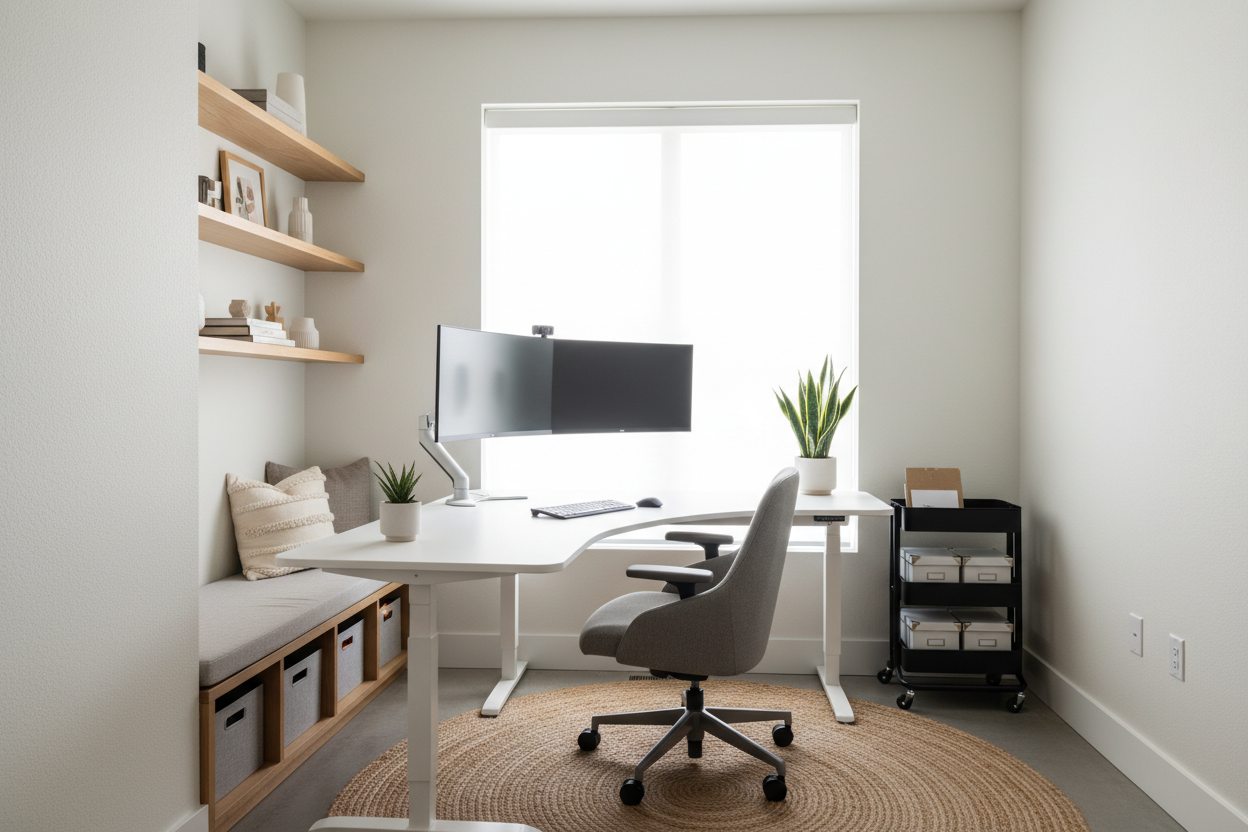
We often assume that limited square footage demands a compromise on style or function, but as a designer, I see constraint as the ultimate catalyst for creativity. The dilemma isn't usually the lack of space; it's the misuse of volume. Whether you are carving out a niche in a master bedroom or outfitting a dedicated box room, successful small office interior design relies on manipulating perception and prioritizing ergonomics over bulk.
Key Features to Look For
- Visual Permeability: Prioritize furniture with exposed legs or glass elements to keep the floor visible.
- Vertical Utilization: Look for shelving units that go floor-to-ceiling to draw the eye upward.
- Scale & Proportion: Select desks with a shallow depth (20-24 inches) but adequate width.
- Multi-functional Lighting: Opt for articulated sconces rather than floor lamps to save footprint.
- Material Durability: Choose high-pressure laminates or sealed veneers for high-touch surfaces.
Mastering Layout and Flow
When executing a modern small office design, the layout must be ruthless. The most common error I see is the "floating desk" in a room that cannot support it. In tight quarters, perimeter layouts often work best. Anchoring your primary work surface against a wall opens up the center of the room, creating a sense of airiness.
For those seeking small office renovation ideas, consider built-ins. Unlike freestanding furniture, a custom built-in can bridge awkward alcoves and maximize every inch of vertical space without the visual clutter of gaps and shadows.
Choosing the Right Material and Finish
In a small modern office, texture plays a pivotal role. Heavy, dark hardwoods can make a room feel like a cavern. Instead, lean toward materials that reflect light or disappear into the background.
Wood vs. Veneer vs. Glass
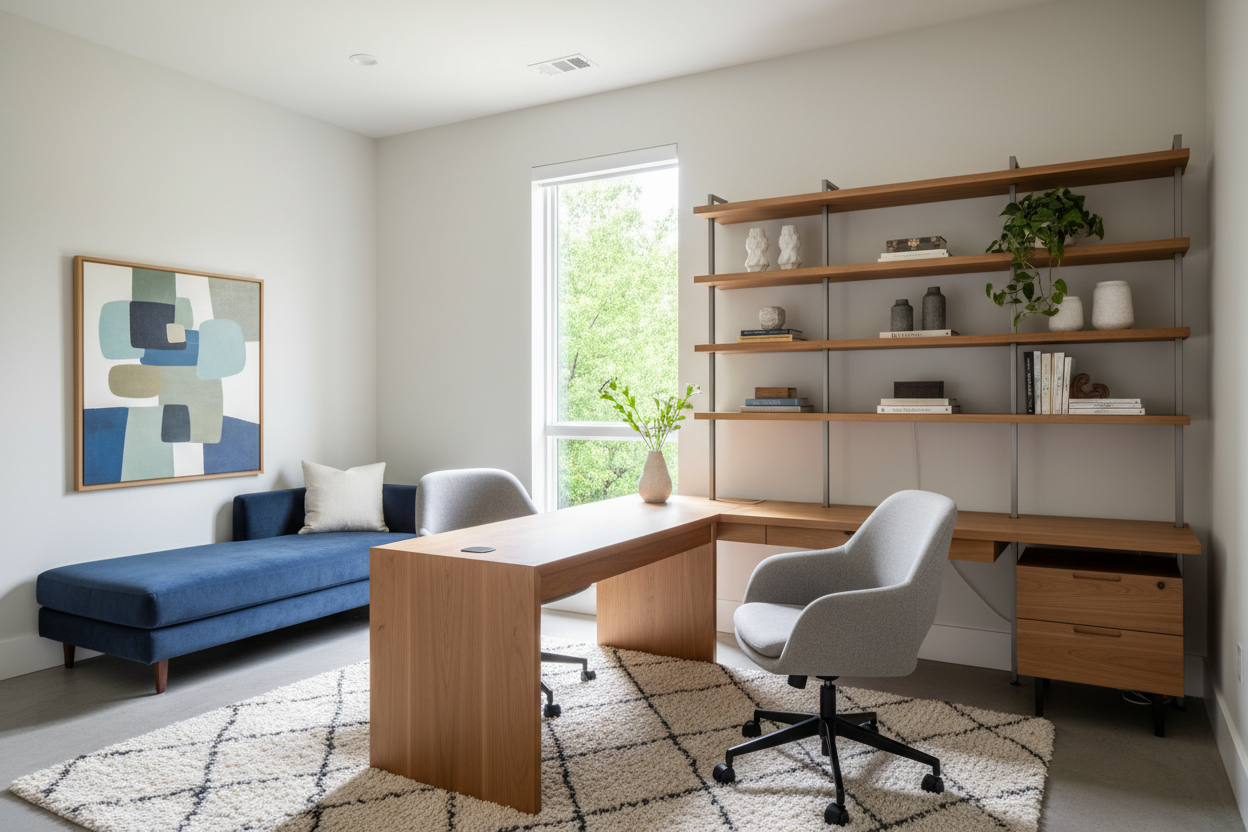
Solid wood is undeniably luxurious, but in a compact space, a heavy oak desk can feel oppressive. High-quality wood veneers offer the same warmth with a lighter profile. For the ultimate space-saving illusion, acrylic or glass desks are phenomenal interior design ideas for small office space because they eliminate visual weight entirely, though they do require disciplined cable management.
Ergonomics in Compact Spaces
Never sacrifice your spine for a silhouette. Small modern office design ideas often showcase trendy, low-back chairs that look sleek but offer zero lumbar support. If you cannot fit a full executive chair, look for task chairs with a mesh back. The transparency of the mesh keeps the visual weight low while providing the necessary breathability and ergonomic contouring.
Visual Balance and Styling
When curating interior design ideas small office space, edit your accessories. A small room cannot handle "visual noise." Use a unified color palette for your storage containers and tech accessories. If your walls are white, white shelving will blend in, allowing your books and decor to act as the focal points rather than the furniture itself.
My Personal Take on Small Office Interior Design
I learned a hard lesson early in my career while designing a home office in a pre-war Manhattan apartment. I fell in love with a stunning, reclaimed timber desk that was visually heavy and lacked drawers. I convinced the client it would be the "statement piece."
Six months later, I visited, and the desk was a disaster zone. Because it lacked storage, the surface was covered in clutter, and the dark wood absorbed all the light from the single window, making the room feel like a closet. The finish also trapped dust in the wood grain, which was a nightmare to clean.
We swapped it out for a sleek, white-lacquer desk with integrated drawers and slim, tapered brass legs. The room instantly felt twice as big. The glossy surface bounced light around the room, and the hidden storage meant the workspace actually looked like the photos. It taught me that in small spaces, "boring" functional features like drawers and smooth finishes often trump raw aesthetics.
Conclusion
Designing a compact workspace requires a delicate balance of form and function. By selecting the right scale, embracing vertical storage, and choosing materials that enhance light, you can create a professional environment that feels expansive regardless of the square footage. Curate your space with intention, and your productivity will follow.
Frequently Asked Questions
What is the minimum depth for a small office desk?
For a laptop setup, you can get away with a depth of 18-20 inches. However, if you use an external monitor, aim for at least 24 inches to maintain a healthy viewing distance and prevent eye strain.
How do I make a windowless small office feel larger?
Lighting is critical. Layer your lighting with ambient ceiling fixtures (aim for 4000K temperature for alertness) and task lighting. Mirrors placed strategically to reflect these light sources can also simulate depth.
Is custom joinery worth it for small offices?
If you own the property, absolutely. Custom joinery allows you to utilize dead space, such as corners or areas above door frames, which freestanding furniture simply cannot reach.


Leave a comment
This site is protected by hCaptcha and the hCaptcha Privacy Policy and Terms of Service apply.