










Walking into a home and immediately stepping onto a pile of shoes or seeing a stack of mail on the floor sets a chaotic tone for the rest of the evening. We have all been there. You unlock the door, your hands are full of groceries, and there is simply nowhere to put your keys. This is exactly where a small console table with drawer storage transforms from a piece of furniture into a daily necessity. It acts as the gatekeeper of your home, filtering out the clutter before it migrates to the dining table or kitchen counter.
Finding the right balance between footprint and function is the primary challenge in compact living environments. Large, bulky furniture makes a room feel claustrophobic, yet minimalism often lacks practical storage. A slim console offers that middle ground. It provides a landing strip for daily essentials while occupying minimal square footage. The addition of a drawer is the critical component here; without it, the table is just another surface to gather dust and visual clutter. With it, you have a designated "hide-away" spot for the items you need but don't want to see.
My Experience with Tiny Entryways
I learned the value of vertical storage the hard way in my first city apartment. The "foyer" was nonexistent—the front door opened directly into a narrow corridor that funneled into the living room. For months, I tossed my keys into a bowl on the floor and hung my bag on a doorknob. It looked messy and felt disorganized.
Eventually, I hunted down a vintage small console with drawer space that was only ten inches deep. I didn't think it would make much of a difference, but I was wrong. Suddenly, I had a place to drop the mail. The drawer became the home for spare batteries, a flashlight, and those takeout menus I couldn't bring myself to throw away. That sliver of furniture defined the space, creating an entryway where there wasn't one before. It taught me that you don't need a grand hall to have a functional entrance; you just need the right dimensions.
Choosing the Right Dimensions for Hallways
When shopping for a small hall table with drawer capabilities, depth is your most important metric. In a standard hallway, you typically want to maintain at least 36 inches of walking path for comfortable movement. If your hallway is 48 inches wide, your table shouldn't exceed 12 inches in depth. Anything deeper will likely result in hip-bumping bruises.
Height is the second factor. Most standard consoles sit between 30 and 32 inches high. This is ergonomically ideal for dropping keys without bending over. However, if you plan to place a mirror above it, ensure the table height doesn't force the mirror too high on the wall, which can disconnect the two elements visually. Length is more flexible and depends on your wall space, but visually, the table should cover about two-thirds of the wall length or be centered under artwork to feel anchored.
The Sofa Table Strategy
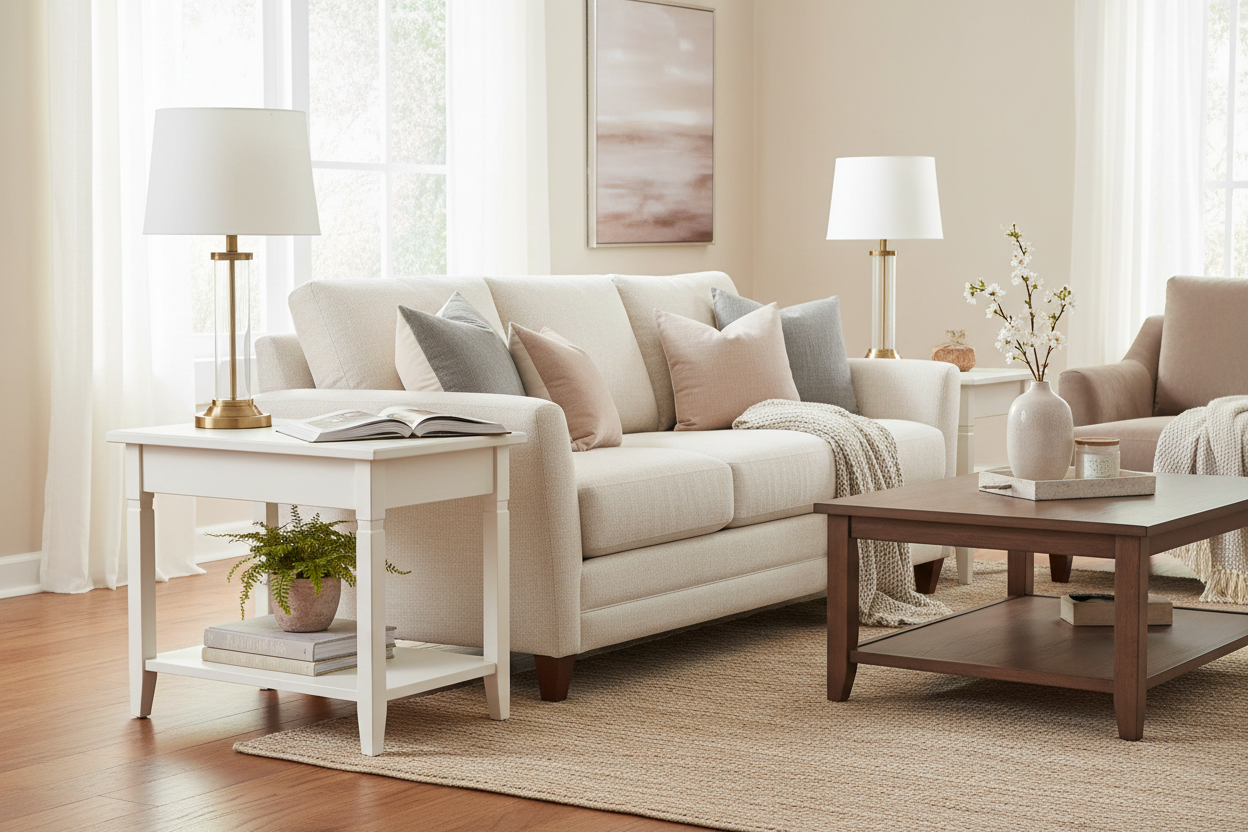
These versatile tables aren't restricted to the front door. In open-concept living rooms, a sofa often floats in the middle of the room to define the lounge area. The back of a sofa can sometimes look stark or unfinished. Placing a small sofa table with drawers directly behind the couch bridges the gap between the seating area and the rest of the room.
This placement serves a dual purpose. Aesthetically, it allows you to add lamps, which brings lighting closer to where you actually sit and read, creating a cozy atmosphere that overhead lights can't match. Functionally, the drawers become accessible storage for living room necessities. You can stash remote controls, coasters, charging cables, or reading glasses right behind you. It keeps the coffee table clear and ensures you never have to hunt for the remote again.
Material Matters: Wood vs. Metal vs. Glass
Visual weight plays a massive role in how big a piece of furniture feels in a room. If your goal is to keep the space feeling airy, look for a console with a glass top or thin metal legs. These materials allow light to pass through, tricking the eye into thinking the piece takes up less space than it actually does.
However, if you need to hide clutter, a solid wood small console table with drawer fronts is superior. Wood adds warmth and texture, grounding the space. If you choose a solid piece for a small room, consider one with legs rather than a solid base or cabinet style. The open space underneath keeps the floor visible, which helps maintain the illusion of a larger room. You can even place baskets underneath for extra storage—perfect for slippers or blankets—without it looking messy.
Organizing the Drawer Itself
The drawer is the hero of this furniture piece, but it can quickly become a junk drawer if not managed correctly. Because console drawers are often shallow, items can slide around every time you open and close them. Using small drawer dividers or shallow trays is the best way to maintain order.
Dedicate specific zones within the drawer. One section is for keys and wallet, another for outgoing mail or stamps, and a third for utility items like a measuring tape or multi-tool. If the table is used as a vanity in a small bedroom, the drawer can hold makeup palettes and brushes, keeping the surface clean for a mirror and a lamp. The goal is to ensure that when you pull that handle, you can instantly find what you need.
Styling Without Crowding
Once you have your table in place, the final step is styling. The temptation with a small surface is to fill it up, but negative space is essential. A good rule of thumb is the "triangle method." Place a tall item (like a lamp or vase) on one side, a medium item (like a stack of books or a framed photo) on the other, and a low item (like a small catch-all tray) in the center or slightly off-center.
This arrangement draws the eye up and creates balance without cluttering the surface. Remember, if you cover the entire top, you lose the functionality of having a "drop zone" when you walk in the door. Leave some empty space. It allows the furniture to breathe and gives you that necessary utility the moment you arrive home.
Frequently Asked Questions
Can I use a console table as a desk in a small apartment?
Yes, but it depends on the leg clearance. Many console tables have a crossbar or shelf at the bottom that might prevent you from sliding a chair underneath. If you find a simple design with open space below and a depth of at least 15 inches, it can double as a compact laptop workspace.
How do I stop a lightweight console table from wobbling?
Narrow tables can sometimes feel top-heavy or unstable, especially on carpet. The best safety measure is to anchor the table to the wall using a simple L-bracket or furniture strap. This prevents wobbling and is a crucial safety step if you have children or pets.
What is the difference between a console table and a sofa table?
Historically, sofa tables were slightly lower and wider to match the scale of a sofa back, while console tables were taller and stood against a wall. Today, the terms are often used interchangeably. The main thing to check is that the table height doesn't exceed the height of your sofa cushions if you place it behind the couch.

Leave a comment
This site is protected by hCaptcha and the hCaptcha Privacy Policy and Terms of Service apply.