










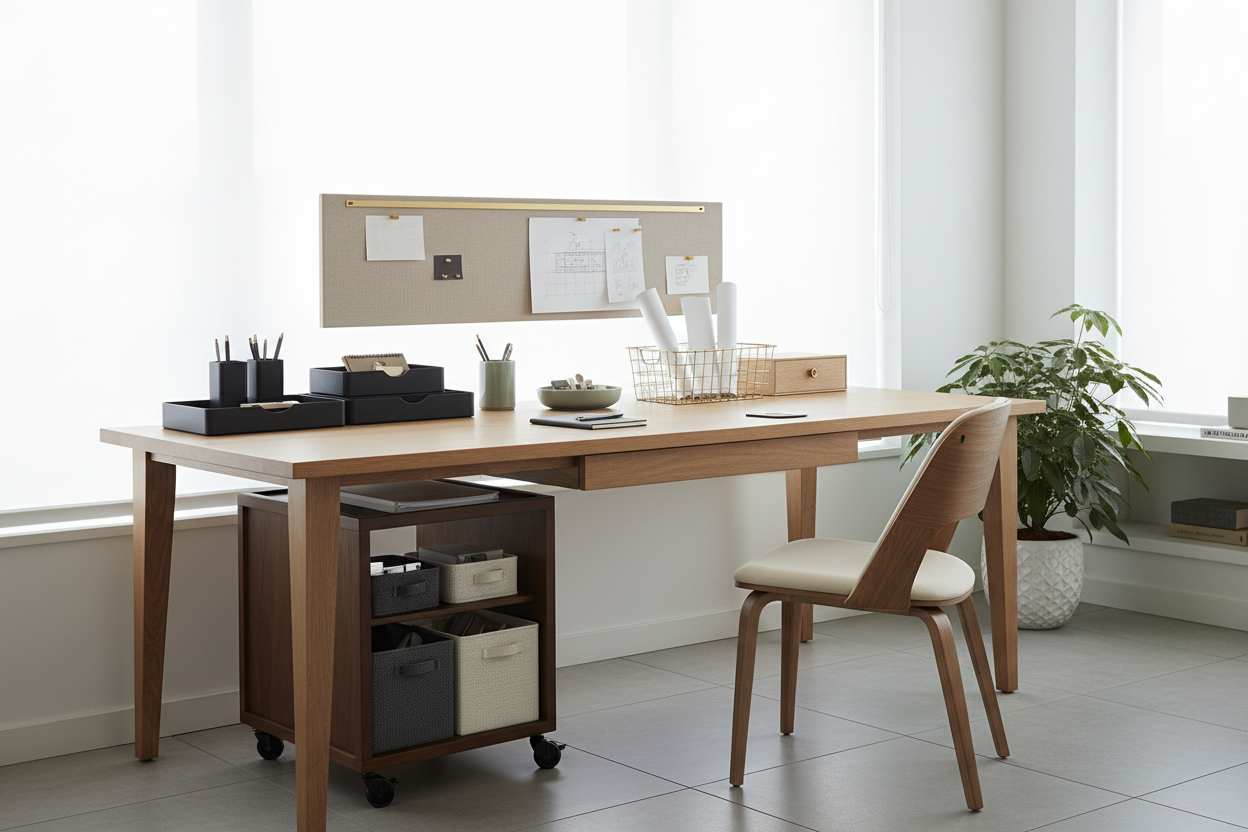
Nothing disrupts a sophisticated interior scheme quite like a chaotic work surface. As designers, we often see beautiful mahogany or oak desks buried under mounds of paper and tangled cables, completely ruining the intended visual balance of the room. Finding the right storage for desks is not merely about tidying up; it is about curating a workspace that promotes mental clarity while respecting the architectural integrity of your furniture.
Quick Decision Guide: Selecting Desktop Organizers
- Material Integrity: Choose materials that complement, not compete with, your desk surface (e.g., leather on glass, wood on white lacquer).
- Vertical vs. Horizontal: Use vertical stackers to preserve precious surface area on smaller desks.
- Visual Weight: Opt for acrylic or glass desktop storage solutions to maintain an airy feel, or solid wood for a grounded, executive look.
- Accessibility: Ensure your most-used items are within the primary reach zone (approx. 14-16 inches from the user).
Balancing Function with Visual Weight
When curating desk office storage, the concept of "visual weight" is paramount. If you are working with a heavy, mid-century modern teak desk, adding bulky plastic bins will cheapen the aesthetic immediately. Instead, look for office desktop storage that echoes the quality of the furniture.
Materiality Matters
For executive spaces, I often recommend leather-wrapped organizers. They offer a tactile softness that contrasts beautifully with the hardness of a laptop or monitor. If you prefer a minimalist silhouette, acrylic on desk storage allows light to pass through, preventing the desk from feeling cluttered even when the organizers are full.
The Ergonomics of Storage on Desk
Placement is just as critical as the product itself. Storage on desk layouts should follow the natural arc of your arm movement. Frequently accessed items—pens, current files, note-taking tools—should reside in the immediate periphery. Less frequently used items should be relegated to the secondary zone or drawers.
Avoid the common mistake of placing tall shelving units directly in front of your dominant hand, which can create a claustrophobic feeling while typing. Instead, anchor taller desktop storage units to the corners to frame the workspace without encroaching on your active zone.
My Personal Take on Storage for Desks
In my years of sourcing furniture, I have learned a hard lesson about desktop storage solutions that manufacturer photos never show you: the "scratch factor." I once specified a stunning set of raw industrial metal organizers for a client with a high-gloss lacquered desk. Within two weeks, the bottom of the metal trays had created micro-abrasions on the lacquer finish every time they were nudged.
Since then, I refuse to buy any desktop accessory that doesn't have a felt, cork, or silicone base. If I find a piece I love that lacks it, I apply adhesive felt pads immediately. Another detail I look for is the sound. Cheap, hollow plastic creates a jarring rattle when you toss a pen into it. High-quality resin, wood, or leather-lined trays absorb the sound, contributing to the quiet, ambient luxury of a well-designed office.
Conclusion
Your workspace should be a reflection of your professional standards and personal style. By selecting high-quality materials and planning your layout with ergonomic intent, you can turn necessary clutter control into a design feature. Invest in pieces that age well, and your desk will thank you.
Frequently Asked Questions
How do I stop on-desk storage from sliding around?
This is a common annoyance. High-quality organizers usually come with weighted bases or non-slip silicone feet. For lighter items, I recommend using museum wax—it secures the object firmly without damaging the finish of your desk.
What is the best storage for small desks?
For compact surfaces, utilize vertical space. Monitor risers with built-in drawers are excellent space-savers. Wall-mounted organizers or pegboards installed directly behind the desk can also clear the surface entirely.
Can I mix metal and wood storage accessories?
Absolutely. Mixing textures adds depth to the design. A good rule of thumb is to match the metal hardware of your desk (drawer pulls or legs) with your wire organizers, while using wood accents that coordinate with the room's flooring or shelving.

Leave a comment
This site is protected by hCaptcha and the hCaptcha Privacy Policy and Terms of Service apply.