










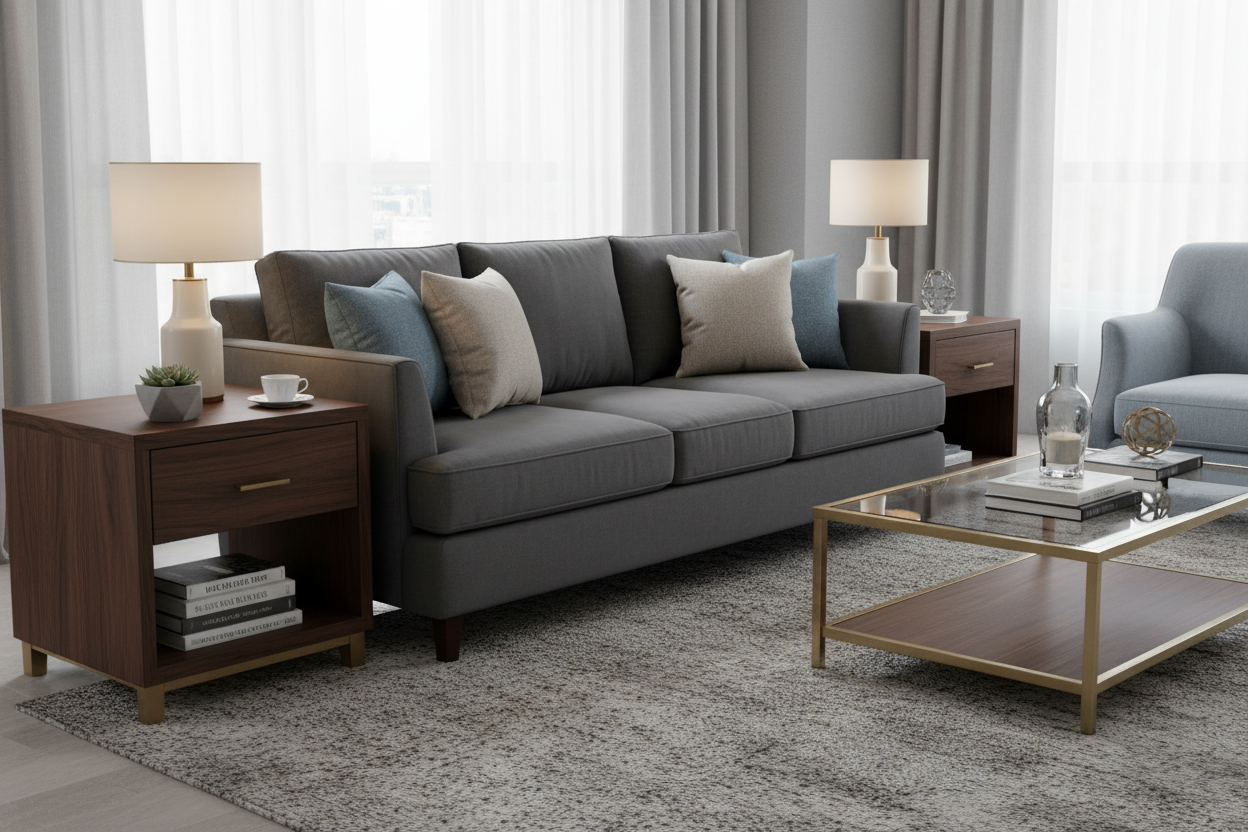
When arranging your living room, the placement of end tables often gets overlooked. Yet, these small furnishing elements can significantly impact both aesthetics and functionality. The question of whether one or two end tables are ideal, or where to put end tables, depends on your space, lifestyle, and design preference.
Are End Tables Necessary?
End tables serve multiple purposes — from holding lamps and decorative items to providing a convenient spot for drinks, books, or remotes. While not strictly necessary, most living rooms benefit from having at least one end table. They add balance to seating arrangements and improve everyday convenience.
How Many End Tables Should You Have?
Determining how many end tables you should have depends on your seating layout. A sofa with a chair on either side might call for two end tables for symmetry. In a smaller living room, one end table might be enough to meet functional needs without crowding the space. There's no strict rule; instead, consider comfort, accessibility, and visual flow.
How Many Side Tables in a Living Room?
Side tables are the broader category, encompassing end tables placed next to seating and accent tables positioned elsewhere. You might have between two to four side tables depending on the size and shape of your living area. For example, a large sectional might need an end table on each end and an additional side table beside an accent chair.
Where Should End Tables Be Placed?
Placement matters. Ideally, end tables should be within easy reach of the person seated. That means placing them next to sofas, between chairs, or beside recliners. An important tip is to align the top of the end table with or slightly below the armrest height. This improves comfort and accessibility.
Where to Place End Tables for Best Flow
Consider traffic flow in the room. Avoid positioning tables where they might obstruct walkways. In open layouts, using a table to put between two chairs can create a cozy conversational nook. Similarly, in long rooms, small end tables can help fill empty corners while maintaining circulation.
Side Table Placement Ideas
One creative approach is to mix materials and shapes for visual interest. For example, place a round end table next to a square sofa or use a mirrored side table to brighten a darker corner. Where to put side table elements also might mean thinking beyond traditional spots — such as next to a window seat or as a perch for plants.
Where to Put Side Tables in the Living Room
In most living rooms, side tables work best when they support seating or serve as secondary surfaces for decor. Place one beside a reading chair with a lamp and book stack. Use another between armchairs to encourage conversation and provide a shared spot for tea or coffee.
Balancing Aesthetics and Function
Design is all about balance. Too many end tables can make the space look cluttered, but too few may leave it feeling incomplete or impractical. Think of side tables as both functional furniture and design elements that enhance your room’s style.
Personal Experience: Finding the Perfect End Table Setup
In my own living room, I started with just one end table beside the sofa. Over time, I realized guests often had nowhere to place their drinks when sitting in the armchair. Adding a small round end table between the two chairs instantly improved the space’s comfort and looked intentional. The secret was choosing end tables that matched in tone but varied slightly in design for subtle visual interest.
Tips Before You Buy
- Measure your seating height to choose an appropriately sized end table.
- Think about storage — drawers or shelves can reduce clutter.
- Consider mobility; lightweight tables can be moved during gatherings.
- Coordinate finishes with existing furniture for harmony.
Final Thoughts
Choosing and placing end tables is about more than filling space; it’s about maximizing function and style. Whether you opt for one or two end tables, or more side tables throughout the living room, make decisions based on your space’s flow, your seating arrangements, and how you live day-to-day.


Leave a comment
This site is protected by hCaptcha and the hCaptcha Privacy Policy and Terms of Service apply.