










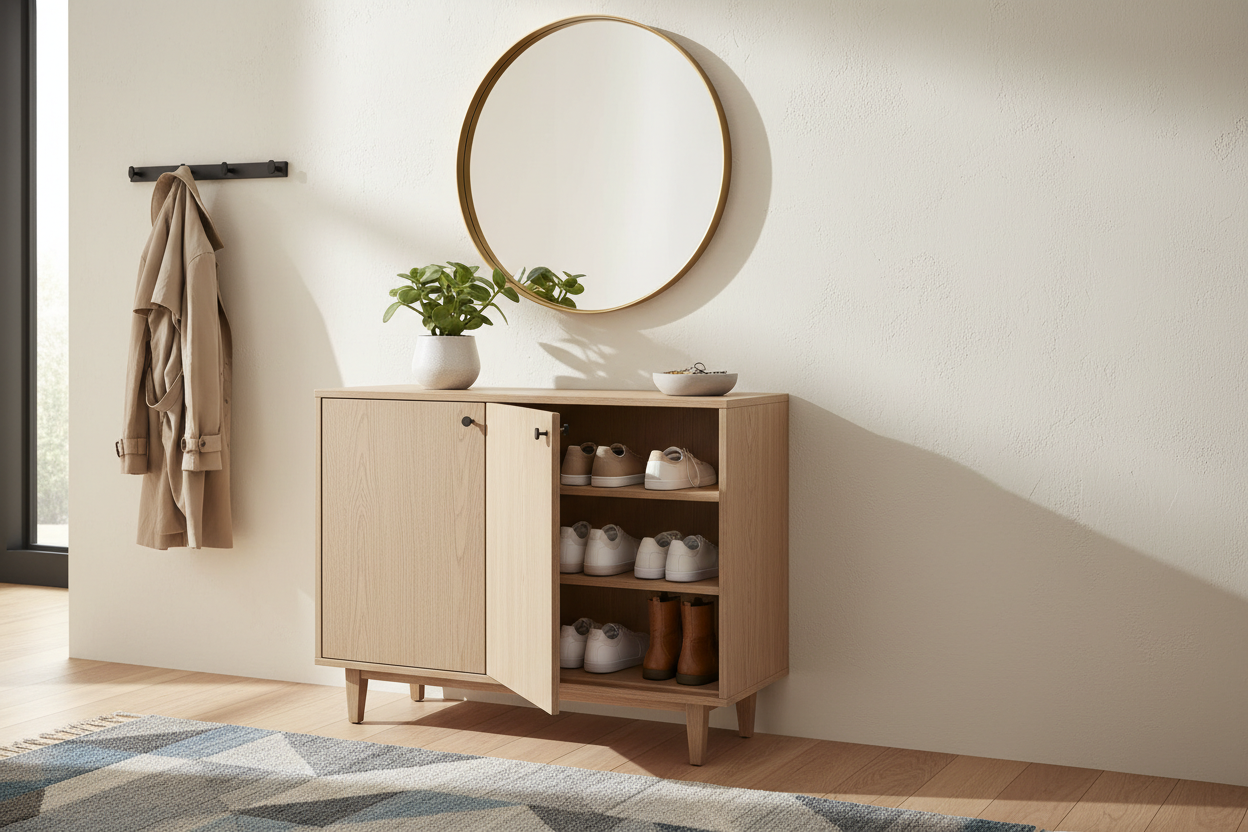
Your front door is the handshake of your home. It sets the tone for everything that follows, yet it is often the most neglected area in terms of organization. If you are tripping over shoes or drowning in a sea of unassigned mail the moment you walk inside, the solution isn't necessarily a bigger house—it is better furniture. Specifically, an entryway cabinet with doors serves as the ultimate barrier between the outside world and your sanctuary.
The primary function of this furniture piece is simple: contain the chaos. While open shelving has had its moment in design trends, it demands perfection. Every item must be curated and aligned because it is always on display. A cabinet with solid doors, however, offers the luxury of imperfection. You can close the doors on the clutter, instantly visually quieting the space.
The Psychology of a Tidy Landing Strip
I learned the hard way that a designated "drop zone" is essential for mental clarity. In my previous apartment, the front door opened directly into the living room. For months, keys ended up on the sofa, mail on the dining table, and bags on the floor. It felt messy even just after cleaning.
Investing in a sturdy foyer cabinet with doors changed the dynamic entirely. Suddenly, there was a specific place for the items that usually migrate around the house. It wasn't just about storage; it was about creating a ritual of arrival and departure. When everything has a home inside a cabinet, you stop losing your keys and start enjoying your space the moment you step across the threshold.
Balancing Storage Needs: Drawers vs. Shelves
When shopping for this furniture, you generally face two main configurations: units strictly with shelves, and the more versatile entryway cabinet with doors and drawers. While shelves are excellent for larger items like boots, bins of winter gear, or backpacks, they often fail when it comes to the small, annoying debris of daily life.
This is where the drawer becomes the MVP of the hallway. An entryway cabinet with drawers and doors offers a hybrid solution. The top drawers catch the "pocket litter"—sunglasses, wallets, loose change, and car keys. Meanwhile, the lower cabinet section handles the bulkier items. If you have a dog, that drawer is the perfect spot for waste bags and extra leashes, keeping them accessible but hidden.
If you choose a unit without drawers, you will likely need to buy baskets or trays to sit on top of the shelves inside. It works, but integrated drawers usually offer a cleaner, more seamless user experience.
Sizing for Traffic Flow
The biggest mistake people make with foyer furniture is ignoring depth. Hallways and entryways are high-traffic zones. A piece that is too deep will make the corridor feel claustrophobic and impede movement. You generally want to maintain at least 36 inches of clearance for walking, though 42 inches is ideal.
For narrower spaces, a 2-door entryway cabinet is often the gold standard. These units typically run about 30 to 40 inches wide and, crucially, tend to have a shallower depth profile than larger buffets or sideboards. A compact 2 door entryway cabinet provides enough surface area for a lamp and a mail tray without dominating the floor plan.
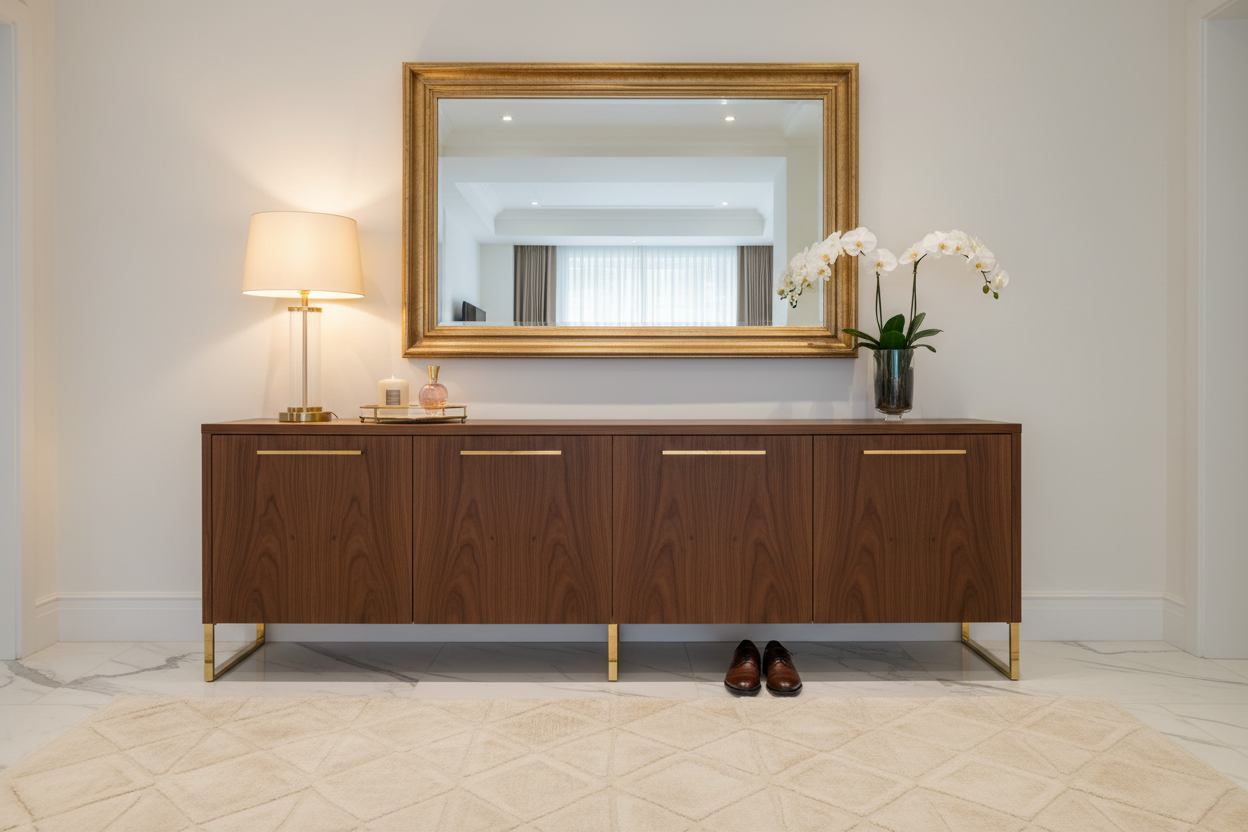
Conversely, if you have a grand foyer with a staircase and high ceilings, a small cabinet will look lost. in those instances, you need a substantial entryway storage cabinet with doors—perhaps a three or four-door credenza—to visually anchor the wall and match the scale of the room.
Style and Material Selection
Since this is the first piece of furniture guests see, aesthetics matter. The utilitarian days of plastic bins are over; today's market offers plenty of options that double as art.
A modern entryway cabinet with doors often features clean lines, handle-less push-to-open mechanisms, and materials like matte lacquer or light oak. These work exceptionally well in contemporary homes where the goal is to keep the look airy and uncluttered. Fluted wood textures or cane webbing on the doors can add warmth and texture without feeling heavy or dated.
For more traditional or farmhouse-style homes, look for foyer cabinets with doors that feature molding details, distressed wood finishes, or antique-style hardware. The material choice also dictates durability. If this is a high-traffic family zone where kids might bang backpacks against the furniture, solid wood or high-quality veneer is far superior to particleboard, which can chip easily at the corners.
Organizing the Interior
Buying the cabinet is step one; organizing it is step two. Without a plan, even the best entryway storage cabinet with doors becomes a black hole where items go to vanish. To maximize the utility of the interior space, consider these adjustments:
- Adjustable Shelving: Ensure the shelves inside can be moved. You might need a tall space for boots and a narrow space for a basket of hats.
- Vertical Dividers: If you are storing mail or paperwork inside the cabinet, use vertical file holders. Stacking papers horizontally is a recipe for losing important bills.
- Labeling: It might seem overkill, but if you have a family, labeling bins inside the cabinet ensures that the kids' gloves don't end up mixed with the dog toys.
Lighting and Decor
Once the practical storage is sorted, the top surface becomes a prime styling opportunity. A mirror hung above your cabinet does double duty: it allows for a final outfit check before leaving and bounces light around a typically dark part of the house. Flank the mirror with a table lamp or sconces to create a welcoming glow.
Keep the decor on top minimal. Remember, this surface will naturally attract clutter. If you fill it with picture frames and vases, there is no room to set down the mail. A simple tray for immediate drop-offs and perhaps a plant for life is usually sufficient.
Ultimately, the right cabinet transforms your entry from a pass-through space into a functional room of its own. Whether you opt for a sleek modern entryway cabinet with doors or a robust vintage piece, the goal remains the same: a calm, organized welcome home.
Frequently Asked Questions
What is the ideal depth for an entryway cabinet?
For most standard hallways, a depth of 12 to 15 inches is ideal as it prevents the space from feeling cramped. If you have a large, open foyer, you can go deeper (up to 18-20 inches), effectively using a standard sideboard or buffet size.
Can I store shoes in a standard entryway cabinet?
Yes, but you may need to adjust the shelving. Standard cabinets often have shelves spaced for dishes or general storage, so you might need to remove a shelf or lower one to accommodate taller boots or high-top sneakers comfortably.
How do I protect the top of the cabinet from scratches?
Since keys and bags can scratch wood finishes, place a decorative tray or a table runner on the surface. This creates a designated landing zone for hard objects while protecting the furniture underneath.

Leave a comment
This site is protected by hCaptcha and the hCaptcha Privacy Policy and Terms of Service apply.