










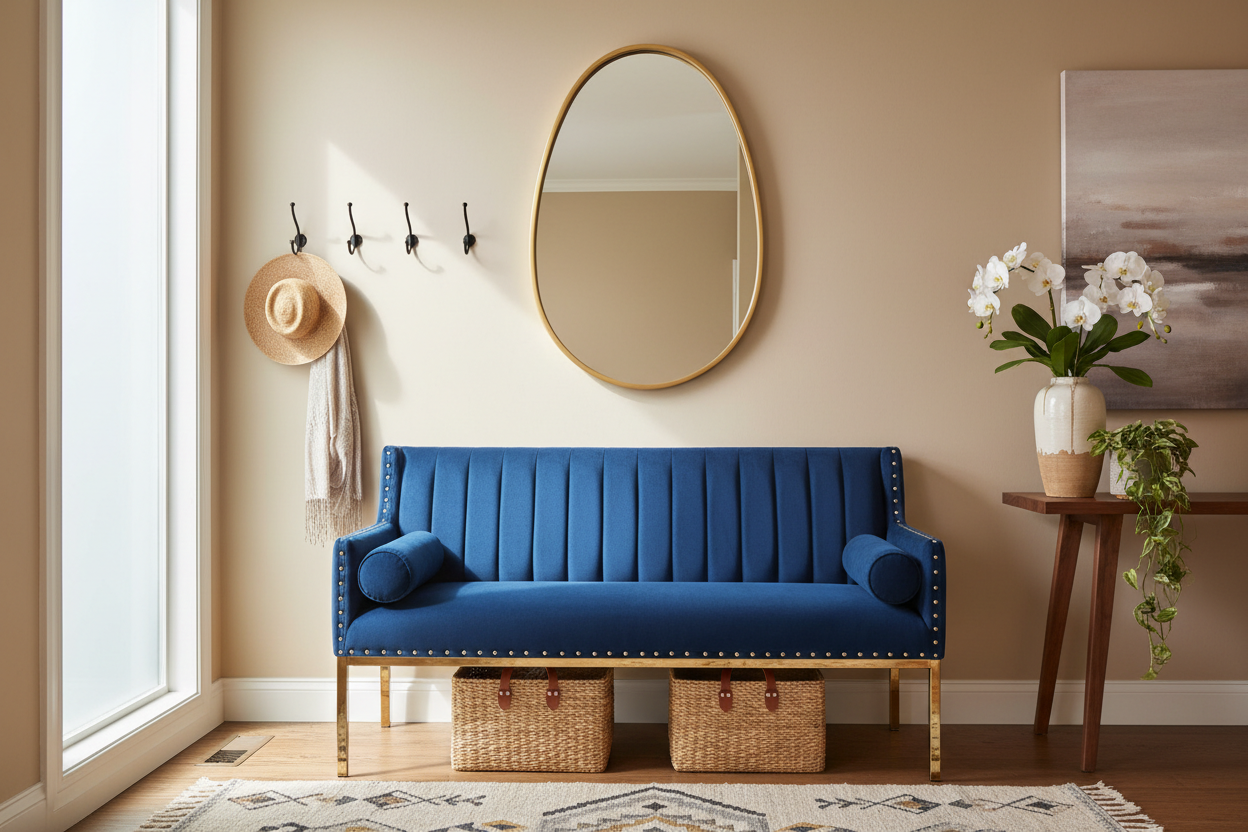
Your foyer is the handshake of your home. It sets the mood the moment the door swings open, yet it often becomes a dumping ground for mail and shoes rather than a curated introduction to your living space. The quickest way to resolve this identity crisis is by anchoring the area with a piece of furniture that bridges the gap between utility and high-end design. An elegant entryway bench does exactly that—it provides a practical spot to pause while establishing a sophisticated tone for the rest of the house. Choosing the right one isn't just about finding a seat; it's about selecting a focal point that balances scale, texture, and everyday durability.
When selecting seating for this transitional space, prioritize the silhouette and material over pure storage volume if you want to maintain a formal aesthetic. While heavy wooden chests have their place in mudrooms, a formal hallway benefits from furniture with legs, which creates a sense of airiness and flow. Look for pieces that complement your home's architectural details, whether that means a tufted velvet seat for a Victorian renovation or a sleek, low-profile slat bench for a mid-century modern dwelling. The goal is to invite guests in without blocking the traffic flow.
Lessons Learned from a Hallway Renovation
I learned the hard way that dimensions on paper don't always translate perfectly to reality. A few years ago, I fell in love with a stunning, high-backed settee that I was convinced would be the crown jewel of my front hall. I measured the length perfectly, ensuring it fit between the doorframe and the coat closet. However, I completely neglected the depth. Once it arrived, I realized that while it fit technically, it visually choked the hallway. You had to awkwardly shuffle sideways to get past it with groceries.
The lesson stuck: visual weight is just as important as physical inches. I eventually swapped it for a backless, upholstered bench with slender brass legs. The swap immediately opened up the space, allowing light to travel under the furniture and making the narrow corridor feel twice as wide. Always tape out the footprint on your floor with painter's tape before purchasing, and walk past it a few times to ensure your shins—and your layout—remain safe.
Balancing Form and Function
Many homeowners assume that choosing a decorative entryway bench means sacrificing usability, but that is rarely the case in modern furniture design. You can find pieces that offer hidden utility without looking utilitarian. For example, a bench featuring a flip-top seat upholstered in performance linen allows you to stash winter scarves or dog leashes out of sight while maintaining a clean, tailored look. The key is to avoid bulky, blocky plastic bins underneath. If you need open storage, opt for a bench with a slatted bottom shelf where you can place woven seagrass baskets or leather bins. This keeps the clutter contained but texturally interesting.
The frame material plays a massive role in the longevity of the piece. Solid hardwoods like walnut or white oak endure the occasional knock from a vacuum cleaner better than veneers. If you prefer metal, ensure the finish is high quality; unlacquered brass develops a lovely patina over time, while matte black powder coating offers a resilient, contemporary edge. The upholstery is equally critical. A foyer sees high traffic, so if you love the look of light fabrics, ensure they are treated for stain resistance or opt for a high-quality faux leather that wipes clean.
Exploring Styles and Silhouettes
The market for decorative benches entryway furniture is vast, ranging from minimalist to ornate. To narrow down your search, look at the legs and the fabric tufting. A bench with cabriole legs and deep button tufting leans towards traditional French or English cottage styles. These pieces add softness and romance to a space that is often dominated by hard surfaces like tile or hardwood floors. Conversely, a waterfall bench—where the material flows seamlessly from the seat down the sides—creates a modern, sculptural effect perfect for contemporary apartments.
Don't be afraid to mix eras. A sleek, acrylic bench can look stunning against traditional wainscoting, creating a transitional vibe that feels current yet timeless. Alternatively, a distressed timber bench can add much-needed warmth and organic texture to a stark, industrial loft. The contrast is often what makes the design feel professional rather than catalog-copied.
Styling the Surrounding Space
A bench rarely looks good floating in isolation. To integrate it into the room, treat the wall behind it as a canvas. A large, round mirror placed above the bench serves a dual purpose: it allows for a final outfit check before leaving and reflects light to make the foyer feel larger. Flanking the mirror with sconces or placing a tall floor lamp next to the bench creates a vertical draw that heightens the room.
Textiles are your best tool for softening the look. A lumbar pillow or a casually draped throw blanket can introduce color and pattern without overwhelming the space. If the bench has open legs, consider the floor beneath it. A runner rug should extend past the bench on both ends to ground the furniture arrangement. This layering of textures—wood, glass, fabric, and wool—creates a welcoming atmosphere that feels lived-in and luxurious.
Final Considerations for Placement
Traffic flow dictates placement. In a narrow hallway, a shallow bench (14 to 16 inches deep) is often the maximum you can accommodate. If you have a grand, open foyer, a round ottoman-style bench placed in the center of the room under a chandelier can act as a dramatic centerpiece, much like a hotel lobby. Regardless of where it sits, ensure there is at least 36 inches of clearance for walking paths. The bench should invite you to sit, not act as a barrier to the rest of your home.
Frequently Asked Questions
What is the ideal height for an entryway bench?
Most standard benches sit between 18 and 20 inches high. This height is comfortable for the average adult to sit and tie shoes. If you plan to use it primarily for decorative purposes or for children, a lower profile of 16 inches can work well and looks less imposing.
How do I choose the right fabric for a high-traffic area?
Performance fabrics like Crypton or Sunbrella are excellent choices because they resist stains and are easy to clean. Alternatively, high-quality leather or vinyl is incredibly durable and develops character with age, making it perfect for homes with pets or frequent guests.
Can I put a bench in a small entryway?
Absolutely, but scale is everything. Look for "backless" designs or benches with open, slender legs to maintain visual transparency. A bench with a small footprint, such as 36 inches wide, can provide function without dominating a compact vestibule.


Leave a comment
This site is protected by hCaptcha and the hCaptcha Privacy Policy and Terms of Service apply.