










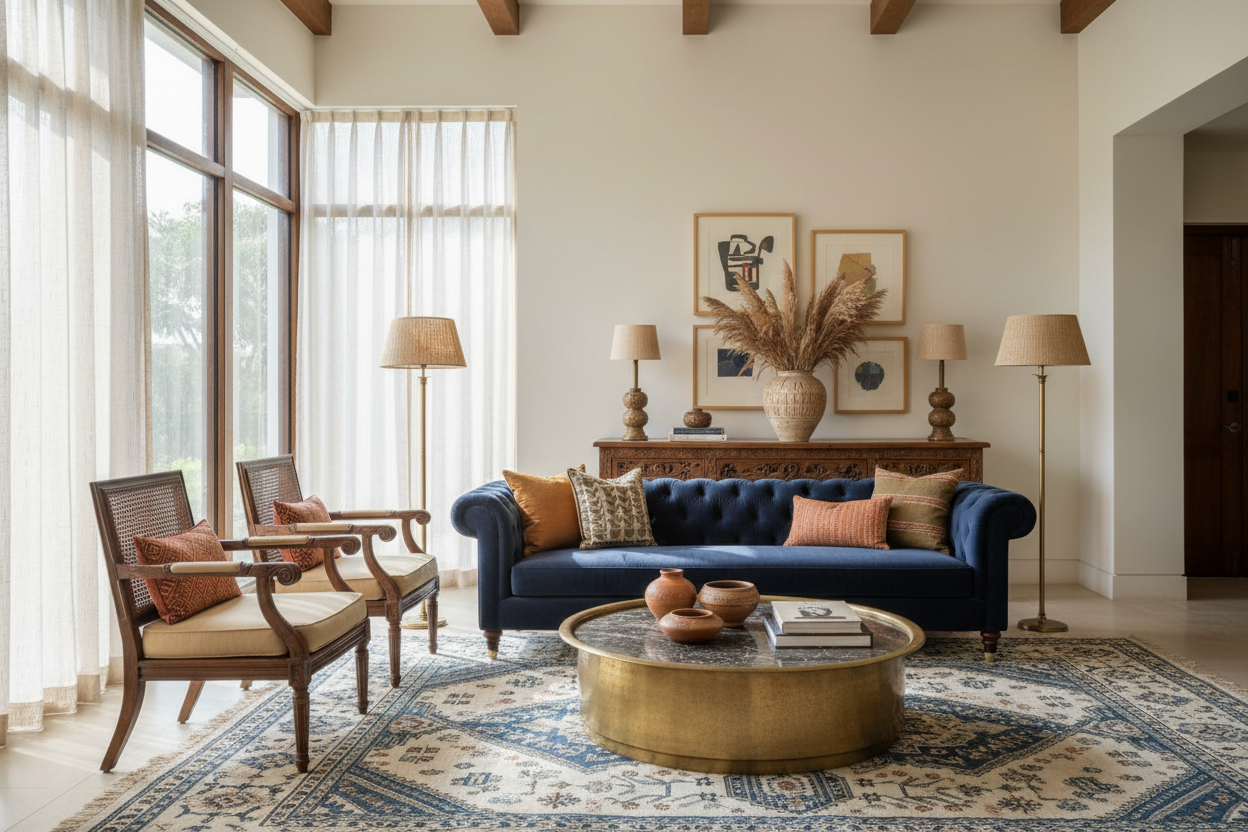
Walking into a showroom or scrolling through endless online catalogs can feel overwhelming. You spot a velvet sectional that looks stunning in a studio photo, but will it survive the humidity of a Mumbai monsoon or the dust of a Delhi summer? Designing a home here isn't just about aesthetics; it is about resilience. Choosing the right furniture for living room india requires a delicate balance between visual elegance and the rigorous demands of our daily lives.
Key Features to Look For
- Material Resilience: Prioritize hardwoods like Teak (Sagwan) or Sheesham over untreated softwoods to withstand humidity and pests.
- Upholstery GSM: Look for fabrics with a high Grams Per Square Meter (350+) count for durability against friction and fading.
- Ergonomic Scale: Ensure seat depth (typically 22-24 inches) complements the average height of your family members.
- Maintenance Level: Opt for raised legs (at least 4 inches) to allow brooms and robotic vacuums to pass underneath easily.
Mastering Materiality in the Indian Context
When scouting for indian living room furniture, the climate is your silent design partner. In coastal regions, metal accents can rust, and untreated pine can warp. This is why seasoned hardwoods remain the gold standard.
Wood Selection: Solid vs. Engineered
While engineered wood offers a sleek, modern finish at a lower price point, it often lacks the longevity required for a "forever home." For structural frames, insist on kiln-dried solid wood. It resists the expansion and contraction caused by fluctuating temperatures. If you prefer the look of living room furniture in india that leans contemporary, consider pieces with high-quality veneers over marine-grade plywood, which offers better moisture resistance than MDF.
Spatial Planning and Visual Weight
A common error I see in urban apartments is overcrowding. A heavy, rolled-arm sofa set might look regal, but in a 12x14 foot room, it suffocates the space. We call this "visual weight."
The Silhouette Strategy
To make a room feel expansive, choose furniture with visible legs. When the eye can see the floor continuing underneath the sofa or armchair, the brain perceives the room as larger. Mix silhouettes: if your sofa is blocky and grounded, pair it with armchairs that have slender, tapered legs to create a dynamic rhythm.
Upholstery: The Tactile Experience
Fabric choice defines comfort. While leather is easier to clean—a massive plus for households with children—it can feel sticky during humid months without air conditioning. Breathable blends like cotton-linen or high-performance polyesters are often superior choices for furniture for living room india. They offer the soft hand-feel of natural fibers but come with stain-resistant treatments that handle the occasional spilled chai.
My Personal Take on Furniture for Living Room India
Lessons from My Own Projects: The "Saree Test"
Early in my career, I designed a minimalist living area for a client in Bangalore using low-slung, European-style seating. It looked magazine-ready. However, three months later, the client called me with a specific regret. Her mother, who wore sarees and had minor knee issues, found it nearly impossible to stand up from the 15-inch seat height gracefully.
Since then, I apply what I call the "Saree Test." I prioritize sofas with a seat height of 17 to 18 inches and firmer foam density (32-40 density). It sounds technical, but that firmness provides the necessary push-back for older family members to rise easily. Furthermore, I now avoid textured velvets in ground-floor apartments; I've learned the hard way that they act as magnets for fine dust, which is notoriously difficult to vacuum out of the pile.
Conclusion
Curating your space is a journey, not a race. By focusing on seasoned materials, appropriate scale, and practical upholstery, you ensure your investment stands the test of time. Don't just fill a room; create a sanctuary that serves your lifestyle.
Frequently Asked Questions
1. Which wood is best for Indian living room furniture?
Teak (Sagwan) and Sheesham (Indian Rosewood) are superior choices due to their natural oil content, which makes them resistant to termites and moisture. Ensure the wood is kiln-dried to prevent warping.
2. How do I arrange furniture in a small Indian apartment hall?
Pull furniture away from the walls by even two inches to create a sense of depth. Use a sectional sofa to maximize corner space and use multifunctional pieces, like ottomans with storage, to reduce clutter.
3. What is the ideal budget allocation for living room furniture?
Allocate 40-50% of your budget to the sofa, as it takes the most physical wear. Spend 30% on accent chairs and tables, and reserve the remaining 20% for soft furnishings and lighting which can be updated more frequently.

Leave a comment
This site is protected by hCaptcha and the hCaptcha Privacy Policy and Terms of Service apply.