










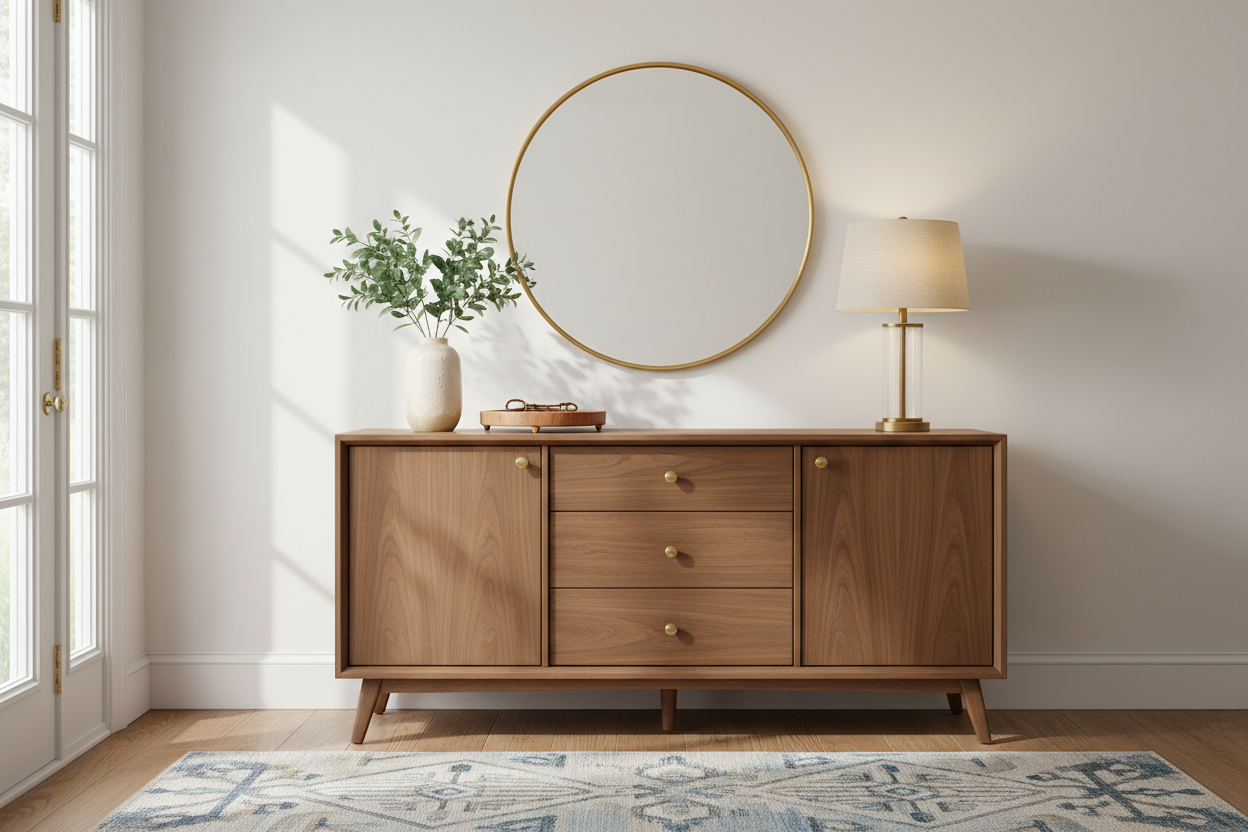
Your front door opens, and the first thing you see sets the tone for your entire home. For many, this space is a chaotic landing strip of tossed keys, unopened mail, and kicked-off shoes. The solution isn't just cleaning harder; it is about having the right furniture to absorb the mess while looking intentional. A credenza for entryway use is the most effective way to bridge the gap between heavy storage needs and high-end design aesthetics.
Unlike an open console table where clutter is visible, an entryway credenza offers closed cabinetry and drawers. It hides the unsightly necessities of daily life while providing a surface for decor that expresses your personality. Whether you are working with a sprawling foyer or a tight hallway, selecting the right piece involves balancing depth, durability, and style.
Why Closed Storage Wins in the Foyer
I realized the importance of this furniture piece after moving into a house with no coat closet near the front door. For months, a simple open table served as the drop zone. Within days of cleaning it, the bottom shelf would inevitably become a graveyard for umbrellas, dog leashes, and reusable shopping bags. It looked messy, and it made coming home feel stressful.
Swapping that open table for a substantial entry credenza changed the dynamic entirely. Suddenly, the dog leashes had a drawer. The winter hats went behind a cabinet door. The visual noise vanished. This is the primary advantage of a credenza: it allows you to maintain a minimalist, curated look on the outside, regardless of how disorganized the contents are on the inside.
Beyond just hiding clutter, these pieces anchor the space. A foyer can often feel transient—a place you just walk through. Adding a solid piece of furniture with visual weight turns it into a legitimate room. It signals to guests that the design experience begins immediately, not just when they reach the living room.
Navigating Dimensions: The Depth Dilemma
The biggest mistake homeowners make when buying an entry credenza is ignoring the depth. Standard dining room credenzas are often 18 to 22 inches deep. In a hallway or foyer, that depth can significantly encroach on your walking path, making the entrance feel claustrophobic.
For most corridors, you want to aim for a piece that is between 12 and 16 inches deep. If you are hunting for a small entryway credenza, look for pieces specifically labeled as "slim" or "shallow." You need enough clearance to open the door fully and walk past with bags of groceries without hip-checking the corner of the unit. Height is equally important; the ideal surface height is around 30 to 34 inches, which is comfortable for dropping keys without bending down.
Measure your space and then use painter's tape to mark the outline of the potential furniture on the floor. Leave the tape there for a few days. Walk past it. If you find yourself instinctively dodging the tape, the piece is too big.
Style Profiles: From Mid-Century to Farmhouse
Once you have your measurements locked in, the fun part begins: choosing the aesthetic. The furniture should whisper, not scream, about the style of the rest of the house. If your living room features sleek lines and geometric shapes, a modern entryway credenza with flat-front doors and minimal hardware will create a seamless transition.
The Modern Aesthetic
Modern designs often utilize materials like walnut, teak, or lacquered finishes. A floating credenza—one that mounts to the wall without legs—is a brilliant hack for modern homes. It keeps the floor visible, which tricks the eye into thinking the room is larger than it is. This is particularly effective in apartment entryways where floor space is premium real estate.
Traditional and Transitional
If your home leans more traditional, look for a credenza with molding details, brass hardware, or a distressed wood finish. These pieces add warmth and character. A heavy oak piece can ground a space that feels too airy or cold. Don't be afraid to mix eras, either. An antique wooden sideboard can look stunning in a contemporary white hallway if styled correctly.
The Art of Styling the Surface
You have the storage sorted, but the top surface is where the design magic happens. The goal is to create a vignette that is functional yet beautiful. Avoid covering every square inch; negative space allows the eye to rest.
Start with lighting. A table lamp adds a soft, welcoming glow that overhead lights can't replicate. It also adds height to your arrangement. If space is tight, wall sconces installed above the unit work beautifully.
Next, add a "catch-all" vessel. Even with drawers, you will naturally drop things on the surface. A ceramic bowl, a leather tray, or a woven basket gives those items a home so they look intentional rather than accidental. This is the secret to keeping a modern entryway credenza looking sharp—containing the chaos.
Finally, anchor the setup with a mirror or art. A large mirror is the oldest trick in the designer's book for a reason: it reflects light and makes narrow hallways feel twice as wide. Hang the mirror so the bottom is 6 to 8 inches above the top of the credenza to connect the two elements visually.
Material Durability and Maintenance
Entryways are high-traffic zones. Your furniture will get bumped by suitcases, splashed by wet raincoats, and scratched by keys. When selecting a credenza for entryway placement, prioritize hardy materials. Solid wood or high-quality veneers are generally more forgiving than glass or high-gloss lacquer, which show fingerprints and scratches instantly.
If you fall in love with a piece that has a delicate top, consider having a piece of custom glass cut to protect it, or use a runner. Metal credenzas are another excellent option for durability, offering an industrial edge that is virtually indestructible against the wear and tear of family life.
The Ecosystem of the Foyer
Your credenza does not live in a vacuum. It needs to work in tandem with other elements. If you have hard floors, place a runner rug in front of the credenza. This adds texture and protects the floor from the pivot traffic that happens when you stop to open a drawer.
Consider the vertical space as well. Hooks on the wall next to the unit can handle the overflow of coats that won't fit inside. A basket tucked next to the legs can hold umbrellas or tall items. By treating the furniture as part of a complete system, you ensure your entry remains functional during the morning rush and serene when you return home at night.
Frequently Asked Questions
What is the difference between a console table and a credenza?
A console table is typically open, featuring legs and a top surface, sometimes with shallow drawers. A credenza provides closed storage with cabinet doors and deeper shelving, making it better suited for hiding clutter and storing larger items.
Can I use a TV stand as an entryway credenza?
Yes, you absolutely can. Many TV stands have the right low-profile height and depth for a hallway. Just ensure the back is finished if it will be visible, and check that the style doesn't look too "media center" for a formal entry.
How do I stop my entryway credenza from looking cluttered?
Use the "one in, one out" rule for the surface and rely on a dedicated tray for small items like keys and coins. Utilize the internal storage for everything else, using drawer dividers or baskets inside the cabinets to keep the hidden mess organized.

Leave a comment
This site is protected by hCaptcha and the hCaptcha Privacy Policy and Terms of Service apply.