










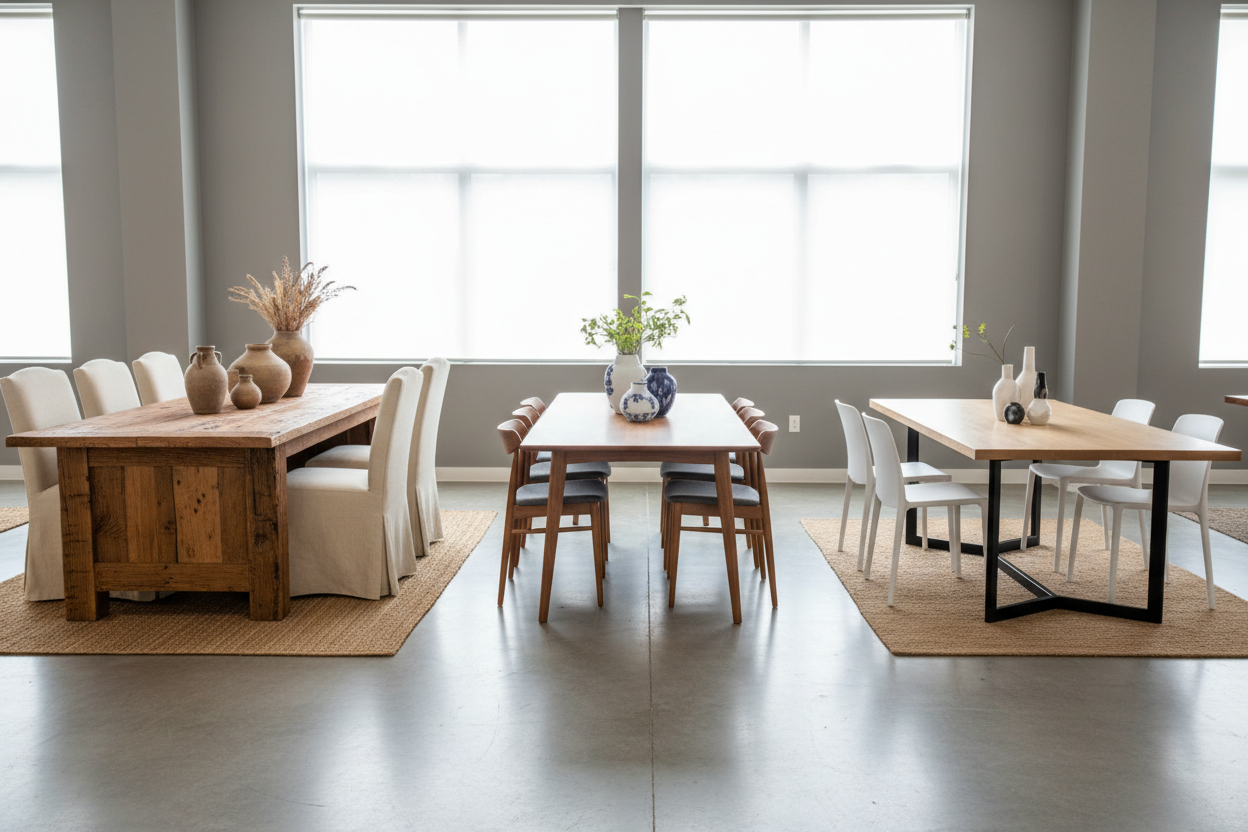
Wood anchors a room in a way that glass, metal, or plastic simply cannot. It brings an organic warmth, a sense of history, and a tactile quality that invites people to gather. Whether you are furnishing a sprawling dining hall or a compact apartment nook, the right timber piece serves as both a functional surface and a stylistic statement. Finding the perfect balance between durability and aesthetics requires looking past the finish and understanding the character of the grain itself.
The Heart of the Home: Dining Room Inspirations
The dining table is often the largest furniture investment you will make, second only to a sofa. Because it commands so much visual real estate, your choice here sets the tone for the entire gathering space. Current wood dining table ideas are moving away from the heavy, high-gloss mahogany sets of the past toward more textured, matte, and natural appearances.
One specific trend gaining traction is the use of reclaimed timber. There is something profoundly grounding about sitting at a table made from barn beams or old factory floors. These pieces carry scars, nail holes, and distinct weathering that tell a story. If you want a conversation starter, a reclaimed oak or pine table paired with modern, sleek chairs creates a dynamic contrast. The roughness of the wood softens the stark lines of contemporary design, preventing the room from feeling sterile.
For those who lean toward minimalism, Scandinavian-inspired wooden dining table design ideas offer a cleaner approach. Think light woods like ash, maple, or white oak with tapered legs and beveled edges. These tables often feature a "soap finish" or a clear matte oil, which keeps the wood looking raw and natural while still offering protection. This style works exceptionally well in smaller spaces because the light color and airy base structure don't visually clutter the room.
My Experience with Walnut
I learned the value of choosing the right wood the hard way. Years ago, I bought a soft pine table because it was affordable and looked charmingly rustic. Within six months, it was covered in dents from my keys, pens, and even a heavy ceramic bowl I set down too quickly. When I finally upgraded to a solid black walnut table, the difference was night and day. Walnut is hard enough to resist daily abuse but finishes to a velvet-smooth texture. The rich, chocolate tones developed a golden patina over time that actually made the table look better with age, not worse. That experience taught me that spending more upfront for a hardwood species like walnut or white oak is actually cheaper in the long run than replacing softwoods every few years.
Living Area and Accent Tables
Moving beyond the dining room, wood table ideas for the living area allow for more experimental shapes. Coffee tables and side tables are lower risk, meaning you can get bolder with the design. The "live edge" look remains a favorite for coffee tables. This design keeps the natural edge of the tree—bark removed—along the sides of the slab. It celebrates the irregularity of nature. A live edge slab on hairpin iron legs bridges the gap between industrial and rustic styles effortlessly.
Another area ripe for creativity is the use of geometric bases. Traditional four-legged tables are functional, but wooden table design ideas involving pedestal bases, slat-stack bases, or sculptural geometric forms turn a simple surface into a piece of art. A round coffee table with a tambour (slatted) wood base adds texture and hides visual weight, making it a smart choice for cozy living rooms.
Mixing Materials for Modern Appeal
Wood doesn't have to stand alone. Some of the most striking designs come from mixing organic timber with industrial materials. A thick slab of acacia wood resting on a concrete base creates a brutalist yet warm aesthetic. Alternatively, inlay work—where brass or copper lines are embedded into the tabletop—adds a touch of luxury without overwhelming the grain.
Glass tops over wooden bases are another practical avenue. If you have a beautiful sculptural wooden base—perhaps a driftwood cluster or an intricate mid-century modern spider leg design—a glass top allows you to admire the woodwork from every angle while protecting the timber from spills and heat rings.
Choosing the Right Finish and Grain
The longevity and vibe of your table depend heavily on the finish. High-gloss polyurethane creates a hard shell, but it can look plastic and makes spot-repairs difficult. If you scratch a high-gloss table, you often have to refinish the whole surface. Oil-based finishes, like Tung oil or Danish oil, penetrate the wood. They offer a lower sheen that feels more natural to the touch. The beauty of an oiled table is that if you get a scratch, you can usually sand that specific spot and re-oil it without stripping the entire piece.
When looking for wooden dining table design ideas, pay attention to the grain pattern. "Quarter-sawn" lumber produces straight, linear grain lines which look tidy and modern. "Flat-sawn" or "plain-sawn" lumber shows the cathedral arches and swirls of the grain, offering a more traditional or rustic appearance. Neither is better than the other, but they create very different atmospheres in a room.
Custom vs. Store-Bought
We live in a golden age of woodworking where accessing custom furniture is easier than ever. While big-box stores offer convenience, commissioning a local woodworker allows you to specify the exact dimensions and wood species. This is particularly useful if you have an oddly shaped dining nook or need a specific height for a coffee table.
However, if you are browsing ready-made options, check the construction. Look for kiln-dried wood, which prevents warping and cracking as humidity levels change in your home. Check the joinery; dovetail or mortise-and-tenon joints are indicators of quality that will outlast simple screws or staples.
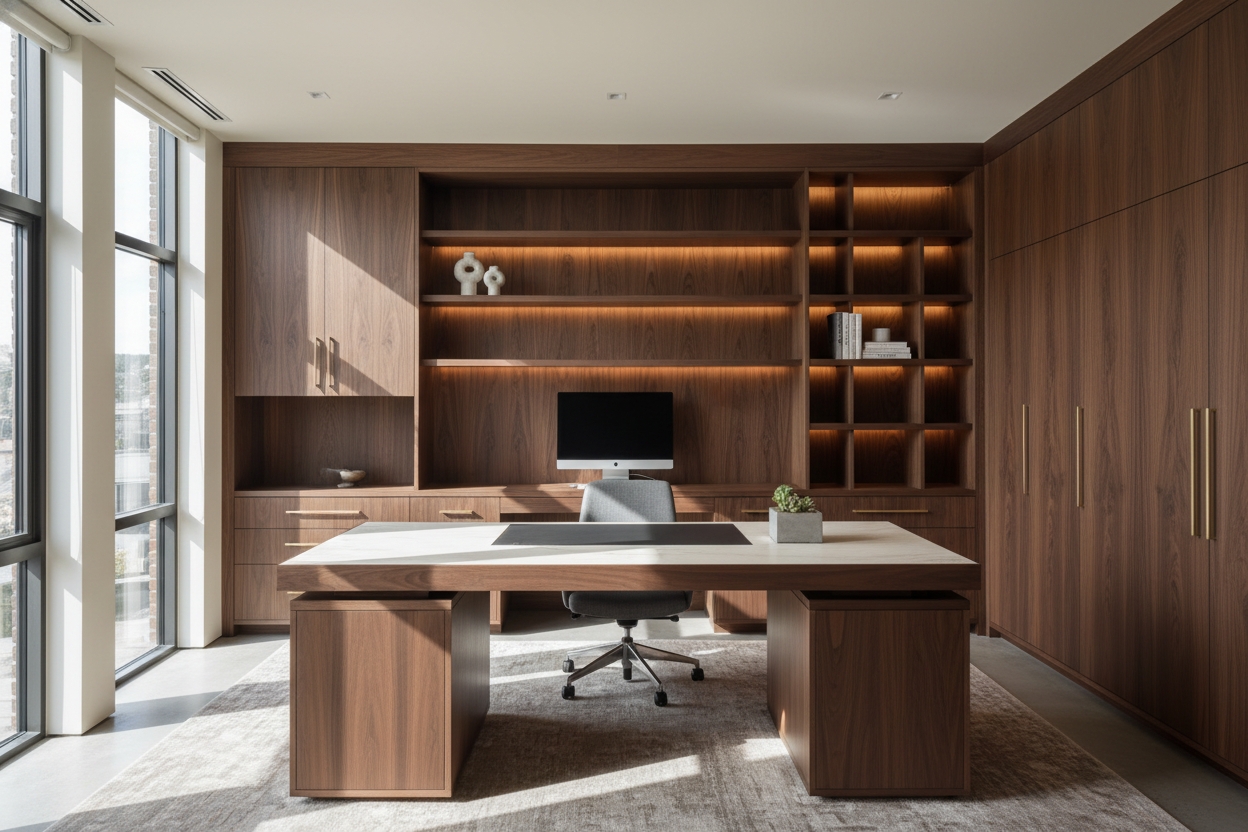
Whether you choose a sleek mid-century modern walnut desk or a chunky farmhouse oak dining table, the goal is to select a piece that ages gracefully with your home. Wood is a living material that changes over time, and choosing the right design ensures that it only gets more beautiful with every passing year.
Frequently Asked Questions
How do I mix different wood tones in the same room?
The key to mixing woods is to keep the undertones consistent. Mix warm tones (like cherry, mahogany, and warm oak) with other warm tones, and cool tones (like ash, maple, or grey-stained woods) with other cool tones. To prevent a chaotic look, try to have one dominant wood tone and use the others as accents.
What is the best wood for a dining table if I have young children?
Hardwoods with a high Janka hardness rating, such as white oak, hard maple, or hickory, are best for resisting dents and scratches from toys and silverware. A matte, distressed, or wire-brushed finish is also a smart choice as it hides imperfections much better than a smooth, high-gloss surface.
How often does a solid wood table need to be refinished?
A high-quality solid wood table shouldn't need a full refinish for decades unless it suffers major damage. For oil-finished tables, applying a fresh coat of maintenance oil once a year or when the wood looks dry will keep it protected and looking vibrant without requiring sanding.

Leave a comment
This site is protected by hCaptcha and the hCaptcha Privacy Policy and Terms of Service apply.