










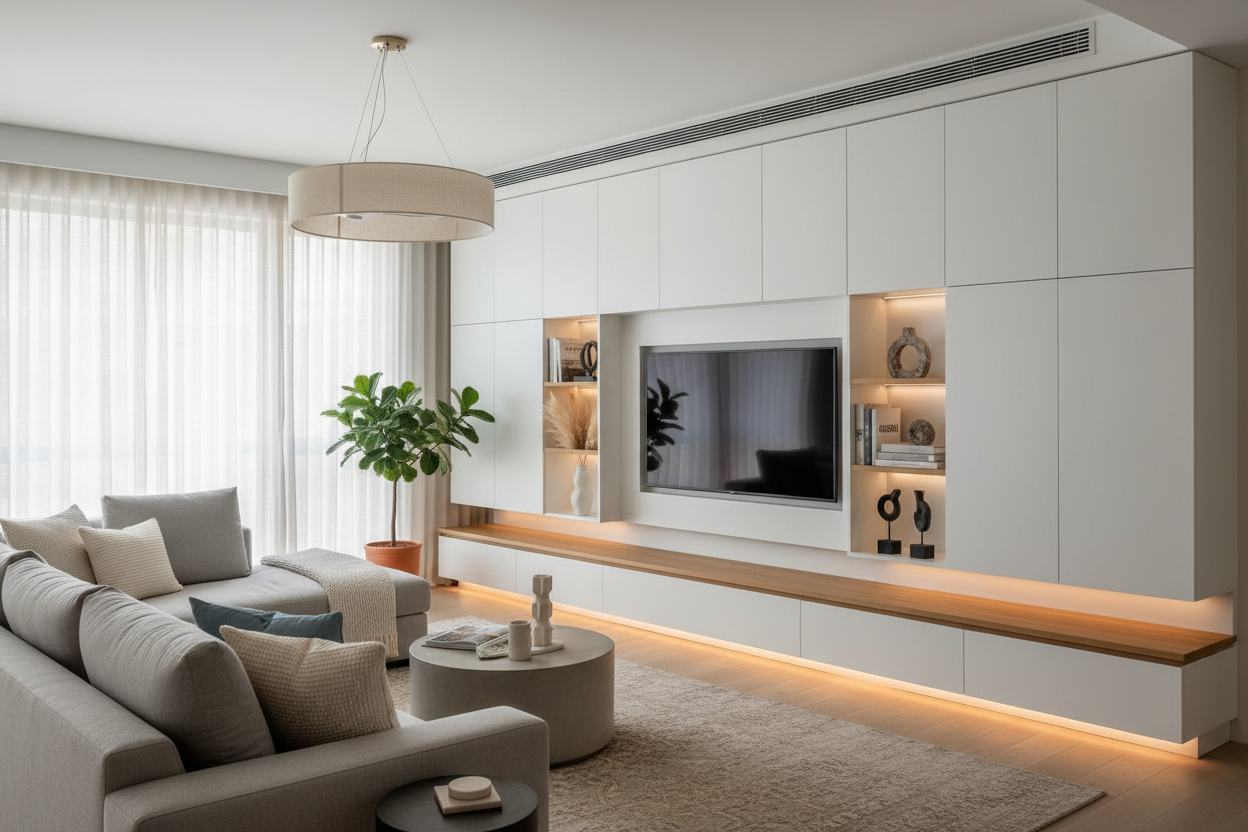
The living room is the gravitational center of the home. It is where you unwind, entertain, and inevitably, where a significant amount of daily clutter accumulates. Finding the balance between a space that feels lived-in and one that feels chaotic usually comes down to a single piece of furniture: the storage cabinet. While open shelving has had its moment in the design spotlight, the practical reality of maintaining a tidy home often calls for a more forgiving solution. You need places to put things away, completely out of sight, while keeping them accessible.
Choosing the right furniture requires understanding your own habits. If you are not the type of person who wants to artfully arrange book spines by color or dust knick-knacks every weekend, open units will likely frustrate you. This is where living room storage cabinets with doors become the unsung heroes of interior design. They provide a visual anchor for the room and, more importantly, a way to instantly reset the visual noise of the space by simply closing a door.
The Reality of Living With Clutter
I learned the value of closed storage the hard way. In my first apartment, I was obsessed with the industrial aesthetic and bought a massive, open metal shelving unit. It looked fantastic in the catalog. In my actual living room, however, it became a display case for my chaotic life. Router cables, stacks of unread mail, and board games with battered boxes were on full display. No matter how much I cleaned, the room felt messy because everything was visible.
The game-changer was swapping that unit for a mid-century sideboard. Suddenly, the chaos was contained. I could stash the ugly electronics and the overflow of blankets behind solid wood, and the room immediately felt calmer. That experience taught me that design must serve your lifestyle, not the other way around. Unless you are a minimalist with very few possessions, having a designated "hide-away" zone is essential for mental clarity.
Functionality Meets Aesthetics
When shopping for these pieces, you aren't just looking for a box. You are looking for a piece of architecture that sits on your floor. The best options are usually living room storage cabinets with doors and shelves inside. The interior shelving is critical because a large, cavernous cabinet without dividers often results in a pile of jumbled items at the bottom. Adjustable shelves allow you to customize the interior height for tall vases, stacks of vinyl records, or rows of media boxes.
Think about what you need to store before you buy. If you are hiding a gaming console or a media server, you need a cabinet with ventilation or a way to cut holes in the back panel for wires. If you are storing heavy items like dinnerware or photo albums, check the weight capacity of the internal shelves. Flimsy particle board might bow under the weight of heavy books over time.
Low-Profile vs. Vertical Storage
The footprint of your cabinet dictates the flow of the room. Low-profile cabinets, often called credenzas, sideboards, or buffets, are excellent for maintaining an open feel. Because they stay below eye level, they don't crowd the room visually. They also offer a dual purpose: storage inside and a display surface on top. You can style the top with a table lamp, a piece of leaning art, or a tray for remotes, effectively turning a storage unit into a design focal point.
On the other hand, vertical space is often underutilized. Highboards or armoires can act as statement pieces. If you have a smaller floor plan, going up rather than out is a smart move. Tall shelves with doors for living room setups allow you to maximize cubic footage without eating up the walking path. These are particularly useful for items you don't need daily access to, such as seasonal decor or archives of paperwork.
Material Choices and Durability
Solid wood is the gold standard for longevity, but it comes with a price tag and weight to match. Veneers over MDF (Medium Density Fiberboard) offer a stable, cost-effective alternative that resists warping better than solid wood in humid climates. Metal cabinets introduce an industrial or modern edge and are incredibly durable, though they can be noisy when doors are slammed.
Glass doors offer a middle ground between open and closed storage. Fluted or reeded glass is particularly trendy right now; it obscures the contents enough to hide the mess while still reflecting light and keeping the piece from feeling too heavy or blocky. If you choose clear glass, remember that you are back to the curation problem—the contents need to be tidy.
Organizing Behind the Doors
Buying the cabinet is step one. Organizing it is step two. Just because the doors close doesn't mean the inside should be a disaster zone. Use bins or baskets within the cabinet to categorize items. For example, designate one bin for video game controllers and charging cables, another for candles, and a third for paperwork. This micro-organization prevents the "junk drawer" effect from taking over your beautiful furniture.
Labeling the edges of shelves or the front of bins might seem excessive, but if multiple family members use the space, it helps ensure things return to their rightful homes. If your cabinet has deep shelves, place less frequently used items in the back and keep daily necessities at the front. Lighting can also play a role here; sticking a small, battery-operated motion sensor light inside a dark cabinet makes finding things significantly easier.
Integrating Storage into Your Decor Style
Your storage solution should converse with the rest of your room, not shout over it. If your living room leans towards a farmhouse or rustic vibe, look for distressed wood finishes or barn-door style hardware. For a modern, sleek look, handleless push-to-open doors provide a seamless facade that blends into the wall.
Don't be afraid to mix and match. A vintage wooden cabinet can look stunning in a modern room, adding warmth and character. Conversely, a sleek, lacquered unit can modernize a traditional space. The goal is to view the cabinet not just as a utility item, but as a key player in the room's composition.
FAQ
How deep should a living room storage cabinet be?
Standard depth for most living room cabinets or sideboards ranges from 16 to 20 inches. This is deep enough to hold dinner plates, media equipment, or board games without protruding too far into the room. If you have a narrow space, look for "slim" console tables with storage, which are typically 10 to 12 inches deep.
Can I use a kitchen sideboard in the living room?
Absolutely. The distinction between a dining room buffet, a kitchen sideboard, and a living room media console is mostly marketing. As long as the dimensions fit your space and the style matches your decor, a sideboard is an excellent choice for living room storage due to its generous internal capacity.
How do I style the top of a storage cabinet?
Use the "triangle rule" or groups of three to create balance. Anchor one side with a tall item like a lamp or a vase with branches, place a horizontal item like a stack of books or a tray in the middle, and finish with a smaller decorative object on the other side. Leave some negative space so the surface doesn't look cluttered.

Leave a comment
This site is protected by hCaptcha and the hCaptcha Privacy Policy and Terms of Service apply.