










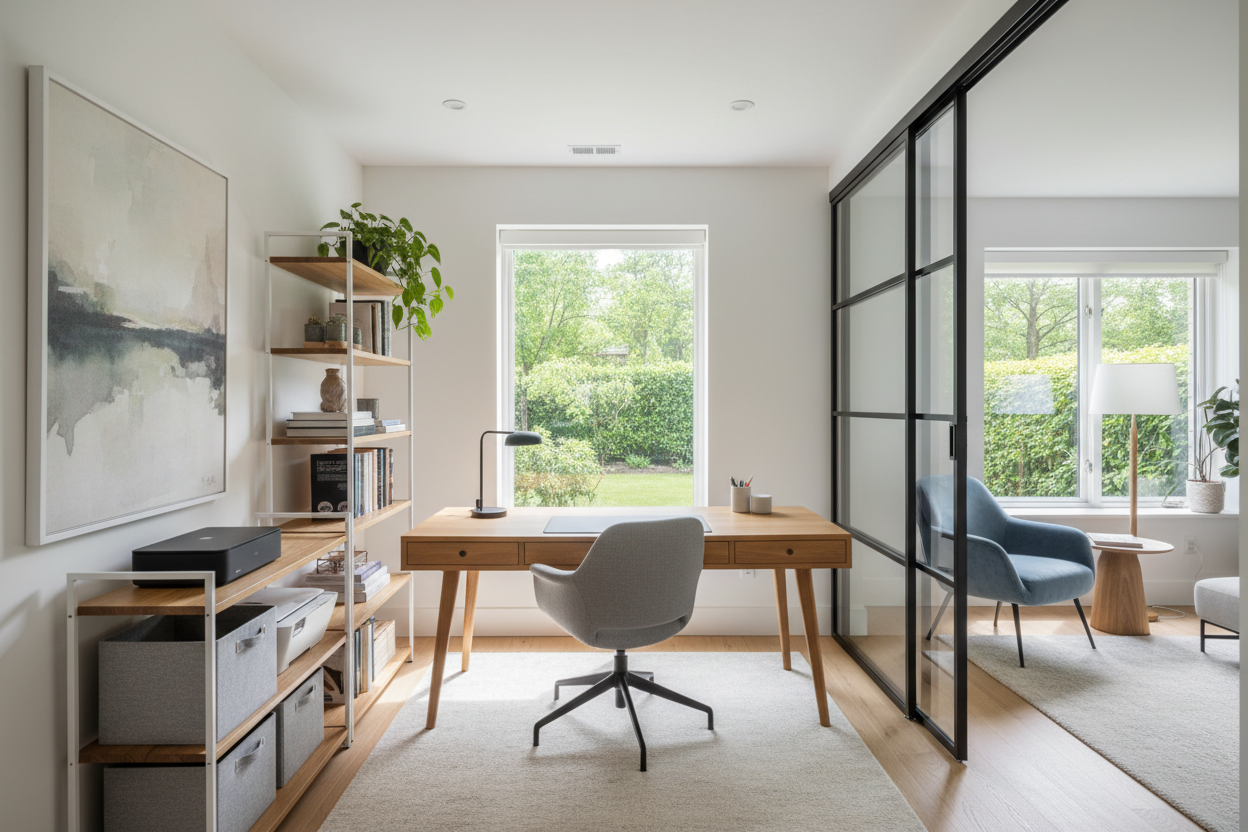
It usually starts innocently enough: a laptop on the dining table. Fast forward six months, and your living room has been completely hijacked by monitors, tangled charging cords, and ergonomic chairs that look like they belong in a spaceship. Finding functional home work ideas that do not compromise your home's aesthetic is one of the most common design challenges I face with clients today.
You do not have to choose between a beautiful living space and a productive workday. Whether you are carving out a corner in a small apartment or rethinking an open-concept suburban family room, this guide will walk you through how to integrate a workspace seamlessly. You will walk away knowing exactly how to select the right furniture, manage visual clutter, and maintain the comfort you need.
Quick Decision Guide
- Mind your clearances: Always leave a minimum of 36 inches behind your desk to push your chair back comfortably without hitting walls or other furniture.
- Match visual weight: If placing a desk in a living room, opt for slender silhouettes (like tapered legs) rather than heavy, blocky executive desks.
- Prioritize cord management: A beautiful desk is useless if it is covered in black wires. Look for pieces with built-in channels or deep modesty panels.
- Rethink the chair: You do not need a bulky mesh task chair. Many commercial-grade upholstered dining or accent chairs offer an 8-hour sit rating while looking residential.
Carving Out Space in Open-Concept Homes
When implementing work from home ideas in an open floor plan, the goal is to define the space without building walls. Placing a desk flat against a wall is the default, but it often makes the room feel like a dorm. Instead, consider the flow of the room.
The 'Floating' Desk Layout
If you have the square footage, floating the desk perpendicular to a wall or placing it behind a floating sofa creates a distinct zone. This arrangement allows you to face into the room rather than staring at a blank wall. To pull this off, you must choose a desk with a finished back. A solid wood or high-quality veneer piece with a modesty panel will hide the structural hardware and keep the room looking polished from every angle.
Closet Conversions (The Cloffice)
For smaller spaces, removing the doors from a shallow reach-in closet and installing a built-in desktop is incredibly space-efficient. The trick here is lighting and texture. Add hardwired sconces or rechargeable LED art lights above the desk, and use a heavily textured grasscloth wallpaper on the back wall to give the nook depth and high-end appeal.
Blending Work With Living
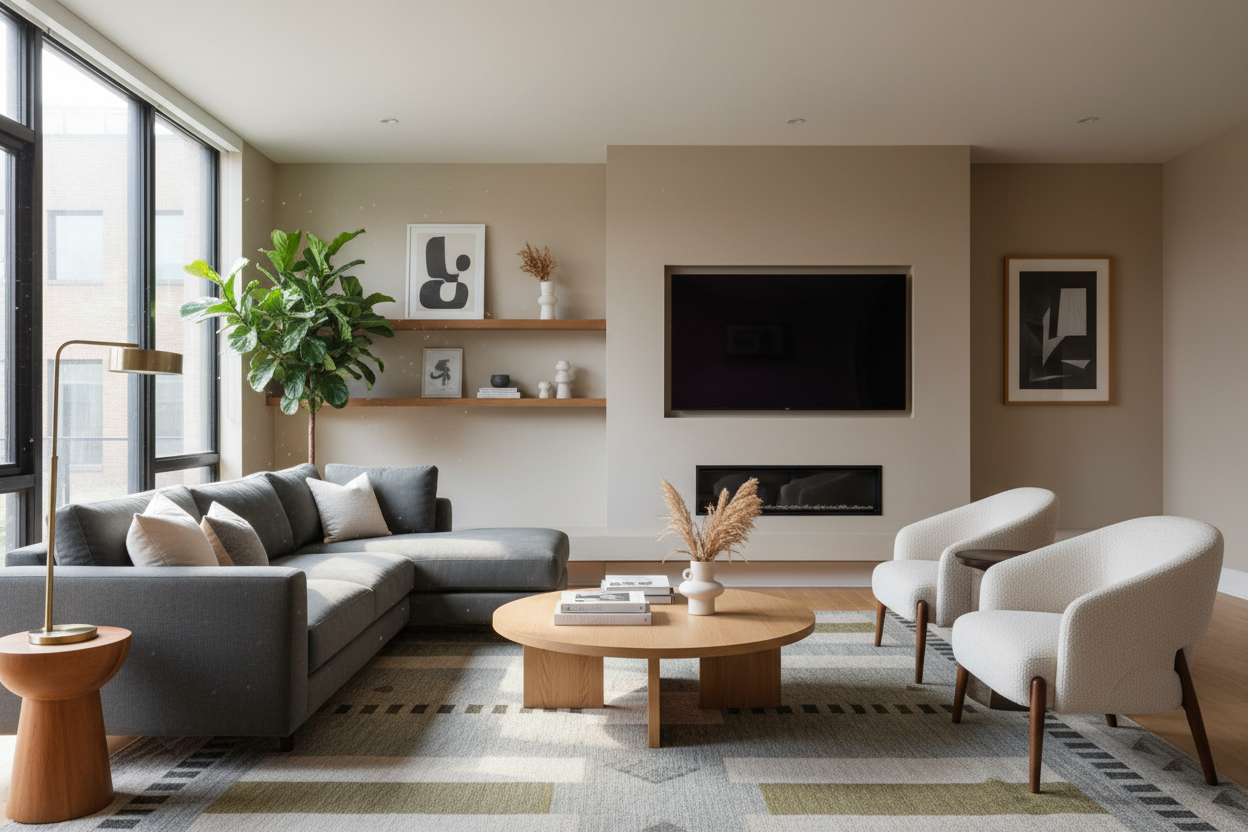
The whole idea of work from home setups in shared spaces relies on material coordination. If your living room features warm tones—like an olive green sofa and brass accents—a stark white melamine desk will stick out terribly.
Wood Tones and Textures
You do not need to match woods perfectly; in fact, layering them looks more intentional. If your floors are a cool-toned oak, try a rich walnut desk to create a focal point. Incorporating natural materials like a leather-wrapped desktop or woven cane drawer fronts bridges the gap between 'office furniture' and 'living room decor'.
Ergonomics Without the Corporate Look
A beautiful workspace fails if it hurts your back. However, finding great work at home ideas that balance ergonomics with aesthetics is entirely possible if you know where to look.
The Truth About Seating
Standard dining chairs are designed for a 45-minute meal, not an 8-hour shift. If you refuse to buy a traditional office chair, look for 'conference' or 'boardroom' chairs. These are often fully upholstered in performance fabrics or leathers, feature hidden tilt mechanisms, and offer proper seat depth (usually around 18 to 20 inches) without the aggressive plastic lumbar supports.
Designer's Honest Take
I learned the hard way that a floating glass desk looks incredible on a minimalist mood board, but in reality, it is a nightmare. I bought a gorgeous tempered glass and brass desk for my own home office a few years ago. Within a week, I realized it put every single black power cord, tangled charging cable, and fingerprint on full display.
I spent more time trying to cable-tie wires to the metal legs than I did actually working. I eventually swapped it for a solid white oak desk with a built-in wire management trough. The lesson? Never buy a desk without a concrete plan for where your laptop charger and monitor cables will live. Storage and concealment are just as important as the silhouette.
Frequently Asked Questions
How do I hide my monitors when I am done working?
If you cannot put them in a cabinet, camouflage them. Place tall, visually interesting objects like a large structural vase with branches or a substantial table lamp next to the monitors. This distracts the eye and integrates the technology into a larger vignette.
What is the minimum space needed for a home workspace?
You need a footprint of at least 4 feet by 5 feet. This accommodates a standard compact desk (48 inches wide by 24 inches deep) and allows the required 36 inches of push-back clearance for your chair.
Are standing desks worth the aesthetic sacrifice?
They can be, but you do not have to sacrifice aesthetics anymore. Many brands now make dual-motor standing desks with solid hardwood tops and thick, architectural metal legs that look like high-end dining tables rather than industrial workstations. Just ensure you buy a cable management snake to hide the wires when the desk is raised.


Leave a comment
This site is protected by hCaptcha and the hCaptcha Privacy Policy and Terms of Service apply.