










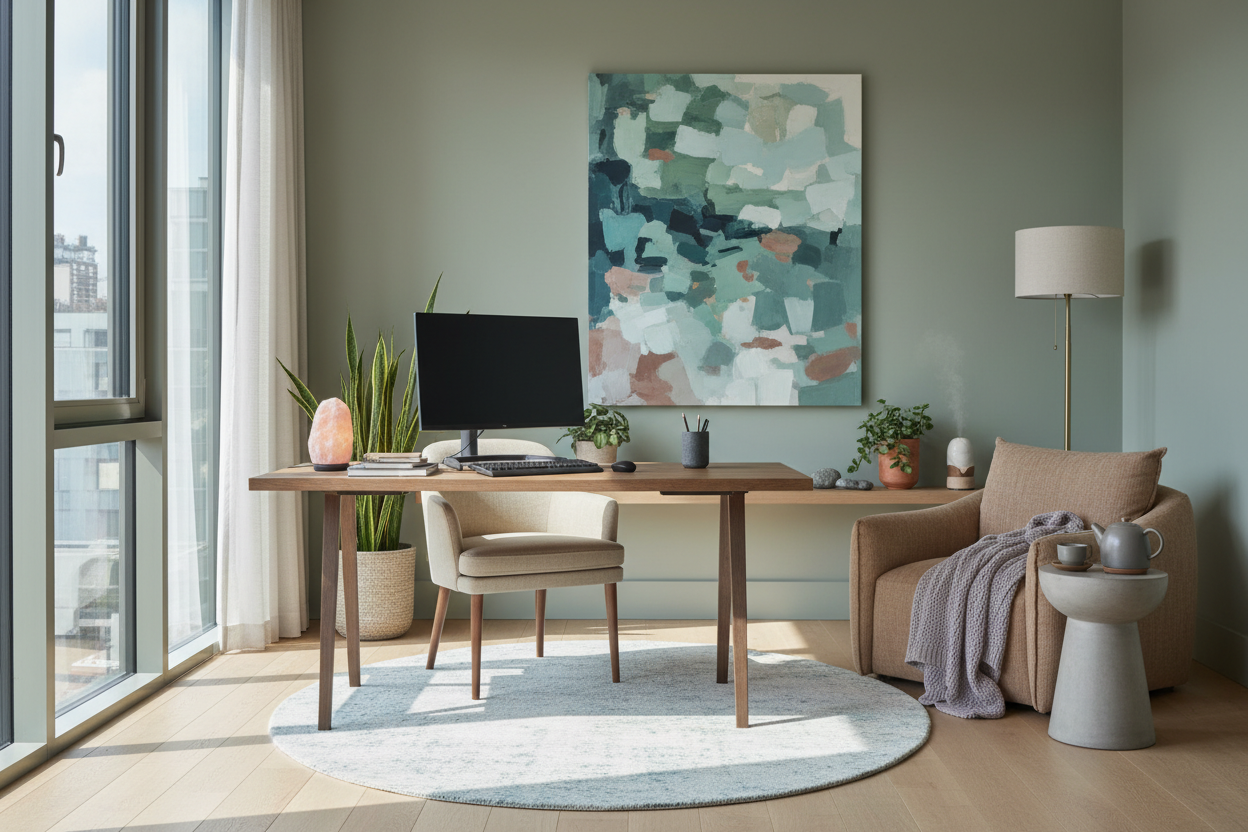
Staring at a cluttered workspace under harsh fluorescent lighting is the quickest way to kill creativity. As a designer, I see clients attempt to force productivity through rigid organization, often overlooking the psychological impact of their environment. A truly calming office decor scheme isn't just about minimalism; it is about curating a sensory experience that lowers cortisol and invites deep work. This guide will walk you through the structural and aesthetic choices necessary to turn a chaotic room into a sanctuary of focus.
Key Features for a Tranquil Workspace
If you are looking to rapidly improve your environment, prioritize these foundational elements before buying accessories. These are the pillars of a peaceful office space:
- Lighting Temperature: Aim for 2700K to 3000K (warm white) bulbs to reduce eye strain and mimic natural warmth.
- Material Haptics: Choose matte finishes and natural textures (wood, wool, linen) over cold, high-gloss synthetics.
- Acoustic Control: Incorporate soft furnishings like rugs or acoustic panels to dampen echo and create a quiet atmosphere.
- Biophilic Elements: Integrate living plants to improve air quality and provide a visual rest for the eyes.
- Ergonomic Flow: Ensure clear pathways and furniture that supports posture to reduce physical stress.
Mastering the Palette and Lighting
When designing a relaxed office, color psychology is your first tool. While white is often associated with cleanliness, it can feel clinical and straining in high doses. Instead, look toward a "low-contrast" palette. Soft sage greens, dusty blues, or warm terracottas absorb light rather than reflecting it, creating a soothing office decor atmosphere. These hues mimic nature and signal the brain to relax.
Lighting is equally critical. Avoid the single overhead fixture, which casts harsh shadows. Layer your lighting by using a dedicated task lamp for your desk and ambient floor lamps to soften the room's corners. This approach allows you to control the mood and intensity of the light throughout the work day.
Furniture Selection: Texture Over Trends
A calming office relies heavily on the tactile experience. When selecting a desk, consider solid wood with a matte oil finish rather than glass or metal. Glass desks may look airy, but they are cold to the touch and create distracting clamor when you set down a mug or type on a keyboard. A wooden surface offers warmth and sound absorption, contributing to a tranquil office decor.
Seating and Soft Goods
Your chair is the command center, but it shouldn't look like a cockpit. Look for ergonomic chairs upholstered in fabric rather than mesh or leather if you want a softer, more residential feel. To further the relaxing home office vibe, introduce a high-pile rug. This anchors the room visually and significantly reduces the "visual noise" of the space.
Zoning: The Office Relaxation Room Concept
Even in a small footprint, you need a visual break from the screen. In larger corporate fit-outs, we design a dedicated office relaxation room, but you can replicate this in a home office or cubicle. Create a "soft corner"—a small armchair, a floor cushion, or even just a specific view out a window where no work happens. This separation implies a mental boundary, allowing you to relax in office spaces without leaving the room.
Calming Desk Decor and Organization
Clutter is visual stress. However, sterile desks are uninspiring. The balance lies in "clustered styling." Group your soothing desk accessories—like a ceramic pen holder or a stone paperweight—on a tray. This turns scattered items into a single visual unit. For calming cubicle decor, use vertical space for storage to keep the immediate work surface clear, preserving your mental bandwidth for the task at hand.
My Personal Take on Calming Office Decor
I learned a hard lesson about "aesthetic vs. reality" during a project for a high-anxiety client a few years ago. We designed a stunning, monochromatic, all-white soothing office decor scheme. It looked incredible in photos. However, two weeks later, the client called me in distress.
The issue? The pristine white surfaces highlighted every single speck of dust, coffee ring, and stray hair. Instead of feeling peaceful, she felt a constant, nagging pressure to clean. It was the opposite of a relaxed office. We ended up swapping the white lacquer desk for a reclaimed oak table with a heavy grain and added a vintage Persian rug. The imperfections in the wood and the busy pattern of the rug hid the daily mess of life. The lesson stuck with me: a truly calming office space isn't perfect; it's forgiving. It allows you to live and work without constantly policing your environment.
Conclusion
Creating a tranquil office is less about buying "Zen" accessories and more about reducing sensory friction. By choosing forgiving materials, controlling your lighting, and managing acoustics, you build a foundation for focus. Start with one change—perhaps swapping a harsh bulb for a warm one—and feel the shift in your workday energy.
Frequently Asked Questions
How do I create a relaxing office in a small cubicle?
Focus on sensory inputs you can control. Use noise-canceling headphones for acoustics, bring in a small desk lamp with a warm bulb to override overhead fluorescents, and add a low-maintenance plant like a Pothos for a biophilic connection. These small relaxing office ideas make a massive difference in confined spaces.
What is the best material for a calming desk?
Walnut, oak, or cherry wood with a matte or satin finish are ideal. Unlike glass or metal, wood is warm to the touch and absorbs sound, preventing the jarring clatter of items being set down. This tactile warmth is essential for a peaceful office space.
Can dark colors still be calming?
Absolutely. Deep charcoal, navy, or forest green can create a "cocooning" effect that many find superior for deep focus compared to light colors. Darker tranquil office ideas work best when balanced with good ambient lighting to prevent eye strain.


Leave a comment
This site is protected by hCaptcha and the hCaptcha Privacy Policy and Terms of Service apply.