










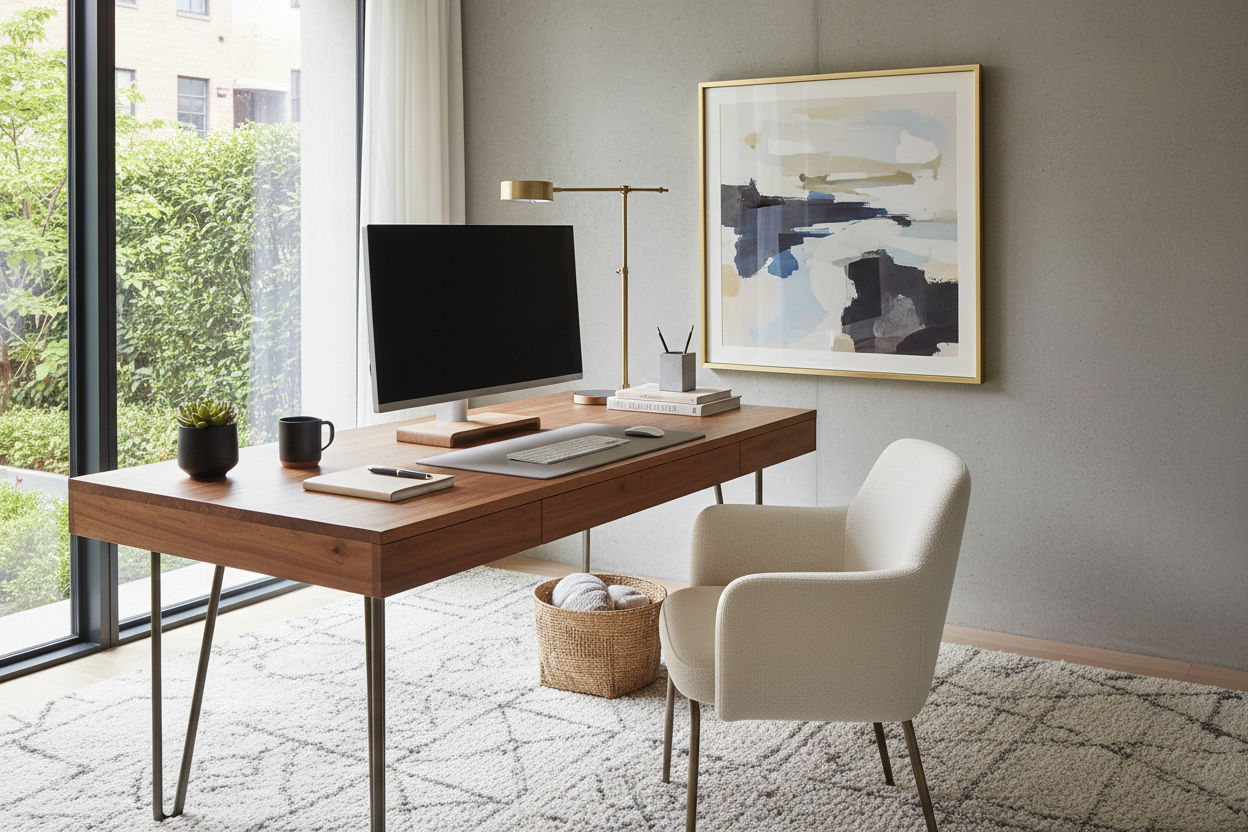
Visual noise is the silent killer of design intent. You might have the most exquisite walnut writing table or an ergonomic masterpiece of a chair, but if the surface is overwhelmed by chaos, the sophistication of the piece—and your focus—evaporates. As a designer, I often see clients treat their surfaces as storage units rather than workspaces. The goal isn't just to tidy up; it is to curate a space that breathes. When you set out to declutter your desk, you are essentially engaging in micro-spatial planning. It requires the same attention to balance, texture, and flow as laying out a living room.
Key Principles of Desk Curation
- Zoning: Define "active" reach zones versus "passive" storage areas to maintain workflow efficiency.
- Visual Weight: Opt for closed storage (drawers) for utilitarian items and open storage (trays) for aesthetic objects.
- Material Continuity: Match your organizers to your desk's finish (e.g., leather on wood) to reduce visual fragmentation.
- Cable Management: Treat cords as structural elements that must be hidden to maintain clean lines.
The Art of Negative Space and Layout
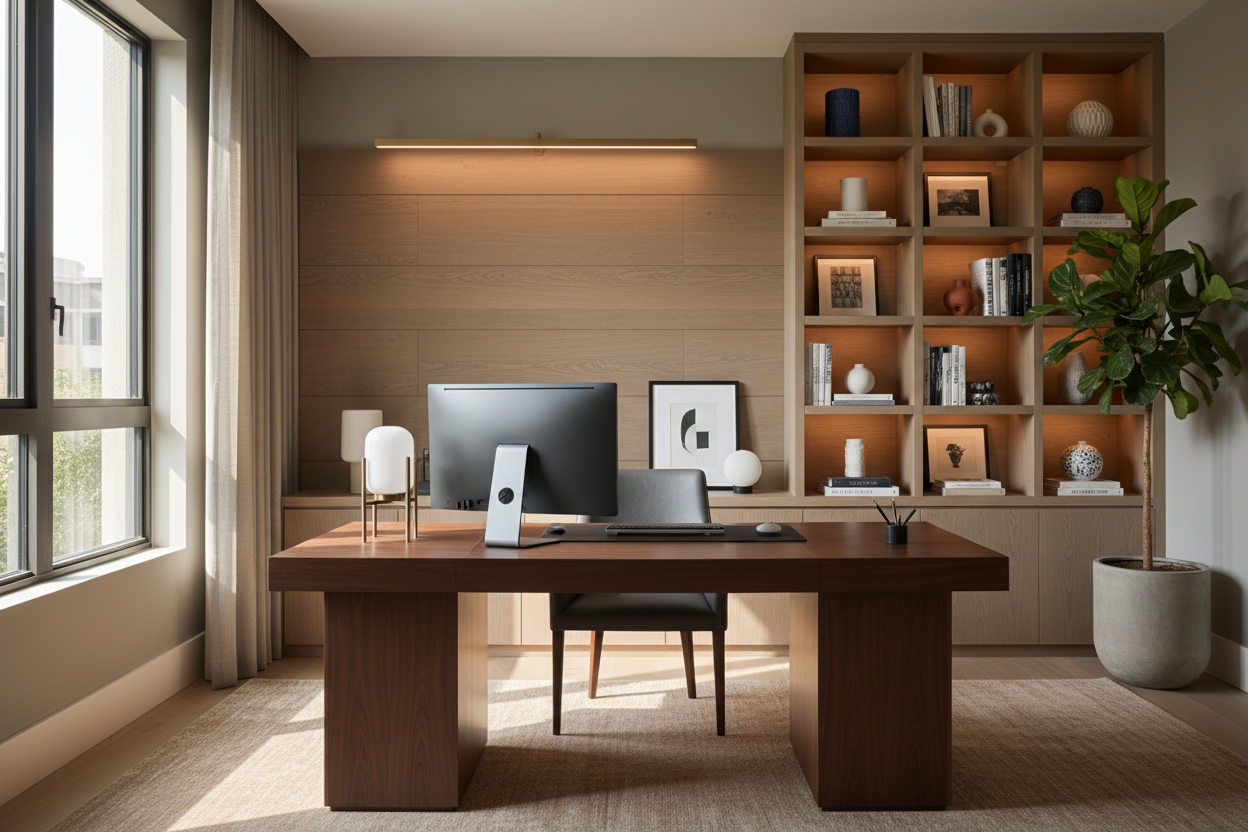
In interior design, negative space is active space. It allows the eye to rest. When looking for declutter desk ideas, avoid the temptation to fill every corner with an organizer. Instead, center your primary focal point—usually the monitor or laptop—and ensure there is at least six inches of clear surface area on either side. This clearance creates a visual frame that elevates the technology from a mere tool to a deliberate part of the design silhouette.
Zoning for Workflow
Divide your desk into primary and secondary zones. The primary zone is strictly for what you are touching right now. The secondary zone, usually the back corners or a side return, is for items you need within the hour. Everything else belongs in drawers or shelving. This is how you declutter office desk setups effectively: by ruthlessly evicting items that do not serve the immediate moment.
Materiality: Choosing Storage That Complements
Cheap plastic bins are the enemy of a refined aesthetic. When selecting accessories to help organize, consider the tactile experience. If you have a solid oak desk, juxtapose it with leather or felt organizers. These materials absorb sound and add warmth, preventing the space from feeling sterile.
For modern, glass, or lacquer desks, structured metal organizers in brass or matte black can add necessary architectural weight. The objective is to ensure your storage solutions look like intentional decor, not temporary fixes.
Ergonomics and the Invisible Clutter
We often forget that cables are visual clutter. A high-end workspace hides its mechanics. If your desk lacks integrated grommets, invest in a vertebrae cable spine or a high-quality under-mount tray. Furthermore, consider a monitor arm. By lifting the screen off the surface, you reclaim valuable square footage and create a lighter, floating aesthetic that makes the entire room feel larger.
My Personal Take on Desk Organization
I learned a hard lesson about desk curation during a project for a client who insisted on using a vintage mid-century Danish teak desk. It was beautiful, but it had absolutely zero cable management and shallow drawers that fit almost nothing. I tried to force modern functionality onto it with stick-on cable clips, but the adhesive reacted poorly with the aged oil finish, leaving a mark I had to have professionally restored.
That experience taught me that sometimes, you have to work with the furniture's limitations, not against them. For that desk, we ended up using a separate, low-profile credenza behind the chair for all the ugly tech and paper storage. The desk itself held only a wireless keyboard, a mouse on a wool felt pad, and a single ceramic lamp. The lesson? If the desk is a statement piece, don't clutter it with utility. Move the utility elsewhere.
Conclusion
A clear desk is not about minimalism for the sake of it; it is about reducing cognitive load through design. By respecting materials, managing the visual weight of your accessories, and hiding the mechanics of your tech, you transform a workstation into a sanctuary of productivity. Start curating today.
Frequently Asked Questions
How do I declutter a small desk without losing functionality?
Verticality is key. Use wall-mounted shelving or a monitor riser with storage underneath. This preserves your surface area for working while keeping essentials within arm's reach.
What is the best way to handle daily paper clutter?
Implement a "one-touch" system using a single, high-quality tray. Papers go in throughout the day, and the tray must be processed and emptied into long-term storage or recycling before you leave the room at night.
Should I use clear acrylic organizers?
While popular, clear acrylic can sometimes look messy if the contents inside aren't beautiful. I generally recommend opaque materials (wood, leather, metal) to hide the visual noise of pens, clips, and cables.

Leave a comment
This site is protected by hCaptcha and the hCaptcha Privacy Policy and Terms of Service apply.