










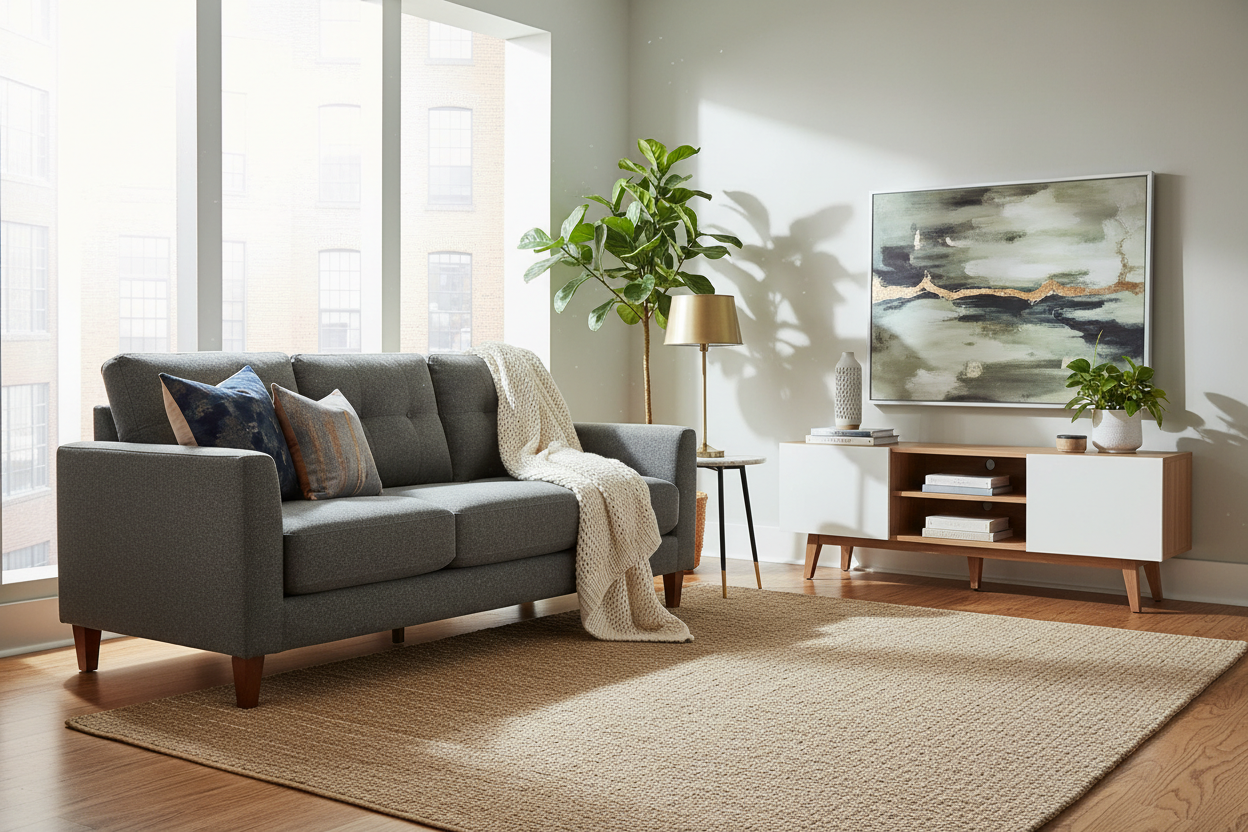
Designing a cohesive living space often hits a roadblock when selecting the primary seating. You want the sprawling comfort and defined silhouette of a chaise sofa, but you likely fear the flimsy construction often associated with affordability. The reality is that sourcing high-quality sectionals under $800 is entirely possible, provided you look past the marketing photos and scrutinize the specifications like a trade professional. It is about understanding where manufacturers cut costs and knowing which compromises are acceptable for your lifestyle.
Key Features to Look For
Before committing to a purchase, use this checklist to ensure the piece will maintain its structure and aesthetic appeal over time:
- Frame Construction: Look for kiln-dried hardwood or reinforced engineered wood to prevent warping.
- Suspension System: Sinuous springs generally offer better longevity than basic webbing at this price point.
- Fabric Durability: Check for a high Martindale rub count (15,000+) or performance blends if you have pets.
- Cushion Density: High-density foam (1.8 lbs or higher) prevents the "pancake effect" after a few months of use.
- Modularity: Reversible chaises allow you to adapt the layout if you move to a new space.
Assessing Material Integrity
When working with a constrained budget, the frame and fabric are where the battle for longevity is won or lost. In the sub-$800 category, you will rarely find solid maple frames, but that does not mean you must settle for cardboard. Look for descriptions that specify "kiln-dried" wood. This process removes moisture, ensuring the frame won't creak or crack as the humidity in your home changes.
The Fabric Factor
For sectionals under 800, performance velvet and tight-weave polyester are your best allies. These materials offer a sophisticated visual texture and are naturally more resistant to snagging than loose linen weaves. Be wary of bonded leather in this price bracket; it tends to peel within a year. Instead, opt for a textural fabric that hides minor wear and adds warmth to the room's ambient feel.
Space Planning and Visual Weight
A common error I see in DIY interior design is ignoring the scale. An inexpensive sectional can look expensive if it fits the room perfectly, but it looks cheap if it overwhelms the traffic flow.
Balancing the Silhouette
If your living room is compact, avoid overstuffed, rolled-arm styles which consume valuable floor space without adding seating area. Opt for track arms (square arms) and raised legs. A sectional elevated on tapered legs allows light to pass underneath, increasing the sense of space and making the footprint feel lighter. This visual trick is essential for maintaining an airy, curated atmosphere.
Lessons from My Own Projects
I recently staged a rental property where the budget was incredibly tight, and we sourced a mid-century modern style sectional for roughly $750. Here is the unvarnished truth about that experience: The sofa arrived in two boxes, and the back cushions were vacuum-sealed so tightly they looked like wrinkled raisins.
Most homeowners panic here. My trick? I used a handheld fabric steamer to release the foam and smooth the fabric. It took about 45 minutes of work, but the difference was night and day. Another detail to note is the legs. The stock legs were a cheap-looking black plastic. I spent an extra $40 on Amazon for screw-in wooden tapered legs. That tiny hardware swap elevated the piece from "budget find" to "boutique design." If you buy in this price range, be prepared to put in a little elbow grease on arrival to get that showroom look.
Conclusion
You do not need a five-figure budget to achieve a comfortable, stylish home. By prioritizing frame integrity, selecting the right textiles, and paying attention to scale, you can integrate sectionals under $800 that anchor your living room with elegance. It is not just about saving money; it is about making smart design choices that serve your space.
Frequently Asked Questions
How long can I expect a sectional under $800 to last?
With daily use, a sectional in this tier typically lasts 3 to 5 years before showing significant cushion fatigue. You can extend this lifespan by rotating cushions weekly and tightening the leg hardware every few months.
Are these sectionals suitable for narrow doorways?
Yes, most sectionals at this price point are "flat-pack" or modular, meaning they ship in boxes designed to fit through standard width (and even narrow) doorways and stairwells. Always check the shipping box dimensions prior to ordering.
Can I replace the cushions if they go flat?
Many budget-friendly sectionals have zippered covers. While the manufacturer may not sell replacement cores, you can visit a local upholstery foam shop or order high-density foam online to restuff the casings, giving the sofa a second life.


Leave a comment
This site is protected by hCaptcha and the hCaptcha Privacy Policy and Terms of Service apply.