










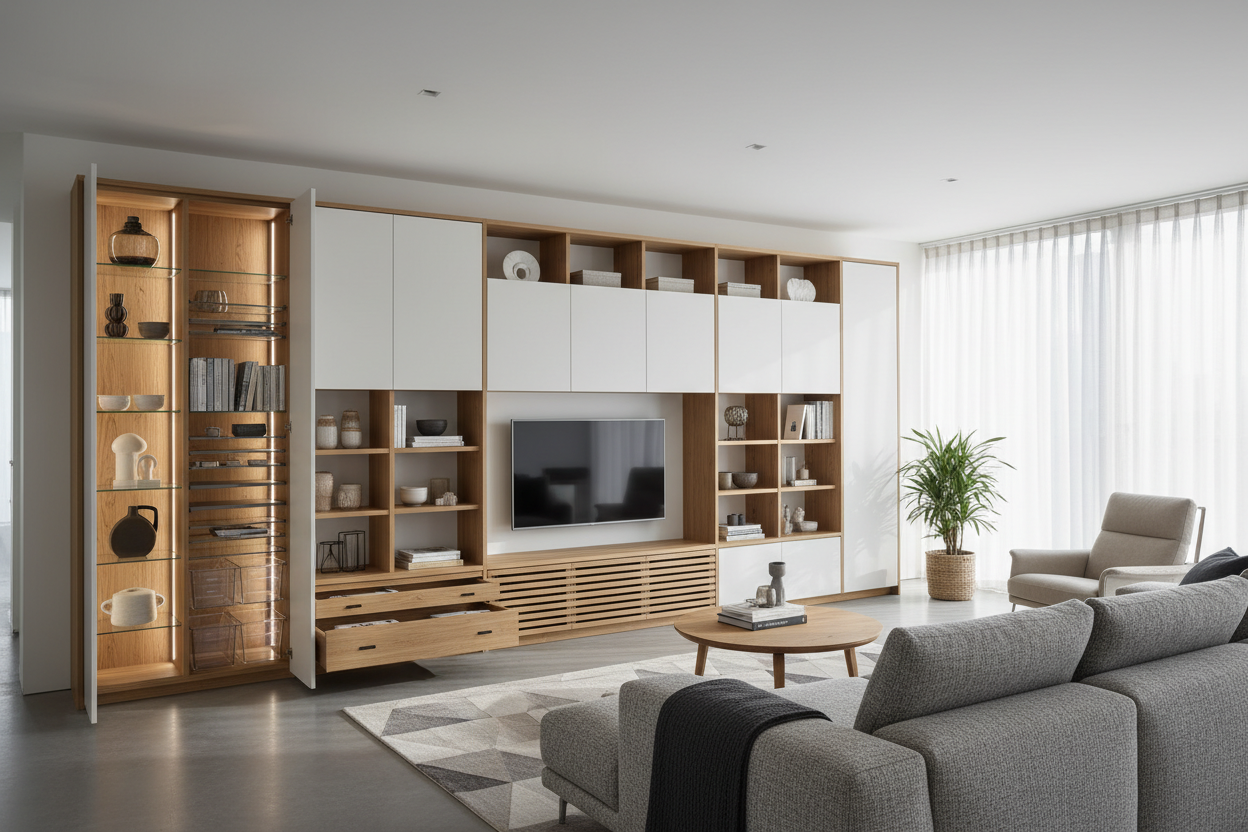
I once bought a 'mid-century' bar cabinet that looked like a dream in the catalog. It arrived, and I realized my standard bottle of gin was exactly half an inch too tall for the fixed shelves. I spent six months keeping my liquor on the floor like a college student because the storage cabinets design was focused on the exterior shell, not the stuff humans actually own.
We have all been there—scrolling through endless Storage Cabinets online, falling for a pretty wood grain or a sleek handle, and completely ignoring the internal physics. If a cabinet can’t hold a standard 12-inch binder or a stack of dinner plates without wasting four inches of vertical space, it is a bad design. Period.
Quick Takeaways
- Check for adjustable shelf pins; fixed shelves are the enemy of utility.
- Measure your largest item (vases, bins, binders) before you even look at the price tag.
- Subtract 1.5 inches from the external depth to find the 'true' storage depth.
- Look for soft-close hinges that don't protrude into the shelf space.
The 'Pretty Box' Problem in Furniture Shopping
Most mass-market furniture is designed to look good in a 2D photo. Manufacturers know that a clean, minimalist face sells. What they don't tell you is that the back panel is often a flimsy piece of cardboard that bows outward, or the interior frame is so thick that a 30-inch wide cabinet only gives you 26 inches of usable width.
I have assembled enough flat-pack furniture to know that the 'pretty box' often hides structural shortcuts. If the design doesn't account for the weight of what you're putting inside, those shelves will sag within six months. When you are browsing through different collections, look for weight capacities. If they don't list them, assume the shelves can't handle more than 20 pounds.
Why Interior Storage Cabinet Designs Matter More
The best storage cabinet designs are the ones that adapt to your life, not the other way around. Look for pieces with 'full-drill' shelf holes. This means you can move the shelves every inch or two, rather than being stuck with three pre-determined heights. It’s the difference between a cramped mess and a perfectly organized pantry.
Pay attention to the hardware, too. Hidden European-style hinges are great for a clean look, but some cheap versions take up a massive amount of room inside the door frame. I always recommend reading up on Shelf and Cabinet Storage — How to Design Units That Actually Work for Your Space to understand how to map out your interior layout before you commit to a purchase.
The 3 Measurements You're Probably Ignoring
First, there is 'True Depth.' If a cabinet says it is 15 inches deep, the door and the back panel usually eat up at least an inch. If you have 14-inch bins, they won't fit. Second is 'Shelf Clearance.' This is the vertical space between shelves. You need to know if your tallest vase or your stand mixer can actually clear the opening. I’ve seen people make huge errors by ignoring Tall Cabinet Design Rules Stop Making These Storage Mistakes, especially when it comes to vertical reach and stability.
The third is 'Door Swing.' If you are putting a cabinet in a tight hallway, a 24-inch wide door is going to block the entire path every time you open it. In small spaces, double doors are almost always better than one large single door because they have a smaller footprint when open.
When to Choose Drawers Instead of Doors
Sometimes, the best cabinet isn't a cabinet at all—it's a chest of drawers. For heavy items like linens, tools, or kitchen gadgets, drawers are objectively superior. You don't have to get on your hands and knees to find what's at the back. A hybrid design, like a 9 Drawer Dresser Storage Cabinet Light Wood Finish With A Modern Linear Design For Ample Storage, gives you the organizational power of small compartments without the 'black hole' effect of a deep, dark shelf.
I personally use a mix. Doors are for the big, bulky stuff like slow cookers and board games. Drawers are for everything else. If you're storing anything smaller than a toaster, put it in a drawer or a bin on a shelf. Don't let your small items float around in a cavernous cabinet.
Personal Experience: My Greatest Storage Regret
I once bought a stunning mango wood sideboard with hand-carved doors. It was the centerpiece of my dining room. The problem? The interior had a massive structural support beam right down the middle that wasn't shown in the photos. I couldn't fit a single serving platter in there. I ended up having to saw into a $800 piece of furniture just to make it functional. Learn from my arrogance: always ask for a photo of the interior with the doors open.
FAQ
What is the best depth for a storage cabinet?
For most homes, 15 to 18 inches is the sweet spot. Anything deeper than 24 inches becomes a graveyard for items you'll never see again because you can't reach the back.
Are metal storage cabinets better than wood?
For a garage or a mudroom, yes. They handle moisture and weight better. But for a living space, wood (or high-quality MDF with a real wood veneer) provides better sound dampening and looks a lot less like a high school locker.
How do I stop a tall cabinet from wobbling?
Always use the wall anchor kit. I don't care if you don't have kids or pets. A tall cabinet with a heavy door is a tipping hazard the moment you open it. If it doesn't come with one, buy a 'L' bracket at the hardware store for three dollars.

Leave a comment
This site is protected by hCaptcha and the hCaptcha Privacy Policy and Terms of Service apply.