










In the era of hybrid work, your environment speaks before you do. I often tell my clients that the space behind them is just as important as the desk in front of them. It frames your professional persona, influences acoustic quality, and dictates the atmosphere of your daily grind. Yet, the most common design crime I encounter is treating the background for office wall as an afterthought—either leaving it starkly barren or cluttering it with distracting knick-knacks.
Quick Decision Guide
If you are planning a renovation or a quick refresh, keep these four pillars in mind to ensure your backdrop is both functional and camera-ready.
- Finish & Texture: Always opt for matte or textured finishes (like wood slats or fabric wallpaper) over glossy surfaces to prevent glare from ring lights or windows.
- Color Psychology: deeply saturated blues and greens convey stability, while warm neutrals prevent the "washed out" look common on webcams.
- Acoustics: Hard surfaces echo. Incorporate soft materials like acoustic felt panels or open shelving with books to dampen sound.
- Depth: Avoid placing your chair directly against the wall. Allow at least 3-4 feet of distance to create a flattering depth of field.
Mastering Office Background Wall Design
Creating a sophisticated backdrop requires a balance between personality and professionalism. It is not merely about decoration; it is about curation. When approaching office background wall design, we must consider visual weight and composition.
Materiality and Texture
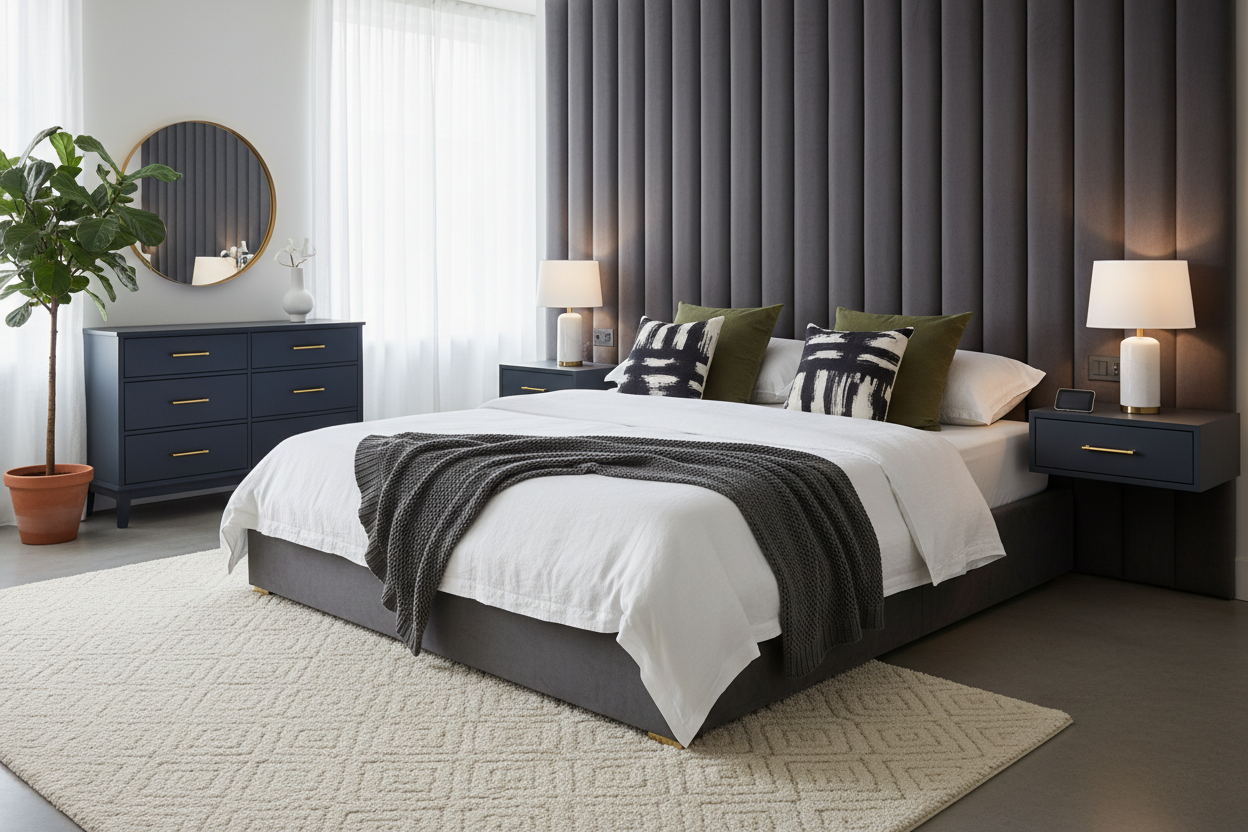
Flat paint often reads as "dead" space on camera. To elevate the room, introduce tactile elements. I frequently recommend millwork, such as wainscoting or vertical shiplap, to add shadow lines that change throughout the day as the sun moves. For a more modern aesthetic, acoustic wood slat panels are exceptional. They provide the warmth of timber while significantly reducing the echo in the room—a crucial factor for audio clarity during calls.
The Art of Shelving
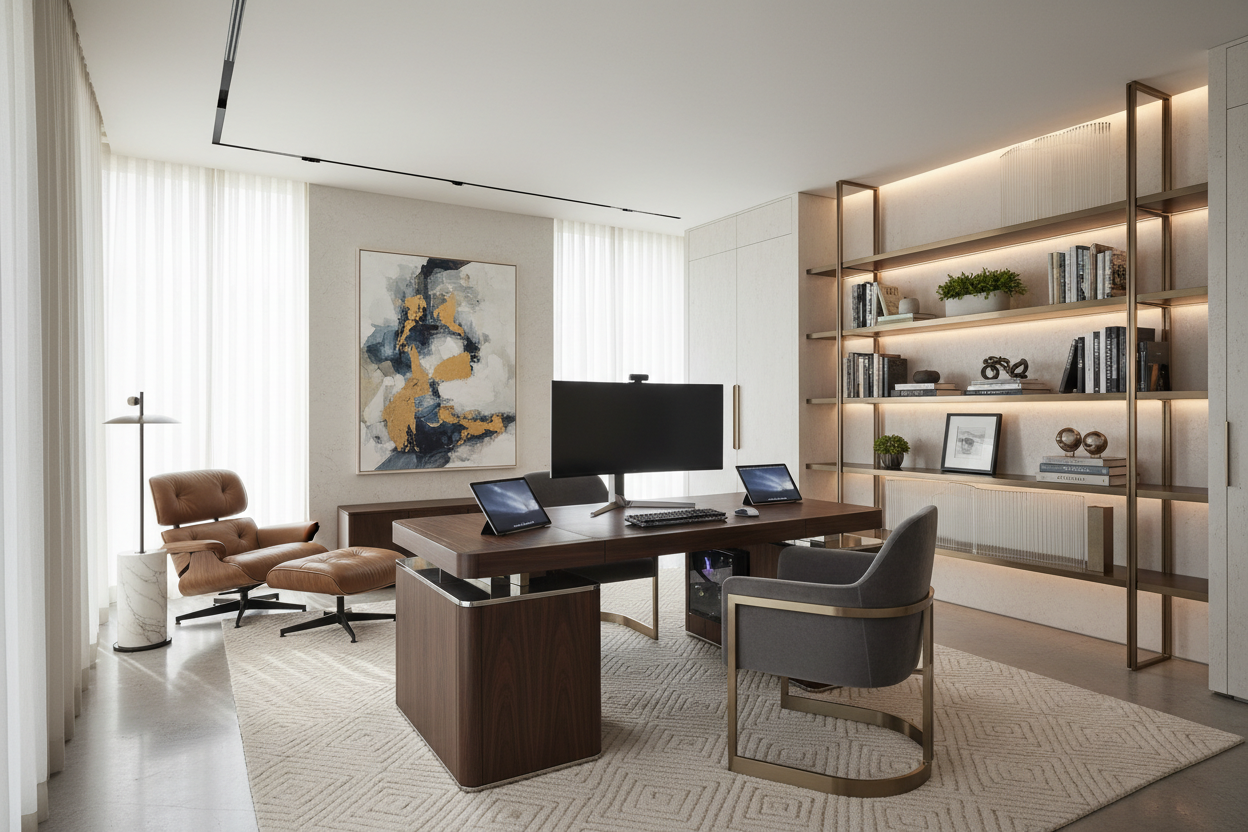
Built-ins or floating shelves are classic choices, but the execution matters. The goal is "breathing room." A common error is stuffing shelves with paperwork. Instead, use the rule of thirds: one-third books (positioned vertically and horizontally), one-third decor (sculptural objects, plants), and one-third negative space. This negative space allows the eye to rest and prevents the background from competing with your face for attention.
Lighting: The Invisible Design Element
You can buy the most expensive walnut paneling, but without proper lighting, it will fall flat. Avoid relying solely on overhead recessed cans, which cast harsh shadows. Instead, utilize wall washers or LED strip lighting tucked behind shelves or joinery. This creates a soft, ambient glow that highlights the texture of your background for office wall and separates you from the background, adding a three-dimensional quality to your video feed.
Physical Design vs. Digital Substitutes
While many rely on office wall background images for virtual meetings, they often glitch and lack authenticity. A physical background builds trust. It shows you are established and organized. However, if you must use a digital solution temporarily, ensure the lighting in your physical room matches the lighting in the image to maintain the illusion of reality.
Lessons from My Own Projects
I learned the hard way about the importance of "finish sheen" during a project for a tech executive in San Francisco. We designed a stunning, deep charcoal accent wall using a high-gloss lacquer intended to bounce light around a small room.
In person, it was breathtaking. On camera? It was a disaster. The client's ring light reflected off the glossy wall like a laser beam, creating a distracting halo right behind his head. I had to pay to have the entire wall repainted in a flat matte finish. Now, I carry a ring light to site visits to test materials specifically through a camera lens. It’s a small, unpolished detail, but it saves thousands of dollars in revisions. If you are painting, never go above an eggshell finish for a video-facing wall.
Conclusion
Your office wall is a prime piece of real estate that sets the tone for your workday and your professional interactions. By focusing on matte textures, controlled lighting, and intentional styling, you can create a space that feels luxurious and functions perfectly for the digital age. Stop settling for a blank slate and start designing a background that works for you.
Frequently Asked Questions
What is the best color for a video call background?
Mid-tone blues, sage greens, and warm grays are ideal. They provide enough contrast to make you pop on camera without causing color casting on your skin tone, which can happen with bright reds or yellows.
How do I make a small office wall look good?
Verticality is key. Use floor-to-ceiling shelving or vertical wood slats to draw the eye up, making the room feel taller. Keep the decor minimal to avoid a claustrophobic feel.
Are acoustic panels necessary for a home office?
If you have hardwood floors and minimal furniture, yes. Sound bounces off hard surfaces, creating an echo that sounds unprofessional. Acoustic panels integrated into the design absorb this sound, making your voice sound richer and clearer.

Leave a comment
This site is protected by hCaptcha and the hCaptcha Privacy Policy and Terms of Service apply.