










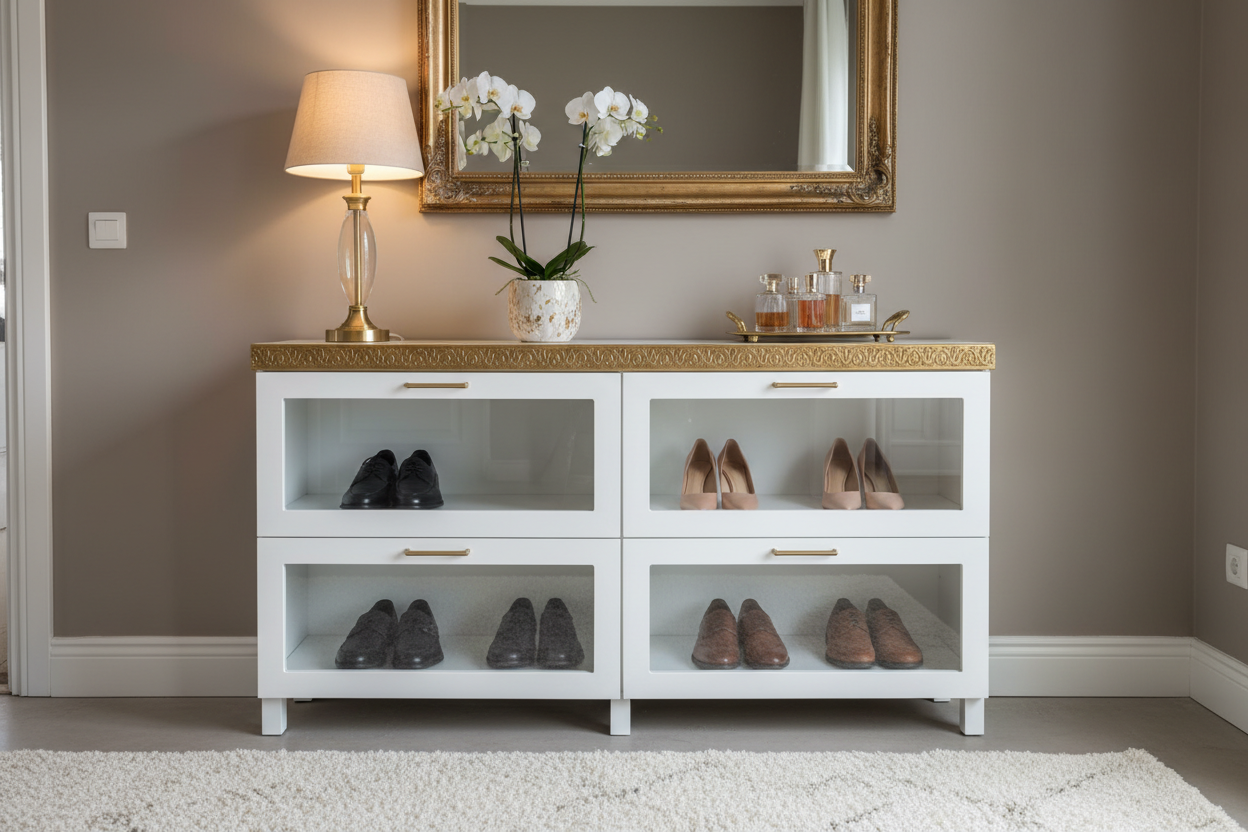
The entryway is the handshake of your home; it sets the aesthetic tone the moment you walk through the door. Yet, in many of the residential projects I consult on, this area is often cluttered, disrupting the visual flow. The challenge lies in finding storage that is slim enough to preserve the circulation path but spacious enough to hide the daily clutter. This is where a well-chosen cabinet for shoes ikea becomes a critical architectural element rather than just a utility piece.
While Scandinavian flat-pack furniture is ubiquitous, the secret lies not in buying the box, but in how you integrate it into your space to achieve a bespoke, built-in appearance.
Key Features to Look For
- Depth Profile: Ensure the cabinet depth (typically 7-12 inches) allows for clear passage in narrow hallways without protruding into the walking lane.
- Ventilation: Look for an ikea shoe organizer cabinet with an open back or breathable design to preserve leather and fabric footwear.
- Mounting Mechanism: Verify if the unit requires wall anchoring (most do) and if it accommodates your specific baseboard height.
- Compartment Style: Decide between a tilt-out ikea shoe compartment for quick access or a shelved shoe rack with doors ikea for boots and larger items.
Selecting the Right Silhouette for Your Space
When specifying furniture for a foyer, visual weight is paramount. You want the storage to feel like it disappears into the wall. For tight urban apartments, the tilt-out mechanism found in standard ikea shoe storage units (like the HEMNES or STÄLL series) is superior to open shelving. It conceals the visual noise of multicolored sneakers and heels behind a clean, solid facade.
If you are dealing with a particularly dark or small hallway, consider a mirror shoe cabinet ikea option. While IKEA’s stock fluctuates on mirrored fronts, you can achieve this effect by placing a large mirror directly above a low-profile shoe rack table ikea. This reflects light and doubles the perceived width of the corridor.
Materiality and Elevating the Finish
Standard white laminate can feel clinical if not styled correctly. To bring warmth into a space, I often steer clients toward the dark gray or ikea black shoe storage options, which ground the space and hide scuff marks better than white finishes. However, the real designer trick is customization.
The Hardware Swap
The quickest way to make an ikea shoe organizer look high-end is to discard the standard knobs. Replace them with heavy brass pulls, matte black bars, or leather tabs. This small hardware change alters the entire character of the piece.
Adding a Custom Top
An ikea shoe cubby or cabinet often comes with a basic painted top. I frequently commission a piece of Carrara marble or stained oak to place on top of the unit. This turns a budget-friendly ikea shoe holder into a sophisticated console table, providing a durable surface for keys, a structural lamp, and a catch-all tray.
Functional Organization Inside the Cabinet
The exterior is about aesthetics; the interior is about ergonomics. A standard ikea shoe case or compartment can become chaotic without a system. For smaller items like sandals or kids' shoes, avoid piling them. Instead, use internal dividers to keep the vertical space utilized.
For utility areas like mudrooms or garages, the plastic shoe rack ikea (specifically the TRONES series) is a modular savior. These can be stacked floor-to-ceiling to create a wall of storage that is waterproof and easy to wipe down—perfect for muddy boots or athletic gear.
Lessons from My Own Projects
I want to share a specific realization I had while installing a four-compartment ikea shoe cabinet in a client's pre-war apartment. On paper, the dimensions were perfect. However, we ran into a snag with the baseboards.
Most IKEA shoe cabinets have only two front legs and are designed to rest flush against the wall. They include a small cutout at the back to accommodate baseboards. In this older home, the baseboards were 8 inches high and ornate—much taller than the cabinet's cutout allowed. The cabinet wouldn't sit flush, creating an ugly gap at the top.
We had to hack the installation by mounting a wooden cleat to the wall to bridge the gap, essentially "floating" the cabinet slightly off the wall to clear the molding. It actually looked more intentional and custom in the end, but it taught me to always measure the baseboard profile, not just the floor space, before buying. Also, the "white" finish on these cabinets is rarely a true bright white; it's usually an off-white. If you place it against a Chantilly Lace or Super White wall, the cabinet might look slightly yellow. Be prepared to paint the wall or the cabinet for a seamless match.
Conclusion
Integrating a cabinet for shoes ikea into your home isn't just about hiding clutter; it's about reclaiming your entryway. By selecting the right profile, upgrading the hardware, and paying attention to installation details, you can create a functional vignette that feels expensive and curated.
Frequently Asked Questions
Can I stack IKEA shoe cabinets to create a taller unit?
Yes, specifically with the plastic shoe rack ikea (TRONES) or modular ikea shoe cubby systems. These are designed to be grouped. However, for heavier wooden units like HEMNES, stacking is unsafe and not recommended due to weight distribution.
Do IKEA shoe cabinets fit large men's boots?
Standard tilt-out shoe compartment ikea units are often shallow. They fit standard shoes well, but for high-top boots or sizes over US 12, you may need to position the shoes sideways or opt for a shoe rack with doors ikea that has adjustable flat shelving instead.
Is wall mounting absolutely necessary?
Absolutely. Because these cabinets are narrow and front-heavy (especially when drawers are open), they are significant tipping hazards. Even if you have a shoe rack table ikea style that looks stable, always anchor it to the studs for safety.

Leave a comment
This site is protected by hCaptcha and the hCaptcha Privacy Policy and Terms of Service apply.