










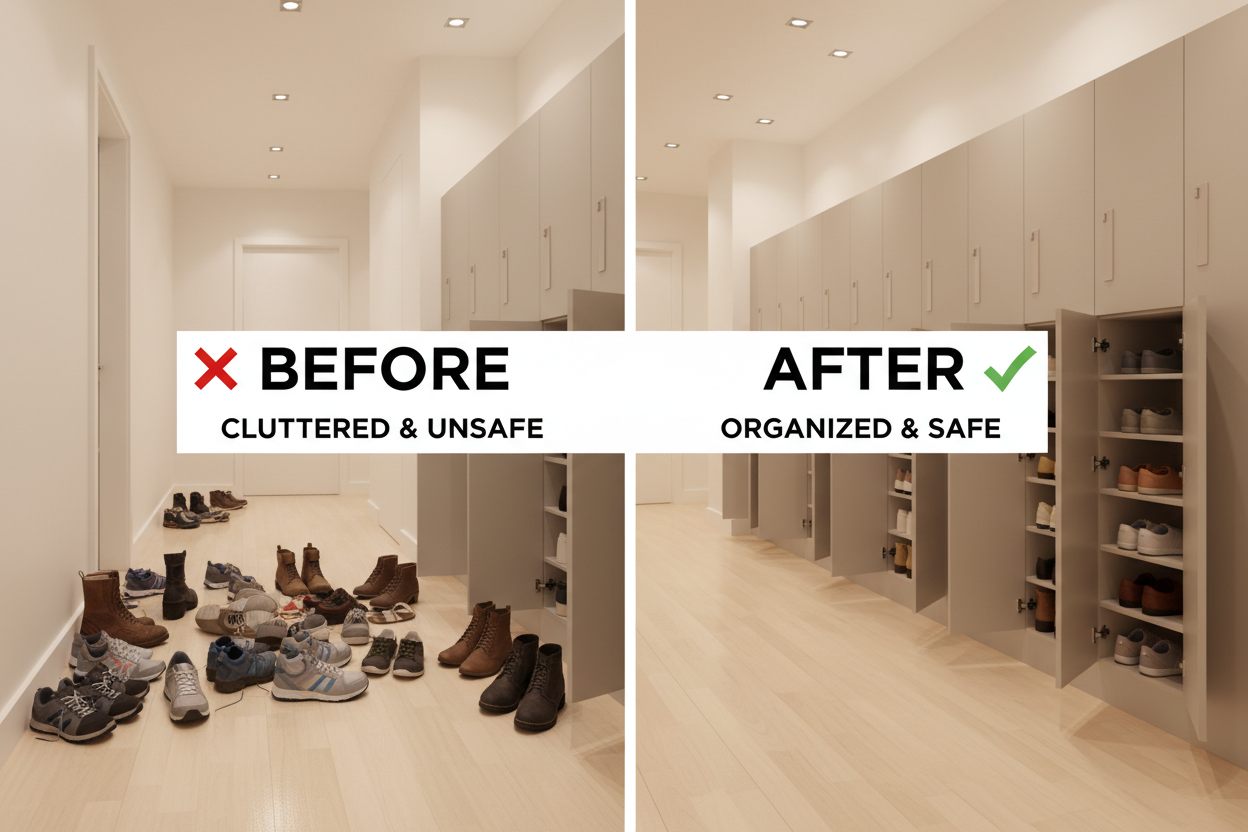
Clutter has a way of multiplying the moment you walk through the front door. Coats end up draped over banisters, backpacks create obstacle courses on the floor, and shoes seem to migrate into a pile that threatens to trip anyone walking by. The solution isn't necessarily a bigger house or a dedicated mudroom addition; often, the answer lies in better utilizing the vertical space you already have. Hallway lockers provide a streamlined, dedicated zone for every family member’s gear, turning a chaotic thoroughfare into an organized command center.
Unlike open shelving or coat racks, lockers offer a visual calm. They hide the mess behind closed doors. Whether you are repurposing vintage metal units for an industrial look or commissioning custom woodwork, integrating storage into your corridor changes the flow of the home. It shifts the dynamic from "drop everything on the floor" to "put it away immediately." This simple psychological shift is why schools and gyms have relied on them for decades, and why they are becoming a staple in modern residential design.
The Real-World Impact on Daily Routine
I learned the value of this storage method the hard way. A few years ago, my entryway consisted of a bench and a row of hooks. In theory, it looked like a Pinterest photo. In reality, the bench was covered in junk mail, and the hooks were buried under layers of coats that never made it to the closet. It was a disaster zone.
I eventually hunted down a set of battered metal lockers from a local school auction. They were dented and painted a questionable shade of beige. After a weekend spent sanding them down and spraying them a matte navy blue, we anchored them in the hallway. The change was instant. Each of my kids had a designated cubby. If a backpack wasn't inside its locker, no screen time. The physical barrier of the door meant I didn't have to look at their gym bags, and the vertical design meant we utilized space right up to the ceiling. It wasn't just furniture; it was a sanity saver.
Choosing the Right Material and Aesthetic
When you decide to incorporate lockers in hallway spaces, the first decision involves materials. The vibe of your home dictates whether you should hunt for vintage metal or invest in carpentry.
Metal: The Industrial Workhorse
Metal lockers are incredibly durable and easy to clean, making them ideal for households with active kids or pets. They bring a distinct industrial or retro charm that works well in modern farmhouses, lofts, or eclectic homes. One of the hidden benefits of metal is magnetism. The inside of the door becomes a prime spot for posting permission slips, photos, or chore charts using magnets. However, metal can be noisy. If your hallway is near a bedroom, the clang of a locker door late at night might be an issue, though you can mitigate this with felt pads.
Wood: The Built-In Look
Wooden lockers offer a warmer, more traditional aesthetic. They often resemble tall cabinetry and can be painted to match your trim or walls, making them feel like an architectural feature rather than a piece of furniture. Wood allows for greater customization in sizing. If you have an awkward recess or a specific ceiling height, a carpenter can build a unit to fit perfectly. While wood lacks the magnetic properties of metal, it allows for easier installation of internal hooks and custom shelving without needing specialized drill bits.
Space Planning and Dimensions
Hallways with lockers need to remain navigable. You cannot sacrifice the primary function of a hallway—walking—just for the sake of storage. Standard lockers usually range from 12 to 15 inches deep. In a narrow corridor, every inch counts. If your hallway is less than 36 inches wide, installing standard lockers might make the space feel claustrophobic or impede traffic flow.
For tighter spaces, look for shallow depth units or consider recessing them into the wall if the studs allow. This requires more construction work but results in a flush finish that doesn't encroach on the walkway. Always measure the swing radius of the doors. You need enough clearance to open the locker fully without hitting the opposite wall or blocking a doorway.
Safety and Installation Essentials
Tall, narrow furniture poses a tipping hazard. This is non-negotiable: you must anchor hallway lockers to the wall studs. This is especially true for vintage metal banks, which can be front-heavy when the doors are open and loaded with heavy winter coats. A simple L-bracket screwed into the top of the unit and the wall stud is usually sufficient to prevent accidents.
Ventilation is another factor often overlooked. If you plan to store gym shoes or damp rain gear, ensure the lockers have louvers or some form of airflow. Closed wooden cabinetry might need mesh inserts in the door panels or vents drilled into the back to prevent mildew and odors from building up inside the enclosed space.
Optimizing the Interior
The shell of the locker is just the beginning. To truly maximize the utility, you need to configure the interior to match your specific needs. A single top shelf and one coat rod is the standard configuration, but it rarely uses the space efficiently.
Zone Your Storage
Divide the vertical space into thirds. The top section is for off-season items or things you don't need daily access to, like bike helmets in winter. The middle section is the active zone for coats and bags. The bottom section is critical for footwear. Without a designated shoe shelf or bin at the bottom, shoes will pile up and prevent the door from closing.
Consider adding double hooks on the side walls of the locker interior, not just the back. This triples your hanging capacity for smaller items like scarves or umbrellas. For metal lockers, magnetic baskets are excellent for holding keys, wallets, and loose change that otherwise gets lost in pockets.
Maintenance and Upkeep
Keeping these units functional requires minimal but regular attention. For metal units, rust is the enemy, especially in humid climates or if wet gear is frequently stored. Inspect the bottom corners regularly and treat any spots with rust inhibitor. Wipe down the interiors seasonally to remove the inevitable accumulation of grit and dust.
Wooden units may require touch-up paint, particularly around the handles where hands constantly grab the doors. If you have installed hardware like knobs or pulls, check them periodically to ensure they haven't loosened with use. A well-maintained bank of lockers serves as a long-term asset to your home, keeping the chaos of daily life contained behind closed doors.
Frequently Asked Questions
How deep should a hallway locker be?
Standard lockers typically range between 12 and 15 inches in depth. For residential hallways, a 12-inch depth is usually preferred to preserve walkway width while still providing enough space to hang a standard coat hanger or store a backpack.
Can I paint vintage metal lockers?
Yes, painting metal lockers is a great way to update them. You must sand the surface thoroughly to remove gloss and rust, apply a metal-bonding primer, and then use a durable enamel spray paint or rolled paint designed for metal surfaces.
Are lockers safe for young children?
Lockers are generally safe if they are securely anchored to the wall to prevent tipping. For younger children, avoid using padlocks and ensure the latch mechanism is easy to operate so they don't get trapped inside or pinch their fingers.

Leave a comment
This site is protected by hCaptcha and the hCaptcha Privacy Policy and Terms of Service apply.