










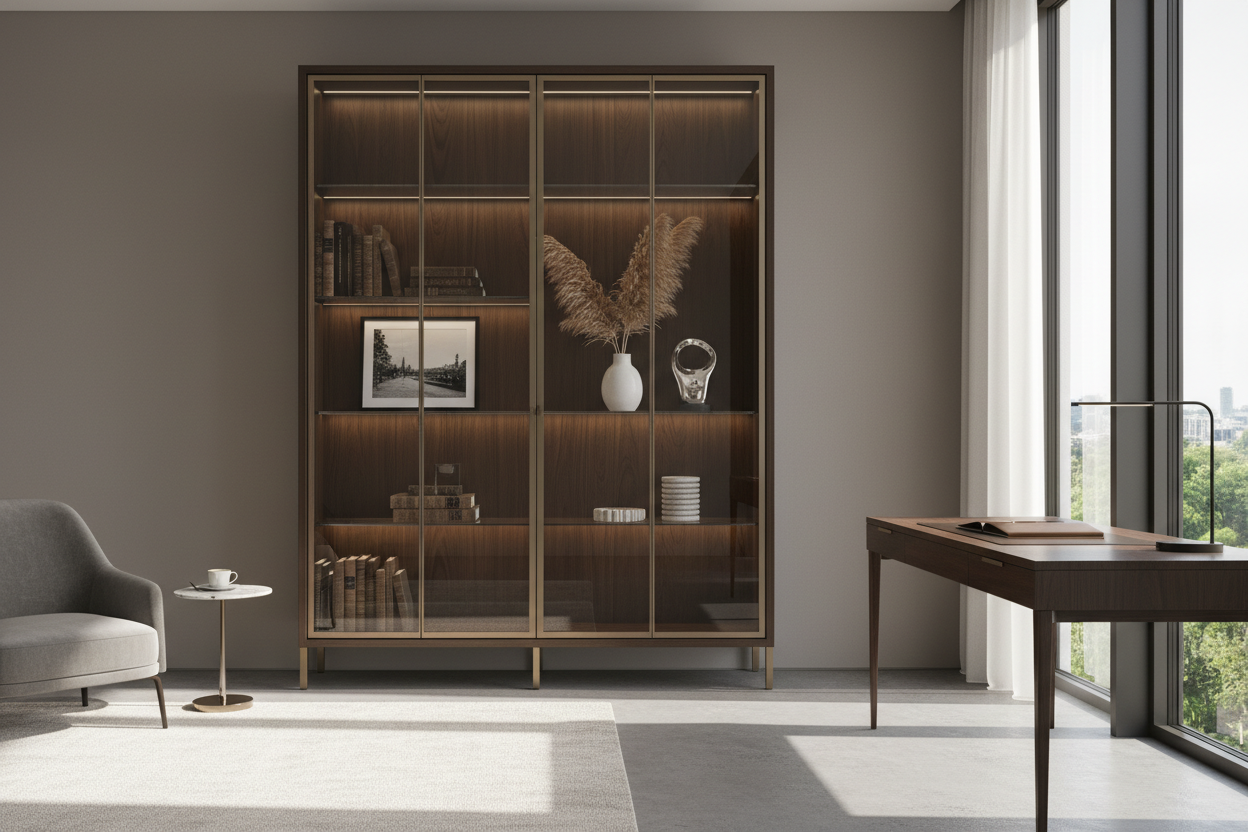
We have all seen that home office. The desk is beautiful, the chair is ergonomic, but the room feels entirely sterile—just monitors, cables, and a blank wall. On the flip side, some workspaces swing too far the other way, drowning in piles of reference books and loose papers. Finding the middle ground between a functional workspace and a room that actually feels good to be in is where the office display cabinet proves its worth.
Adding a dedicated piece to showcase your professional accolades, vintage book collections, or sculptural objects adds immediate character to a room. But getting the proportion and styling right is harder than it looks. In this guide, I will walk you through exactly how to choose, place, and style one so your office looks curated, not cluttered.
Quick Decision Guide
- Measure your vertical space: Leave at least 12 to 18 inches between the top of the cabinet and the ceiling to prevent the room from feeling top-heavy.
- Mind the glare: Place your cabinet on a wall adjacent to windows, rather than directly opposite, to minimize harsh reflections on the glass doors.
- Balance the visual weight: If your desk is a heavy, solid wood executive style, opt for a metal-framed cabinet to keep the room airy.
- Plan for power: If you want integrated lighting, ensure your placement allows for cord management without running cables across walkways.
Material and Build: Choosing the Right Foundation
The materials you select dictate both the longevity of the piece and the overall vibe of your workspace. While open shelving is popular, an enclosed office display case protects your items from dust while offering a more finished, tailored look.
Wood vs. Metal Framing
Solid wood frames—like walnut or white oak—bring warmth and ground a transitional or traditional space. However, wood frames often have thicker stiles (the vertical pieces of the door), which can obscure the items inside. If your goal is maximum visibility and a modern aesthetic, a metal-framed glass cabinet for office use is highly effective. Powder-coated steel profiles are incredibly thin, allowing your displayed items to act as the focal point.
The Importance of Tempered Glass
Never compromise on the glass quality. A proper glass office cabinet must use tempered or safety glass. Standard annealed glass is a hazard if accidentally bumped by a rolling desk chair. Tempered glass handles the daily vibrations of a busy household much better, especially if you live in an older home with bouncy floors.
Space Planning: Where Should It Go?
Placement is everything. A display cabinet office layout needs to account for both workflow and video-call backgrounds.
The Video Call Background
Placing the cabinet directly behind your desk chair creates a sophisticated backdrop for virtual meetings. If you do this, ensure the cabinet is centered on your camera frame. You will also want to avoid placing highly reflective objects on the shelves, as your ring light or monitor glow will bounce right back into the lens.
Clearances and Walkways
Most standard cabinets run between 15 and 20 inches deep. Make sure you leave a minimum of 36 inches of clearance between the front of the cabinet and your desk chair. If your home office is tight, look for a glass cabinet office design with sliding doors rather than swing doors. Sliding doors require zero outswing clearance, saving you valuable square footage.
Styling: The Art of the Shelfie
An empty cabinet holds promise; a poorly styled one creates visual noise. The trick is mastering proportion and negative space.
Start with your largest items first—usually oversized art books or heavy sculptural bookends. Place them on the lower shelves to anchor the visual weight. As you move up the shelves, lighten the load. Group items in odd numbers (threes and fives), and leave at least 30 percent of every shelf completely empty. This negative space gives the eye a place to rest and makes the pieces you do display feel intentional.
Designer's Honest Take
Over the last 15 years, I have specified dozens of these cabinets, and I will be completely honest: keeping them pristine is a chore. A few years ago, I installed a stunning, matte-black metal and glass cabinet in my own home office. It looked incredible on day one. By day ten, the glass was covered in smudges from my dog's nose, and the interior glass shelves showed every single speck of dust when the afternoon sun hit them.
I learned the hard way that glass shelves require constant maintenance. If you hate dusting, do not buy a cabinet with glass interior shelves. Instead, look for a piece with wood or painted MDF shelves behind glass doors. You still get the display aspect, but the solid shelves hide dust far better than transparent ones.
Frequently Asked Questions
What should I put in an office display case?
Mix professional and personal items. Stacked industry books, framed degrees, and architectural models look great alongside organic elements like a trailing pothos plant or a collection of vintage ceramics. Avoid small, loose items that read as clutter from across the room.
How do I keep a glass cabinet for office looking clean?
Skip the harsh chemical sprays. A simple mix of distilled water and a splash of white vinegar, wiped down with a flat-weave microfiber cloth, will leave the glass streak-free. Dust the interior with a dry microfiber cloth weekly.
Is a glass office cabinet safe around kids or pets?
Yes, provided you take two precautions. First, ensure the glass is tempered. Second, you must anchor the cabinet to the wall using anti-tip hardware. Even heavy cabinets become tipping hazards if a child tries to use the lower shelves as a ladder.

Leave a comment
This site is protected by hCaptcha and the hCaptcha Privacy Policy and Terms of Service apply.