










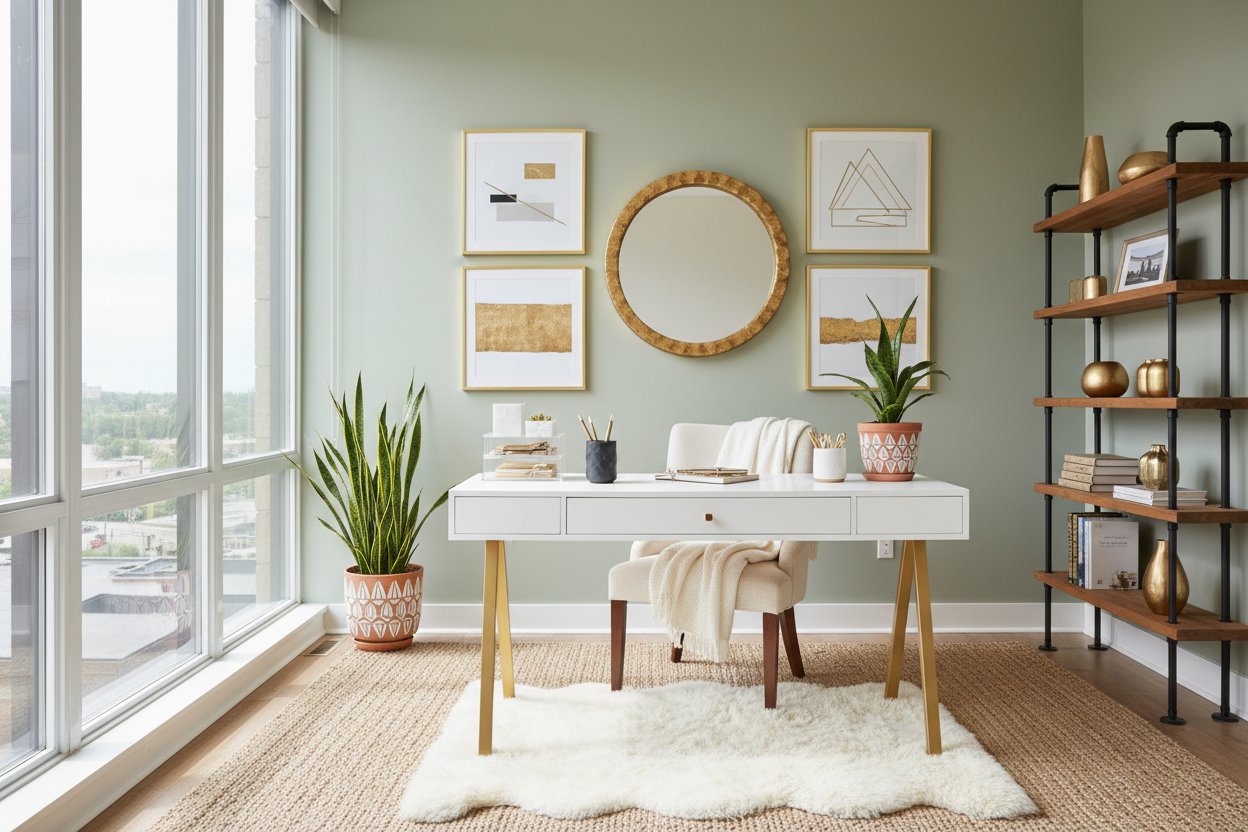
We have all experienced the stark, uninspiring energy of a workspace that feels like an afterthought. The sterile lighting and mismatched furniture can drain creativity faster than a looming deadline. The common misconception is that a curated, boutique-style workspace requires a corporate-level budget. However, as an interior designer, I can tell you that constraints often breed the most interesting design solutions. Achieving a high-end aesthetic with budget office decor requires a shift in perspective—moving away from purchasing generic 'sets' and toward selecting individual pieces with intention, focusing on silhouette, texture, and light.
Key Elements for Affordable Luxury
- Material Authenticity: Avoid shiny, paper-thin veneers. Look for textured laminates or matte finishes that mimic the grain of real wood.
- Lighting Temperature: Swap standard cold bulbs for 3000K-3500K LEDs to create a warm, residential ambiance.
- Hardware Upgrades: Replace stock plastic handles on inexpensive filing cabinets with brushed brass or matte black pulls.
- Vertical Utilization: Use floating shelves to draw the eye upward, making small footprints feel grander without buying bulky bookcases.
Sourcing the Right Foundation: Materials Matter
When you are looking for cheap office ideas, the distinction between "cheap" and "value" lies entirely in the material composition. In the lower price bracket, you will typically encounter particle board covered in either laminate or paper foil.
Laminate vs. Paper Foil
Always opt for high-pressure laminate (HPL) or thermally fused melamine over paper foil finishes. Paper foil scratches if you so much as look at it wrong and peels at the edges within months. Melamine, conversely, offers significant durability and scratch resistance. When decorating an office on a budget, checking the "edge banding" of a desk is crucial. If the edge looks like a seamless continuation of the top rather than a glued-on strip, it will elevate the perceived value of the entire room.
Lighting: The Invisible Architecture
Inexpensive office decor ideas often neglect lighting, yet it is the single most effective tool for setting a mood. Overhead fluorescent lighting is the enemy of luxury. To counter this, layer your lighting scheme.
Start with a task lamp that has a substantial visual weight—perhaps a metal dome or an architectural arm. This serves as a focal point. Then, introduce ambient lighting using floor lamps with fabric shades to soften the acoustics and visuals of the room. This approach eliminates the harsh shadows that make budget furniture look flat and unappealing.
Textural Layering and Accessories
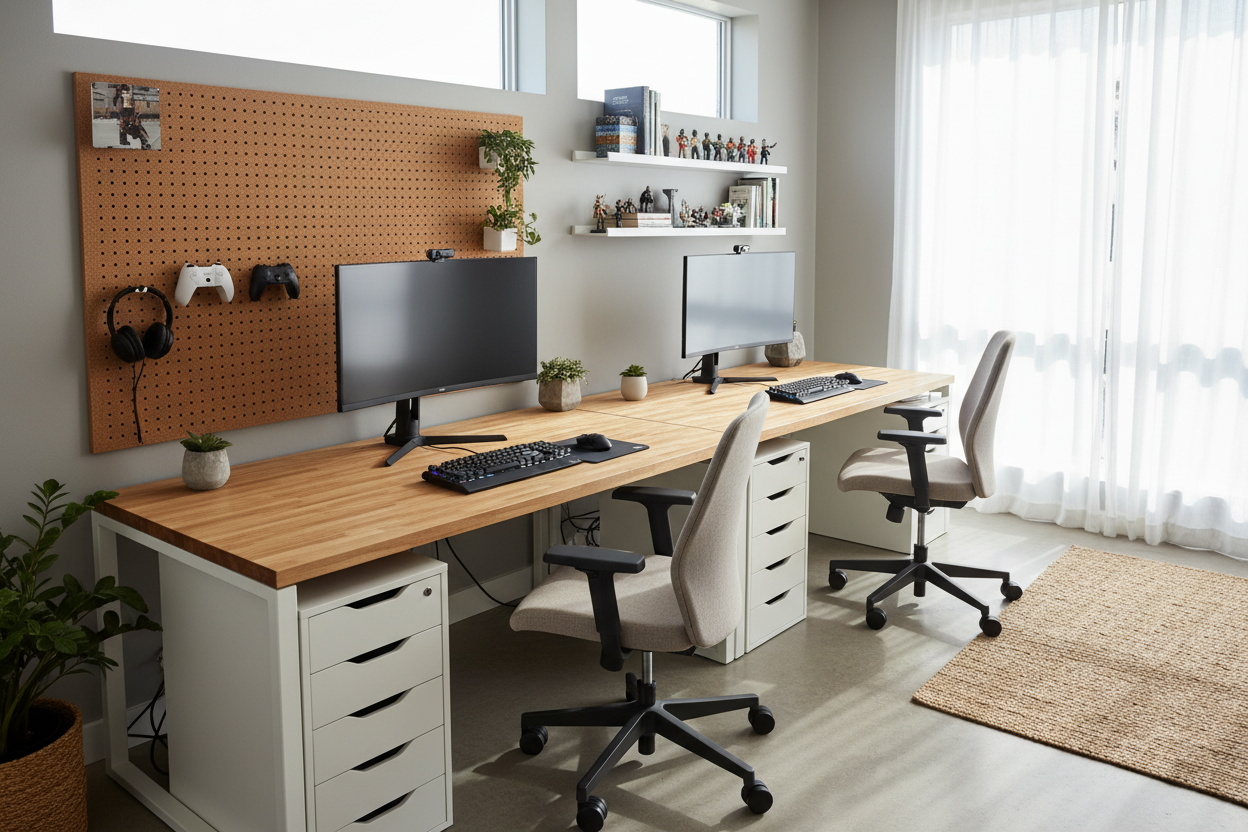
One of the best cheap ways to decorate an office is to distract the eye from utilitarian surfaces using rich textures. If your desk is a simple white laminate table, ground it with a high-quality wool or felt desk pad. This not only improves the ergonomics of mouse usage but adds a tactile layer that feels expensive.
The Rug Anchor
Office decorating on a budget often results in a room that feels "floaty" because furniture is pushed against walls. Anchor your desk with a vintage-style area rug. It defines the zone and dampens the hollow echo often found in sparsely furnished rooms. Choose a low-pile rug to ensure your chair casters can roll smoothly without getting stuck.
Visual Balance and Layout
Low budget office decorating ideas fall flat when the layout lacks flow. Avoid the "dorm room" setup where everything lines the perimeter. If space permits, float your desk in the center of the room or perpendicular to a wall. This command position improves the room's flow and allows you to utilize the wall behind you for a curated gallery of art or shelving, rather than staring at a blank wall while you work.
My Personal Take on Budget Office Decor
I once worked on a home office project where the budget was nearly non-existent. We bought a very basic, hollow-core door and placed it on two metal trestle legs. Visually, it was sleek and modern. However, the first time the client sat down to type, the desk drummed and vibrated with every keystroke—a sensory detail you don't notice in a photo.
The fix was surprisingly simple and cheap. We mounted a heavy timber board underneath the back edge of the desk to add mass and rigidity, and we used a thick, oversized leather blotter on top. The added weight stopped the vibration and the leather absorbed the sound. It taught me that "cheap" furniture often just lacks density. If you can add weight—whether through books, heavy lamps, or structural reinforcement—you can make a $50 desk feel like a $500 piece of joinery.
Conclusion
Creating a workspace that inspires success does not require a five-figure investment. It requires a designer's eye for detail. By upgrading contact points like hardware, layering warm lighting, and choosing durable laminates, you can curate a space that feels personal and professional. Start with the desk, layer in the light, and let your productivity thrive.
Frequently Asked Questions
How can I make cheap office furniture look custom?
The easiest hack is to swap out the hardware. replacing standard knobs with leather pulls or brass handles instantly changes the character of the piece. Additionally, using peel-and-stick wallpaper on the back panel of a bookshelf adds depth and interest.
What is the best paint color for a small budget office?
Light, neutral tones like warm greys or off-whites (think "Swiss Coffee" or "Dove Wing") reflect light and make small spaces feel larger. If you want drama without cost, paint just the ceiling a dark charcoal to create a cozy, library-like atmosphere.
Is it worth buying a used office chair?
Absolutely. A second-hand Herman Miller or Steelcase chair is infinitely better for your spine than a brand-new budget chair from a big-box store. The mechanisms and foam density in high-end chairs are designed to last 10+ years, making them a safe vintage buy.

Leave a comment
This site is protected by hCaptcha and the hCaptcha Privacy Policy and Terms of Service apply.