










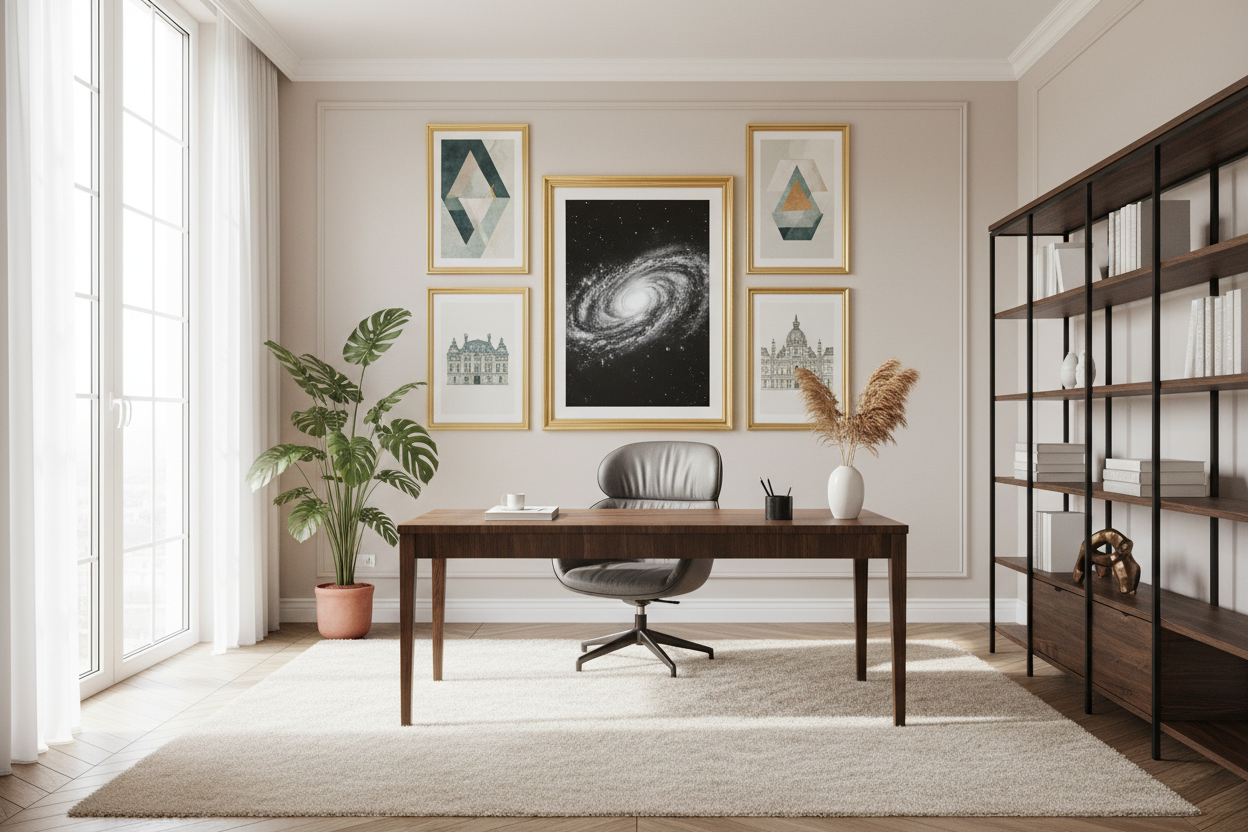
There is nothing quite as uninspiring as staring at a blank, beige wall while trying to meet a deadline. It drains energy and makes a workspace feel temporary rather than established. As a designer, I often see clients invest heavily in ergonomic chairs and mahogany desks, only to neglect the vertical surfaces. The right framed wall art office selection does more than just fill space; it anchors the room, improves acoustics, and subtly communicates your professional brand.
Quick Decision Guide: Selecting Office Art
- Scale & Proportion: The art should span two-thirds to three-quarters of the width of the furniture below it (e.g., your desk or sofa).
- Glazing Type: Always opt for non-reflective or museum glass in offices to prevent overhead lighting glare.
- Frame Material: Match the frame to the secondary accents in the room (e.g., chair legs, drawer pulls) rather than the main wood finish to avoid a "matchy-matchy" look.
- Subject Matter: Abstract or architectural framed office prints generally offer the best longevity and least visual distraction during video calls.
Mastering Scale and Composition
The most common error I encounter in corporate and home offices is "floating postage stamp" syndrome—hanging a small piece of art on a massive wall. Visual balance is critical. If you are working with a large executive desk, a single small frame will look lost. In this scenario, you have two sophisticated options: a large-scale statement piece or a gallery wall of framed office pictures.
For a gallery wall, coherence is key. You don't need the images to match, but the frames should share a common element, such as profile thickness or material. This creates a unified visual language that feels intentional rather than cluttered.
Materiality: Wood vs. Metal Frames
When specifying framed art for offices, the material communicates the vibe. A sleek, matte black aluminum frame suggests precision, modernity, and tech-savviness. It pairs exceptionally well with glass desks and Herman Miller seating.
Conversely, a walnut or oak frame brings warmth and gravitas. If your office leans traditional or mid-century modern, natural wood frames bridge the gap between cozy and professional. However, be wary of cheap veneers. In an office setting, where you might stand close to the art during a presentation or meeting, the joinery tells a story. Solid wood with splined corners exudes quality.
The Role of Matting
Never underestimate the power of a wide mat. Taking a standard 8x10 print and placing it in a 16x20 frame with a thick, acid-free white mat instantly elevates the piece. It adds "breathing room" around the framed artwork for office spaces, allowing the eye to rest. This technique turns affordable prints into gallery-worthy installations.
Lighting and Glazing Considerations
Offices are unique because they often have harsh overhead lighting or strong directional light from windows. Standard glass on framed posters for office use can turn your artwork into a mirror. I always recommend UV-protective, non-glare acrylic or glass. It protects the pigment from fading—crucial if your desk faces a window—and ensures the image remains visible from all angles.
Lessons from My Own Projects
I learned the hard way about the importance of "visual quietness" in a workspace. Early in my career, I designed a home office for a fintech consultant. We installed a vibrant, chaotic abstract piece directly behind his monitor. It looked stunning in photos.
Two weeks later, he called me. The office framed wall art was visually exhausting him. Every time he looked up from his spreadsheet, his brain had to process complex shapes and aggressive reds. We swapped it for a serene, large-scale architectural photograph with a lot of negative space and a simple maple frame. The difference was immediate. He felt calmer and more focused.
Another unpolished tip: If you are hanging art in a commercial building with metal studs, don't trust adhesive strips. The HVAC vibrations in large office buildings can eventually shake them loose. I once walked into a conference room to find a shattered glass frame on the table. Always use toggle bolts or proper anchors.
Creating Your Professional Sanctuary
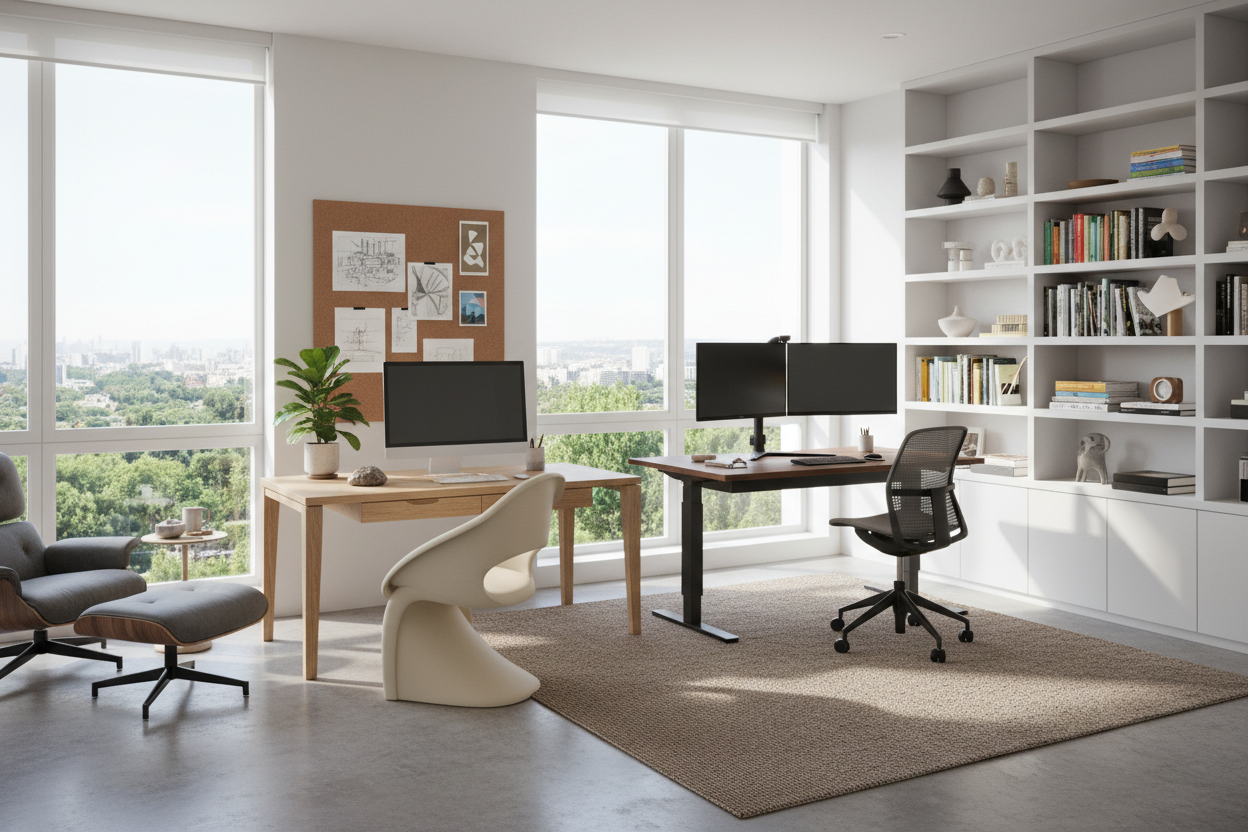
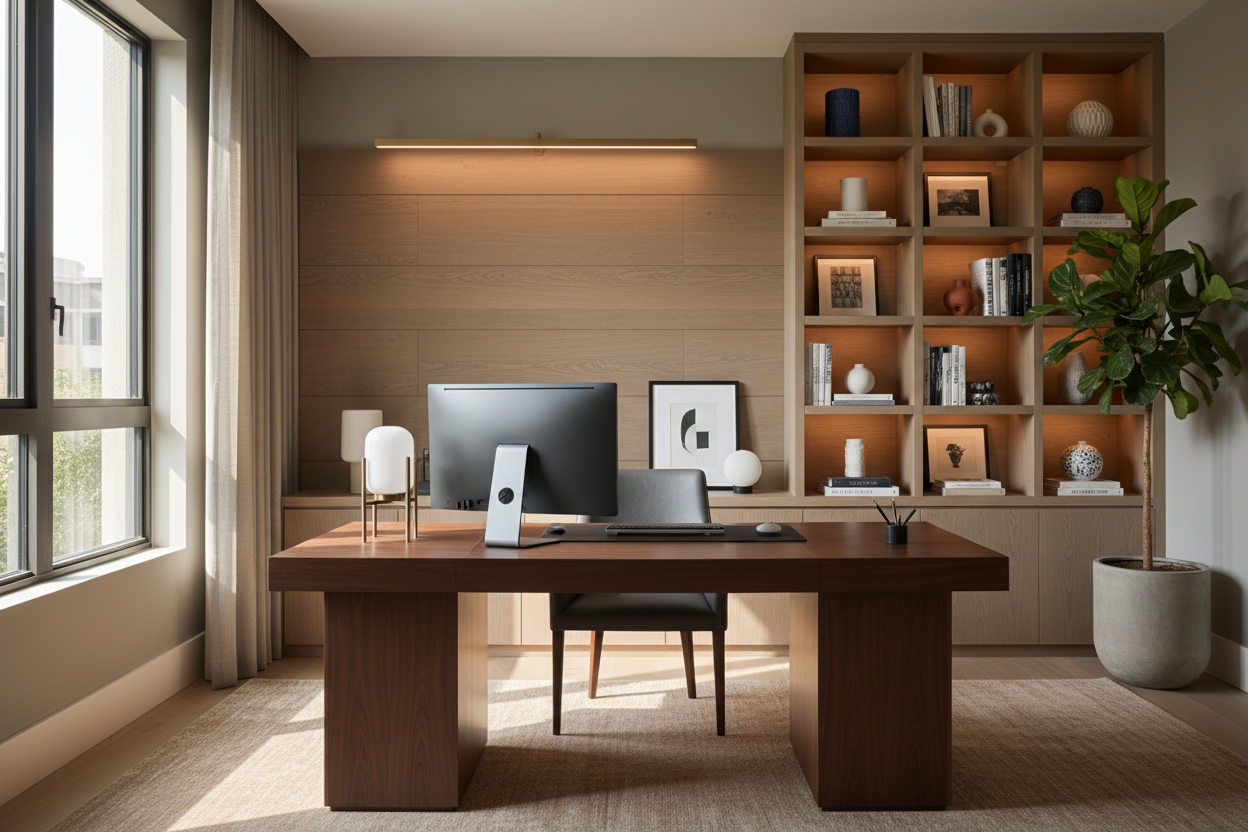
Your office environment directly influences your output. By carefully selecting scale, materials, and glazing, you transform a workspace from a utility room into a studio of productivity. Don't settle for generic decor; curate a view that motivates you.
Frequently Asked Questions
What is the ideal height to hang art in an office?
While the gallery standard is 57 inches on center, in an office, you often view art while seated. I recommend hanging art slightly lower—around 54 to 56 inches on center—or eye-level from your seated position if the art is directly opposite your desk.
Should I choose canvas or framed prints for a professional look?
Framed prints generally look more formal and polished due to the glass and matting structure. Canvas can feel a bit casual or residential. If you want a luxury aesthetic, go with framed office prints with a wide mat.
How do I stop frames from tilting?
Use two hanging points (D-rings) on the back of the frame rather than a single wire. This locks the frame in place and prevents it from shifting when doors slam or cleaning crews dust the frames.

Leave a comment
This site is protected by hCaptcha and the hCaptcha Privacy Policy and Terms of Service apply.