










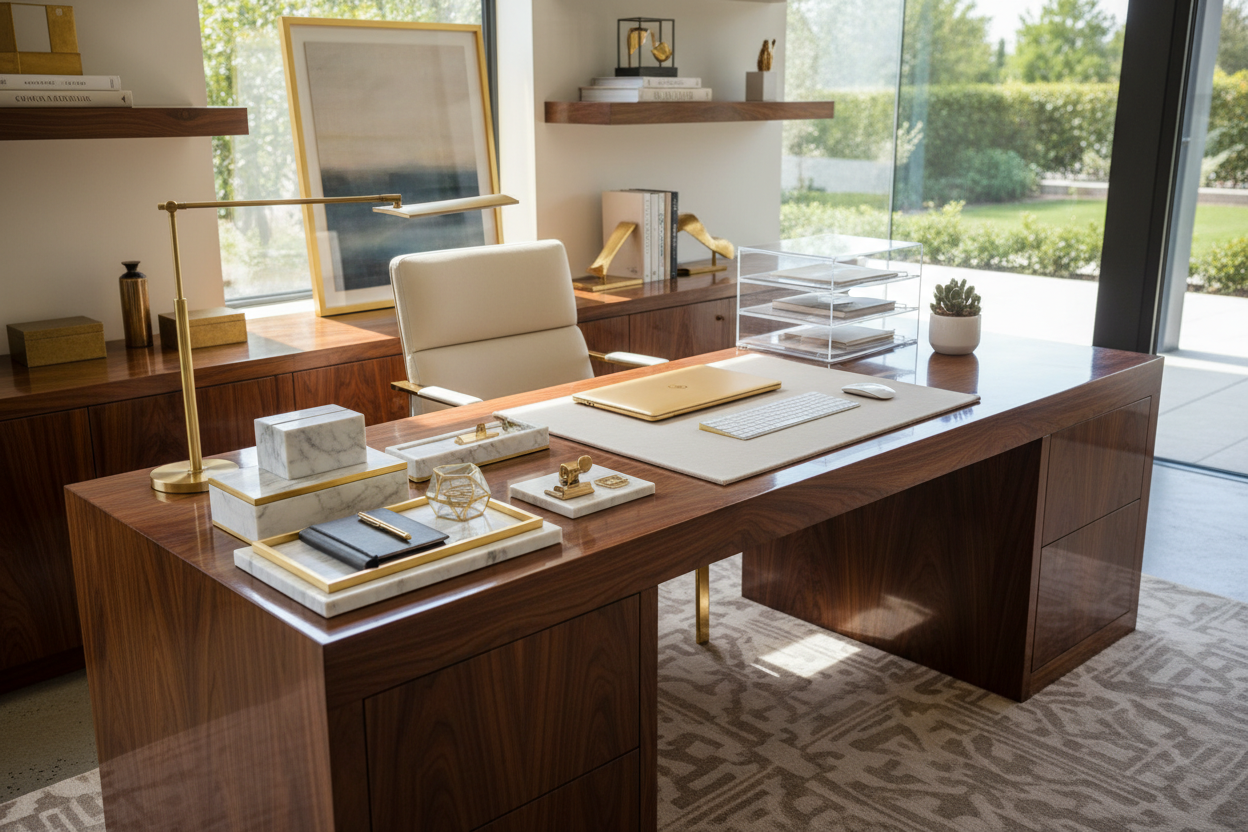
A chaotic surface is the enemy of a calm mind and a productive workflow. As a designer, I often walk into home offices where the furniture is exquisite, but the surface is lost under a sea of papers and tangled cables. The challenge isn't just about tidying up; it is about curating a space that invites focus while maintaining visual harmony. Implementing the right organised desk ideas requires a shift in perspective—moving away from clutter and toward a system where every object has a designated sanctuary.
Key Principles for a Curated Workspace
- Zoning Logic: Divide your desk into 'active' (daily reach) and 'passive' (storage) zones to maintain flow.
- Material Continuity: Select organizers that complement your desk's finish (e.g., walnut trays for a timber desk) to reduce visual noise.
- Vertical Utilization: Use risers and wall-mounted shelving to liberate the primary work surface.
- Ergonomic Alignment: Ensure storage solutions do not impede the natural reach or wrist placement required for typing.
- Concealment Ratio: Aim for 80% hidden storage (drawers/boxes) and 20% display (trays/stands) to avoid the 'cluttered organizer' effect.
Mastering the Layout: Zoning and Ergonomics
When approaching desk organisation, we must first address the layout. The most common error is placing bulk storage in the primary work zone. Your monitor, keyboard, and mouse are the anchors. Everything else must orbit these essentials. For office table organization ideas, I recommend the 'semicircle rule.' Anything you use hourly should be within a forearm's reach. Anything used daily goes to the corners; weekly items belong in drawers or on shelves.
Elevating Aesthetics with Materiality
Plastic bins may be functional, but they rarely inspire. To achieve a high-end look, focus on aesthetic desk organization ideas that utilize premium materials. If you have a glass or lacquer desk, consider leather or felt desk tidy ideas to add warmth and dampen sound. For a solid wood desk, brass or matte black metal organizers create a striking contrast. This attention to texture turns a simple study table organizer idea into a design statement.
Storage Solutions for Compact Spaces
Dealing with limited square footage requires ingenuity. Desk organization ideas for small desk layouts must prioritize verticality. A monitor riser is non-negotiable here; it lifts your screen to eye level and provides a 'garage' underneath for your keyboard or notebooks. Furthermore, office desk shelving ideas shouldn't be limited to bulky bookcases. Floating shelves installed directly above the monitor draw the eye upward and keep the footprint clear.
The Home Office vs. The Bedroom Desk
Context matters. Home desk organization ideas often differ from corporate setups because the desk must blend with residential decor. This is especially true for bedroom desk organization ideas. Here, we want to avoid the sterile 'cubicle' look. Opt for lidded woven baskets or linen-wrapped boxes to conceal stationery. These cute ways to organize your desk allow the workspace to transition back into a restful bedroom environment once the laptop is closed.
Managing the Micro-Clutter
The devil is in the details—paperclips, charging cables, and sticky notes. For office table organizer ideas, look for modular drawer inserts rather than dumping everything into a single deep drawer. Compartmentalization is key. Additionally, never underestimate the power of a cable management spine or under-desk tray. Nothing ruins bedroom desk organization faster than a nest of black wires hanging against a clean wall.
My Personal Take on Organised Desk Ideas
In my years of designing bespoke home offices, I have learned a hard lesson about 'transparent' storage. Early in my career, I loved specifying clear acrylic organizers because they looked modern and airy in photos. However, I quickly realized that in a real-world setting, acrylic is unforgiving. It highlights every fingerprint, dust mote, and the messy contents inside the drawer.
On a recent project for a writer in London, we swapped out all her clear containers for smoked oak boxes with leather pulls. Not only did it hide the visual noise of her pens and highlighters, but the tactile experience of opening a wood box versus a plastic bin completely changed how she felt about sitting down to work. It felt substantial and permanent. My advice? Prioritize texture and concealment over transparency unless you are incredibly disciplined with what you put inside.
Conclusion
Transforming your workspace is not about buying the most expensive accessories; it is about intentionality. By selecting materials that age well and prioritizing ergonomic zoning, you create a space that serves your ambition. Start with one zone—perhaps your primary drawer or monitor setup—and apply these principles to reclaim your focus.
Frequently Asked Questions
How do I maintain an organized desk long-term?
The 'reset' method is most effective. Spend the last five minutes of your workday returning items to their designated zones. This ensures you start the next morning with a clean slate, rather than inheriting yesterday's chaos.
What are the best desk organization ideas for a small desk without drawers?
Focus on wall-mounted pegboards or grid panels. These utilize vertical wall space for holding headphones, scissors, and notes, keeping the limited surface area free for your laptop and coffee.
How can I hide cables on a glass desk?
Glass desks are tricky. Use adhesive cable clips that run along the back of the metal legs to guide wires down to the floor. Alternatively, use a cable sleeve that matches the wall color behind the desk to camouflage the cords visually.

Leave a comment
This site is protected by hCaptcha and the hCaptcha Privacy Policy and Terms of Service apply.