










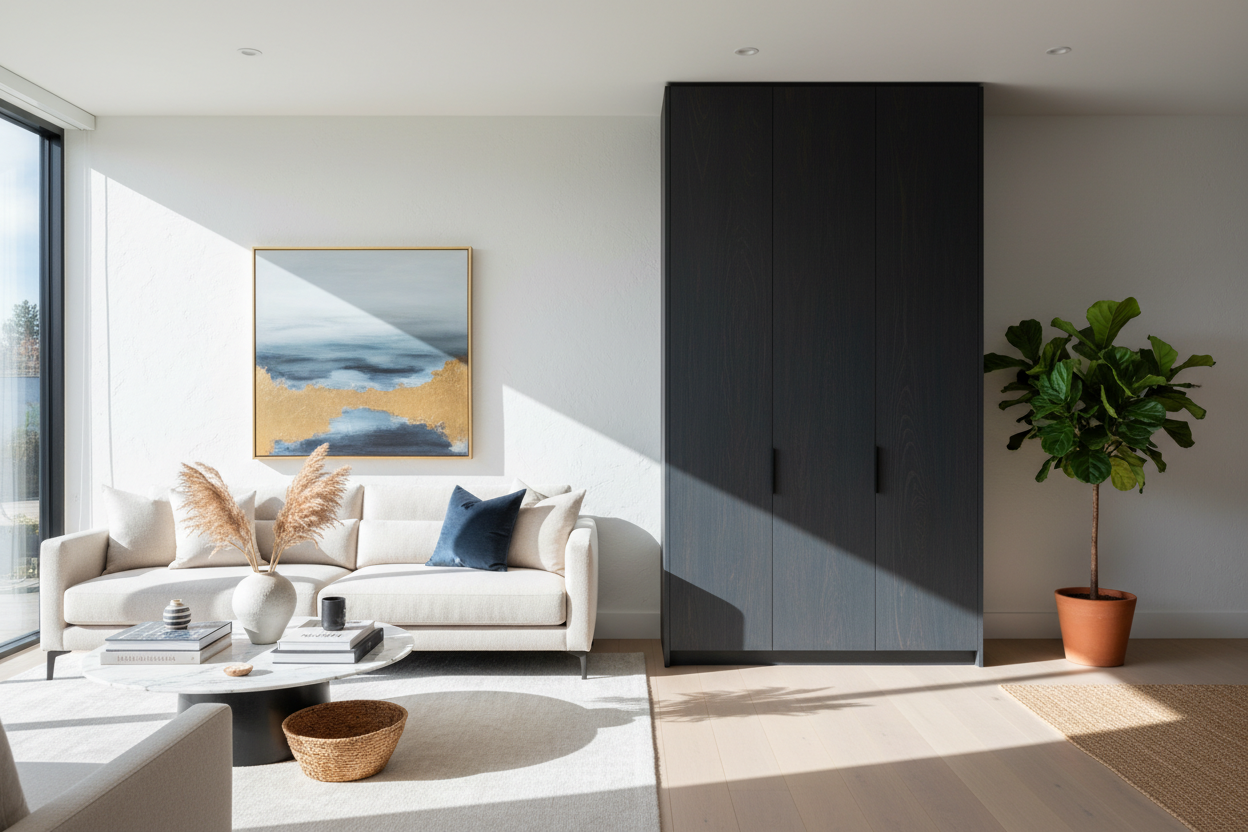
My living room used to look like a Staples stockroom had a nervous breakdown. Between the tangled nest of HDMI cables and the printer that blinked 'Low Ink' at me while I tried to watch Netflix, I couldn't escape my job. I realized I didn't need a bigger desk; I needed an office cabinet tall enough to act as a physical barrier between my living space and my spreadsheets.
Standard desks are great for working, but they are terrible for 'not working.' When your laptop and monitor are always in your peripheral vision, you never truly clock out. Moving to a vertical storage solution wasn't just about floor space—it was about reclaiming my sanity.
- Vertical cabinets use 'dead' air space instead of eating your floor.
- Closed doors provide a psychological 'end' to the workday.
- Adjustable shelves are essential for fitting bulky printers and binders.
- Always anchor tall units to the wall to avoid a furniture-induced disaster.
The Problem With Standard Filing Cabinets (They're Just Dust Magnets)
Let's be honest: the classic two-drawer metal filing cabinet is where dreams go to die. They are usually 28 inches tall, which is the exact height needed to collect a layer of dust, three half-empty coffee mugs, and a stack of mail you'll never open. They take up a huge footprint but offer almost no actual utility for modern tech.
I spent years trying to make small-scale storage work. At one point, I shoved my entire office into a mobile storage cabinet thinking portability was the answer. It wasn't. I just ended up wheeling my stress from the kitchen to the bedroom. Small cabinets leave your 'ugly' gear—the router, the paper tray, the chunky external hard drives—exposed at eye level. It's visual noise that keeps your brain in work mode.
The Hunt for an Office Cabinet Tall Enough for Real Life
When I started hunting for a tall office cabinet, I did the math. Most home offices are squeezed into guest rooms or corners of living rooms. You have plenty of vertical real estate, so why stop at waist height? I looked for units between 60 and 72 inches. Anything shorter feels like a dresser; anything taller starts to feel like it's looming over you.
You need a depth of at least 15 inches. I learned this the hard way after buying a 'slim' unit that wouldn't actually close because my standard 3-ring binders were sticking out by half an inch. Look for real weight capacities, too. If you're stacking reams of paper, those flimsy 1/4-inch particle board shelves will bow faster than a cheap floor lamp. Aim for shelves rated for at least 30-40 lbs each.
How I Hid the 'Ugly Tech' (Yes, Even the Printer)
The printer is the ultimate vibe-killer. It’s bulky, it’s beige (usually), and it has wires sticking out like a cybernetic octopus. A tall office storage cabinet with adjustable shelves is the only way to make it disappear. I spent an afternoon with a 2-inch hole saw bit, drilling a clean opening in the back panel of my cabinet to route a power strip inside.
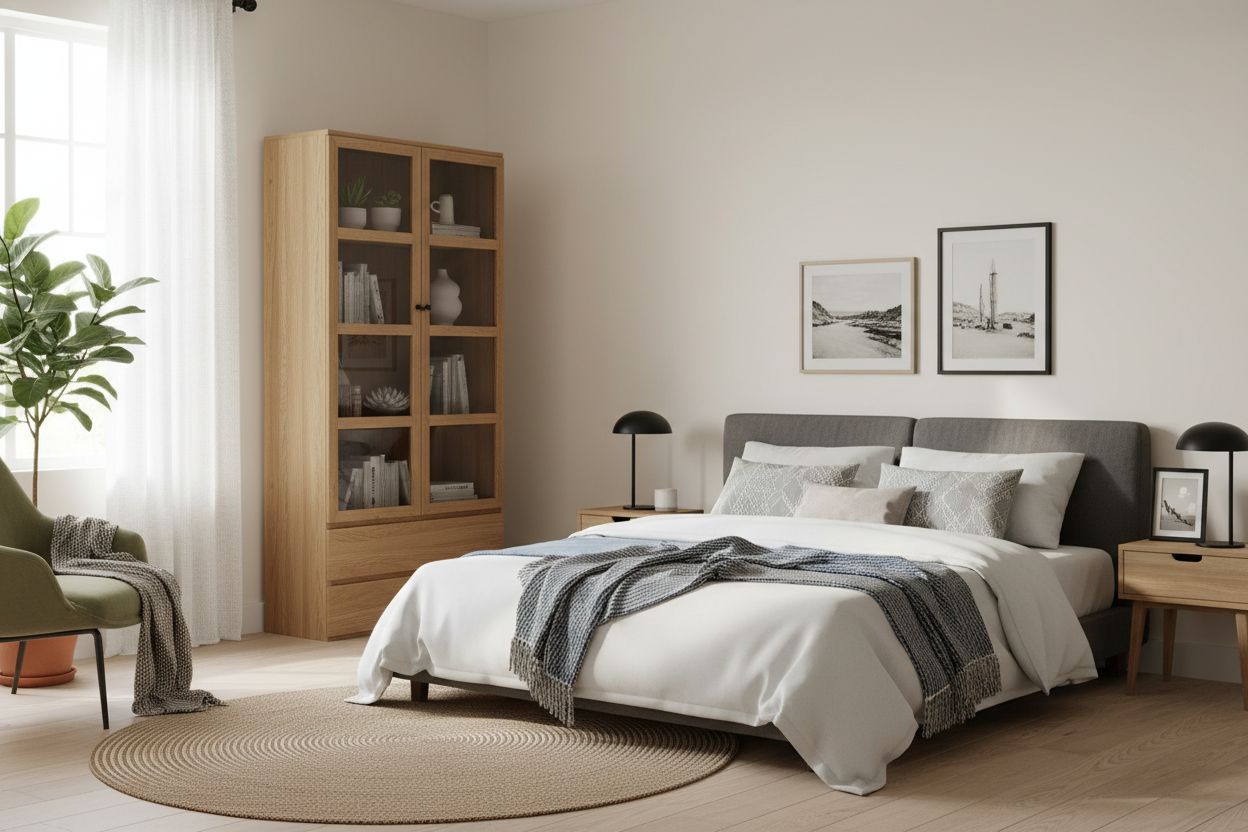
Now, my printer, scanner, and charging hub live behind closed doors. If you want a hybrid look where you can show off your vintage book collection while hiding the cables, a tall storage cabinet with glass doors is a solid middle ground. You put the 'pretty' stuff at eye level behind glass and keep the bottom half for the tangled mess of chargers and tax returns.
Solid vs. Glass: What Matches Your Chaos Level?
Be honest about who you are as a person. If your filing system is 'toss it in and hope for the best,' glass doors will only highlight your failure. Solid doors are for the messy-but-functional crowd. However, if you lean into a moody, professional aesthetic, a black cabinet with glass doors can make a home office feel like a curated library rather than a corporate cubicle.
The Psychology of 'Clocking Out'
There is a distinct, satisfying 'click' when I close the doors on my tall office cabinet with doors at 5:01 PM. It's a physical ritual. When the tech is out of sight, my brain stops scanning for blinking notification lights or the glare of a monitor. It allows the room to become a home again.
In a world where our bedrooms are our offices and our kitchens are our conference rooms, boundaries are a luxury. Investing in a tall unit allowed me to stop living in an office and start living in a home that just happens to have a workspace hidden inside it.
Personal Experience: The Wobbly Mistake
I once bought a 70-inch cabinet from a discount site that arrived in a box the size of a pizza. It was made of such thin material that it wobbled every time the printer started its 'cleaning head' cycle. My cat actually refused to enter the room when it was running. Lesson learned: check the shipping weight. A sturdy tall office storage unit should be heavy. If the box weighs less than 50 lbs, it’s probably a glorified cardboard box. I eventually upgraded to a solid wood frame with a 150-lb total capacity, and it doesn't move an inch.
Frequently Asked Questions
How do I stop my router from overheating inside a cabinet?
If you're hiding your router, make sure the cabinet isn't airtight. You can drill extra ventilation holes in the back or choose a unit with a mesh or cane front. Most routers stay cool enough as long as they aren't buried under stacks of paper.
Is a tall office cabinet with drawers better than shelves?
A tall office cabinet with drawers is great for pens and small gadgets, but shelves offer more flexibility. I prefer a mix: two drawers at the bottom for small items and large, adjustable shelves above for tech and binders.
How do I keep a tall cabinet from tipping?
Every tall unit should come with an anti-tip kit. Use it. Find a stud in your wall and screw the safety strap directly into it. It takes five minutes and prevents a total disaster, especially if you have kids or pets.

Leave a comment
This site is protected by hCaptcha and the hCaptcha Privacy Policy and Terms of Service apply.