










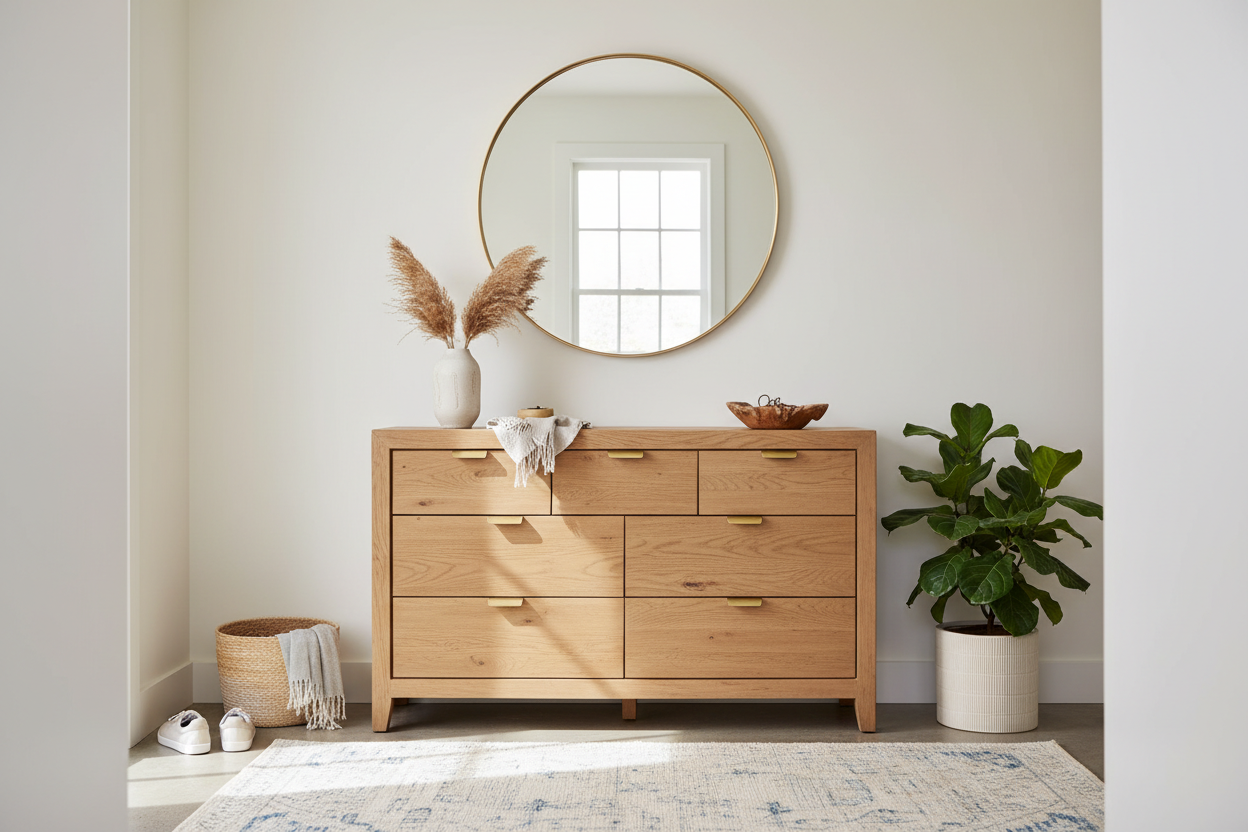
I used to have a console table in my entryway that was essentially a $400 landing pad for trash. Within twenty minutes of getting home, that beautiful mid-century surface would be buried under a mountain of junk mail, half-empty lip balms, and receipts for things I definitely intended to return but never did. It was a 'doom pile' in its purest form—a visual reminder of everything I hadn't dealt with yet.
I finally hit a breaking point when I lost my car keys under a pile of coupons for a pizza place that closed in 2019. I realized that an open surface is just an invitation for chaos. I didn't need a table; I needed a small accent cabinet with drawers. I needed a place where my mess could go to hide while I figured out its final destination.
- Drawers provide a 'hard stop' for clutter that open shelves lack.
- Solid wood construction is non-negotiable for furniture you touch ten times a day.
- Depth is the most important measurement—stay under 14 inches for narrow hallways.
- Specific drawer assignments are the only way to prevent the dreaded 'junk drawer' spiral.
The Anatomy of a Perfect 'Doom Pile'
Why do we do this to ourselves? It’s the path of least resistance. When you walk through the door after a ten-hour day, the last thing you want to do is file a water bill. So, you drop it on the first flat surface you see. Most entryway furniture is designed for aesthetics, giving you a wide, inviting stage for your clutter to perform on.
The problem is that once one item lands, it invites friends. A single set of keys is fine. But then comes the sunglasses, the leash, the spare change, and suddenly you have a tectonic plate of household detritus. These piles don't just look bad; they create micro-stress. You see the pile, your brain registers 'unfinished business,' and you never truly relax in your own home. You need a piece of furniture that acts as a filter, not a magnet.
Why I Swapped My Console Table for Hidden Storage
Making the switch felt like a betrayal of my 'minimalist' aesthetic, but it was the best functional decision I've made in years. I realized that if I can't be a person who immediately files mail, I should at least be a person who hides it. A cabinet offers a boundary. When the drawer is closed, the visual noise disappears.
Finding the right piece wasn't easy. I spent three nights measuring my hallway because I didn't want to lose the walkway space. When you go to choose the perfect cabinet with drawers, you have to account for the 'swing zone'—the space needed to actually pull the drawers out without hitting the opposite wall. I ended up with a 12-inch deep unit that felt like it was custom-built for my narrow foyer.
The Magic of Categorized Drawers
The secret to keeping a cabinet from becoming one giant vertical junk drawer is categorization. I assigned my three drawers very specific jobs. Top drawer: Keys, wallet, and sunglasses. Middle drawer: Outgoing mail and 'to-be-filed' paperwork. Bottom drawer: Dog gear—poop bags, the retractable leash, and the treats I use for bribery.
By removing the friction of 'where does this go?', I actually started putting things away. It takes the same amount of effort to drop keys into a drawer as it does to drop them on a table, but the visual payoff is massive. My entryway went from looking like a crime scene to looking like a curated home in about forty-eight hours.
Material Matters: Why Solid Wood Outlasts MDF
I’ve made the mistake of buying cheap MDF (medium-density fiberboard) cabinets before. They look fine in the studio-lit photos, but the second you start pulling those drawers daily, the tracks start to sag. The screws pull out of the particle board, and suddenly you're lifting the drawer face just to get it to close. If you're using this as a daily drop-zone, you need a wood accent cabinet with drawers.
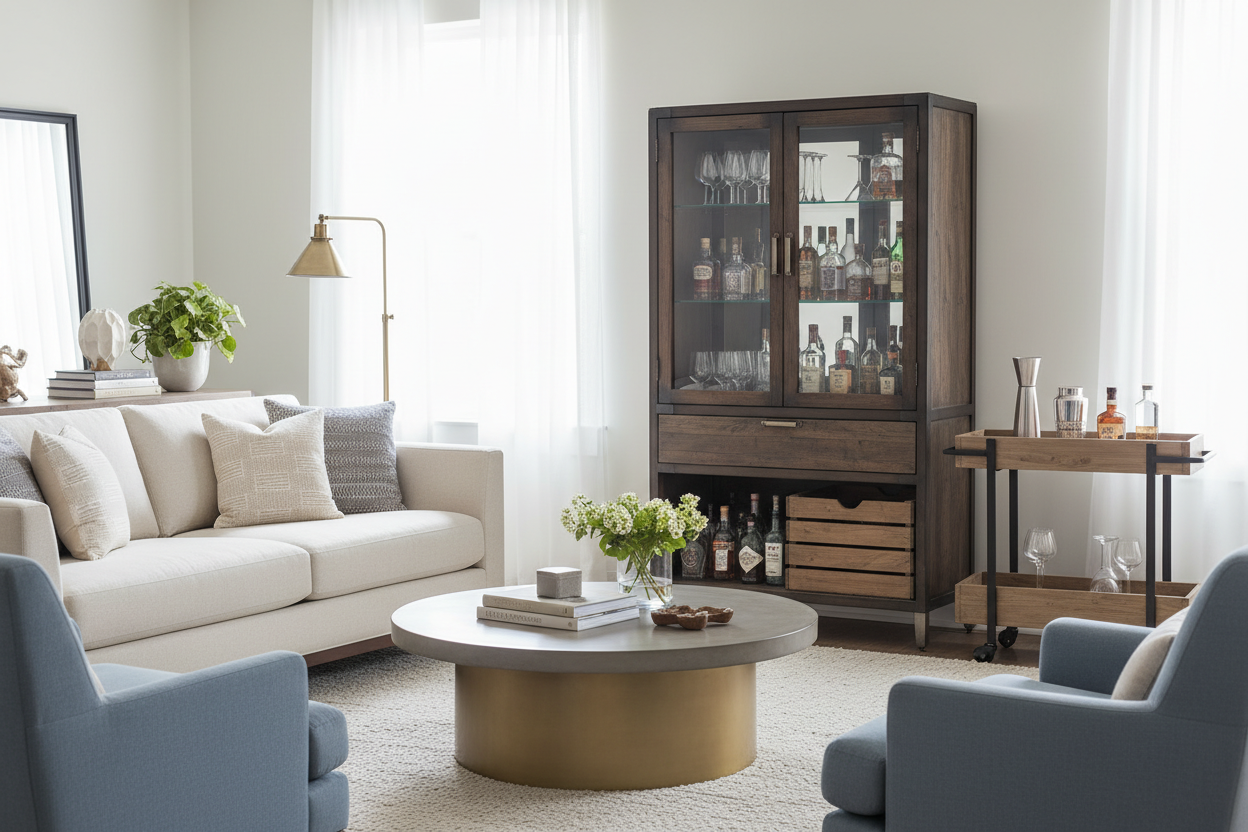
I look for kiln-dried hardwoods like acacia or oak. They have the weight to stay put when you yank a drawer open in a hurry. You want to feel a bit of heft. If I can lift the whole cabinet with my pinky finger, it’s going to wobble every time I toss my keys inside. Contrast this with a small wood cabinet with glass doors—while glass is beautiful for showing off your vintage glassware in a dining room, it's the enemy of the entryway. You don't want to see your clutter; you want it behind solid, opaque wood.
How to Style Your New Entryway MVP
You don't want your new storage piece to look like a shrunken office filing cabinet. The goal is to make it look intentional. I styled mine with a heavy brass lamp—the extra weight helps anchor the piece—and a small ceramic tray for the one or two items that truly don't have a home yet. A piece of art hanging about six inches above the cabinet helps it feel integrated into the room rather than just pushed against a wall.
If natural wood feels too traditional for your vibe, look for different finishes. A black cabinet with glass doors (maybe with frosted or reeded glass to hide the mess) can provide a much sleeker, modern look. The key is to maintain that footprint—keep it small, keep it functional, and for the love of your sanity, keep the drawers closed.
Personal Experience: The 'Too Deep' Disaster
I learned the hard way that 'small' is a relative term. My first attempt at this was a beautiful vintage-inspired piece that was 18 inches deep. It looked great online, but once it was in my 36-inch hallway, I was basically shimmying past it like a cat. I hit my hip on the corner at least twice a day. I eventually sold it on Marketplace and bought a 13-inch deep model. Those five inches are the difference between a functional home and an obstacle course. Measure twice, buy once.
FAQ
How many drawers do I actually need?
Three is the sweet spot. One for personal items (keys/wallet), one for mail, and one for 'utility' (tools, batteries, or pet gear). Any more than that and you'll forget what you put where.
Is solid wood really worth the extra money?
Yes. Entryway furniture takes more abuse than a bedroom dresser. Between the humidity from the door opening and the constant drawer usage, MDF will warp and peel within two years. Solid wood is a ten-year investment.
Can I use a nightstand as an accent cabinet?
You can, but watch the height. Nightstands are usually 24-28 inches tall, which is a bit low for an entryway. Look for 'accent' or 'hallway' cabinets which usually sit around 30-34 inches—the perfect height for dropping your keys without leaning over.

Leave a comment
This site is protected by hCaptcha and the hCaptcha Privacy Policy and Terms of Service apply.