










I remember the exact moment I decided to stop buying cheap furniture. I was sitting on my kitchen floor, surrounded by three flat-pack boxes from a Swedish giant, and my eyes wouldn't stop watering. It wasn't because the instructions were confusing—though they were—it was the smell. That sharp, chemical tang that hits the back of your throat and stays there for days.
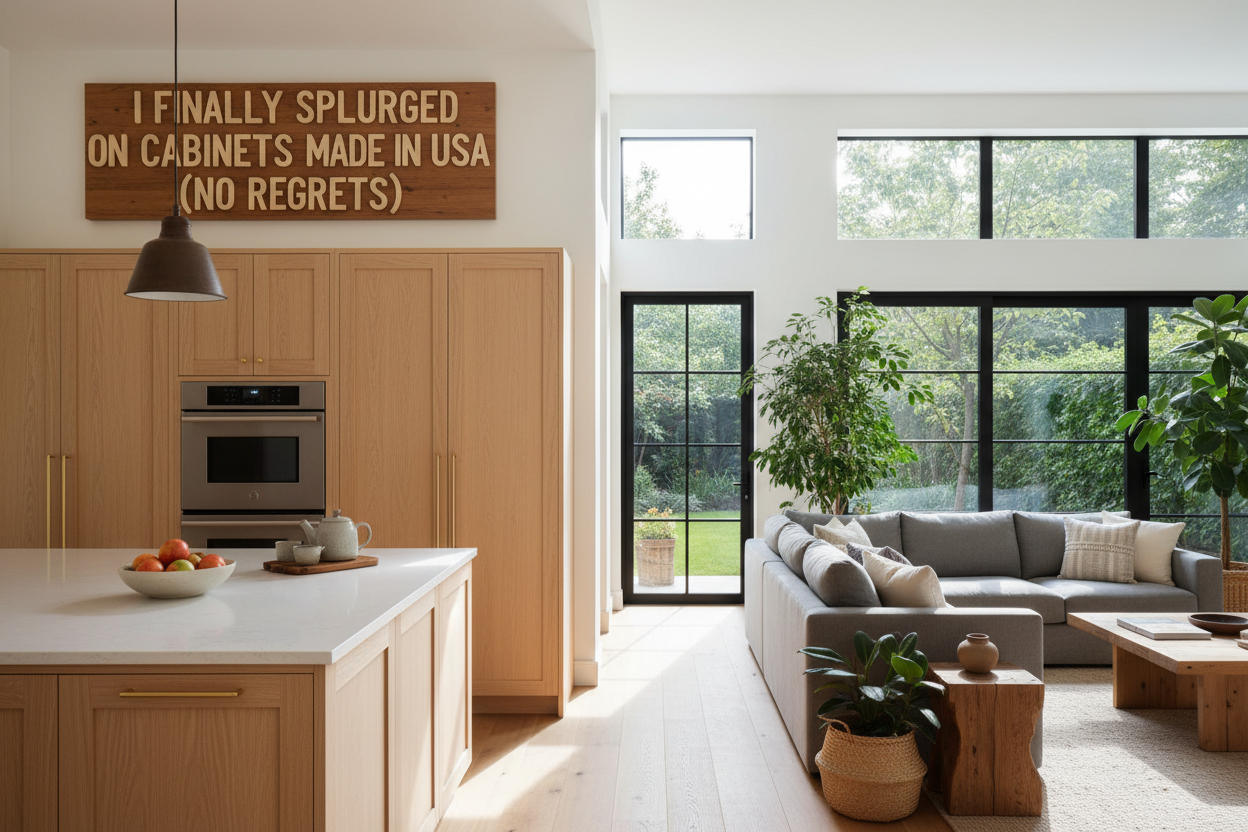
After three days of headaches, I realized I was literally breathing in my kitchen. When it came time for my full renovation, I knew I couldn't do it again. I spent six months obsessing over cabinets made in usa because I wanted a kitchen that didn't double as a chemistry experiment. It was the best decision I ever made for my home.
Quick Takeaways
- Domestic cabinets adhere to much stricter formaldehyde and VOC regulations than most imports.
- The 'cost' of American cabinets is often offset by a lifespan that is 2x to 3x longer than particleboard alternatives.
- Lead times for domestic shops are often more predictable than waiting on a shipping container from overseas.
- Modern US manufacturers are killing the 'outdated oak' stereotype with sleek, minimalist designs.
The Formaldehyde Wake-Up Call (Or, Why My Old Kitchen Smelled)
A few years ago, I renovated a small rental apartment using the cheapest MDF units I could find. Within an hour of opening the boxes, the entire unit smelled like a nail salon. I thought it was just 'new furniture smell,' but a deep dive into indoor air quality told a different story. Most of those budget imports are held together by urea-formaldehyde glues that off-gas for years.
I started noticing that every time I opened a drawer, I got a faint whiff of something synthetic. For someone who spends four hours a day prepping meals, that was a dealbreaker. I did the math: I was saving $4,000 on the initial build but potentially paying for it with my long-term respiratory health. I promised myself that my forever home would be different.
The research was terrifying. Some imported plywood doesn't just off-gas; it lacks the structural integrity to hold heavy stone countertops over time. I saw photos of sagging frames and peeling thermofoil that looked like a sunburned back. That was the end of my 'budget-at-all-costs' phase.
Why American Made Kitchen Cabinets Actually Matter for Your Lungs
When you start looking at made in america cabinets, you start hearing the term 'CARB2 compliance' a lot. It sounds like boring technical jargon, but it is actually your best friend. California’s Air Resources Board set the gold standard for wood products, and because the US market is so integrated, most american made kitchen cabinets meet these strict non-toxic requirements by default.
Domestic shops generally use high-quality plywood or solid hardwood frames with water-based finishes. These finishes dry quickly and don't dump VOCs (volatile organic compounds) into your breakfast nook for the next decade. When my new units arrived, I braced myself for the chemical sting. It never came. They just smelled like... wood.
Beyond the air quality, the hardware is just better. Domestic manufacturers tend to use heavy-duty Blum or Grass hinges and slides. These aren't the thin, tinny pieces of metal that snap after six months of a toddler hanging on the drawer. It’s the difference between a 1.5 lb density foam and a 2.0 lb high-resiliency foam in a sofa—one sags by Christmas, the other stays firm for a decade.
The Budget Myth of USA Made Kitchen Cabinets
Everyone assumes usa made kitchen cabinets are only for people with $100,000 renovation budgets. That is a total myth. While you can certainly spend that much on full-custom walnut, the rise of direct-to-consumer domestic brands has changed the game. By skipping the middleman showroom, you can get high-grade domestic construction for about 20% more than the big-box store imports.
Think about the 'cost per year.' A $10,000 imported kitchen might look rough in seven years—the hinges get wonky, the edges chip, and the particleboard swells if you have a minor sink leak. A $14,000 domestic setup made from kiln-dried maple will easily last 20 to 25 years. You're actually saving money by not doing the job twice.
I also saved a fortune by choosing standard sizes for my perimeter and putting the 'custom' energy into the layout. If you don't need a weird 17.5-inch spice pull-out, domestic semi-custom brands offer incredible value. You get the same thick box construction and dovetail drawers without the artisan price tag.
You Don't Have to Sacrifice Modern Design
There is this weird idea that kitchen cabinets made in america only come in 'Tuscan Villa' or '90s Honey Oak.' That couldn't be further from the truth. In fact, many US shops are leading the way in the 'warm minimalist' look. I was able to find stunning slab doors and slim-shaker profiles that look like they belong in a high-end Danish loft.
If you keep up with current kitchen cabinet trends, you know that texture is everything right now. Domestic makers are incredible at highlighting natural grains. I almost went with white paint, but then I saw how beautiful warm cherry wood cabinets look when they are finished with a modern, matte clear coat. It’s a sophisticated look that imports often try to mimic with cheap 'printed' wood grain stickers.
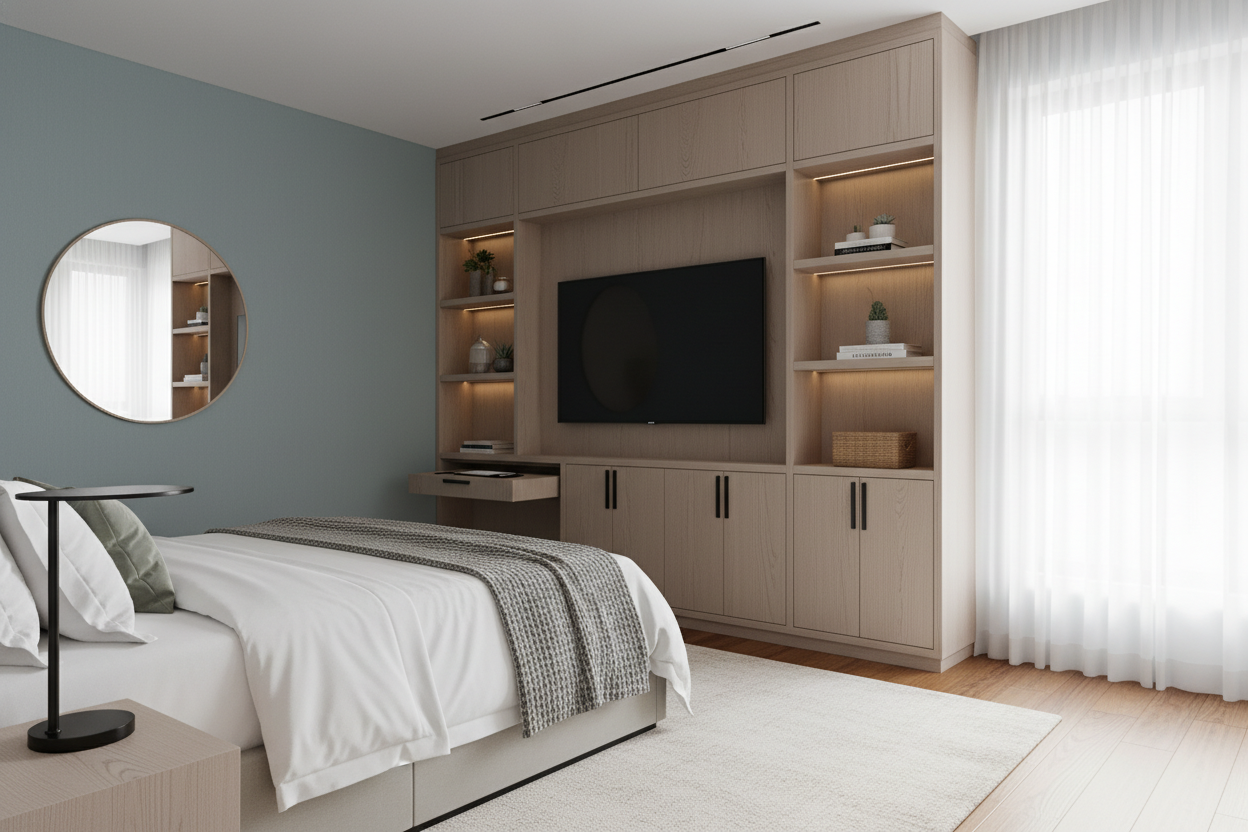
The adaptability is the real win. Because the shop isn't 6,000 miles away, you can often request specific modifications. I wanted a deeper cabinet above my fridge to create a built-in look, and my domestic supplier handled it without a three-month delay. That kind of flexibility is rare with mass-produced overseas units.
My Final Setup (And Why I'll Never Go Back)
Walking into my kitchen today is a completely different experience. There is a sense of solidity when I close a drawer—a heavy 'thunk' instead of a hollow rattle. Choosing kitchen cabinets made in the usa gave me peace of mind that I wasn't trapping my family in a cloud of formaldehyde, and the aesthetics are miles ahead of what I could have gotten at a discount warehouse.
To save on the total bill, I used a mix of built-in perimeter cabinets and freestanding kitchen islands. This allowed me to get the high-end look of a custom island without the massive labor costs of a permanent installation. It also gives me the flexibility to move things around if my cooking style changes.
If you're on the fence, go smell a cheap cabinet box. Then go visit a local shop or order a sample from a domestic brand. The difference in your nose—and your peace of mind—is worth every extra penny. I’m two years into this kitchen, and I haven't had a single 'why did I buy this?' moment.
FAQ
Are American-made cabinets always solid wood?
Not necessarily. Most high-end domestic cabinets use a 'plywood box' construction, which is actually more stable than solid wood for the cabinet structure because it won't warp with humidity. However, the doors and frames are typically solid hardwood.
How can I tell if a brand is actually made in the USA?
Look for specific 'Made in USA' labeling rather than just 'Assembled in USA.' Brands that manufacture domestically are usually very proud of it and will list their factory locations (often in places like Pennsylvania, Indiana, or Oregon) right on their website.
Is the lead time longer for domestic cabinets?
Actually, it's often shorter. While a local custom shop might have a backlog, domestic semi-custom brands usually ship in 4-8 weeks. Imported cabinets can be stuck at ports or on ships for months, making them much riskier for tight renovation schedules.

Leave a comment
This site is protected by hCaptcha and the hCaptcha Privacy Policy and Terms of Service apply.