










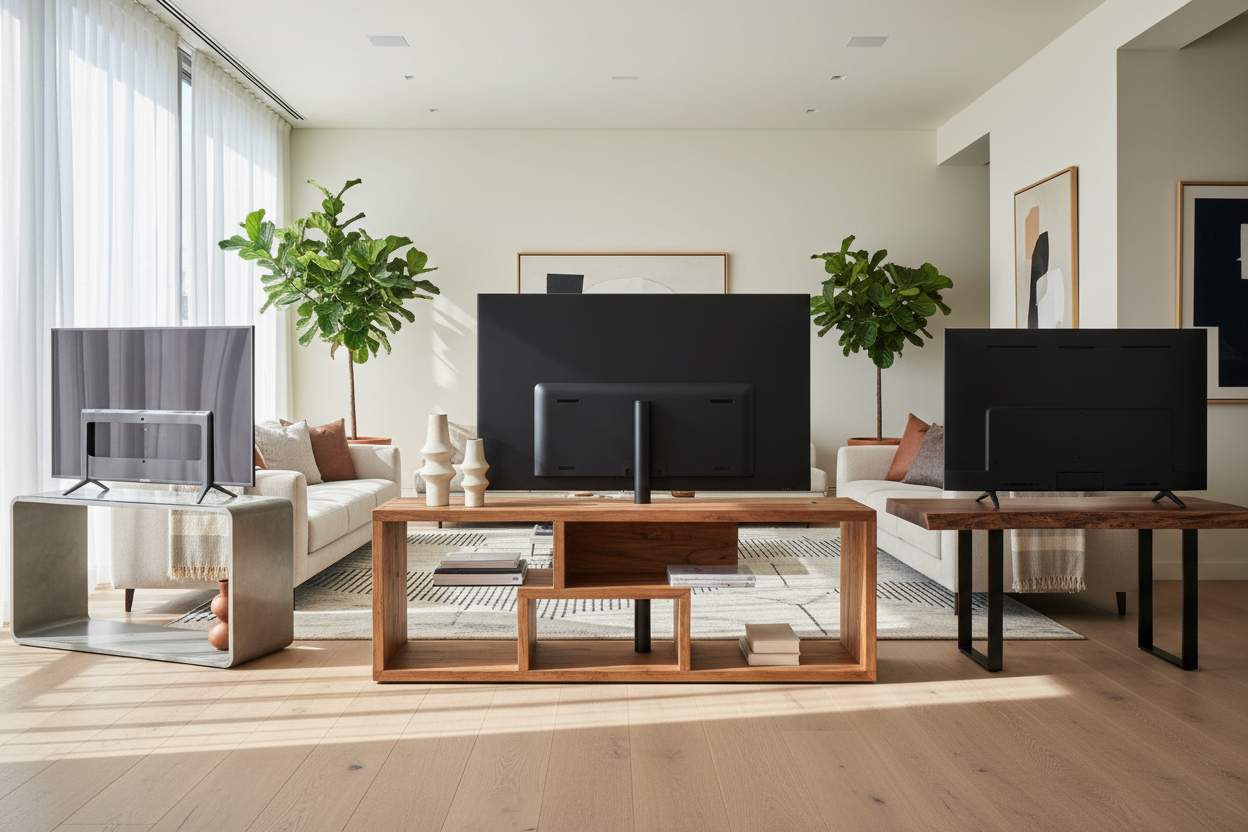
I spent three hours last night scrolling through my own living room photos, and I realized something depressing. My TV—a massive, expensive 65-inch OLED—was sitting on a piece of furniture that had all the personality of a cardboard shipping box. It was a 'safe' choice, a walnut-veneer rectangle that I bought because it was on sale and fit the wall. But looking at it felt like staring at a hotel lobby. If you are tired of your home looking like a carbon copy of a big-box catalog, it is time to talk about unique television stands.
- Stop buying 'sets.' Your TV stand does not need to match your coffee table or your sideboards.
- Texture is the secret sauce—look for slats, fluted glass, or hand-carved wood doors.
- Scale matters more than style; a tiny stand makes a big TV look like it is perched on stilts.
- Do not be afraid of color; a media console is the perfect place for a bold forest green or deep navy.
The 'Safe' Console Mistake (And Why It Ruins Your Room)
Most modern TVs are essentially identical black rectangles. They are voids of personality. If you pair that void with a generic, builder-basic console, you have essentially surrendered your living room to the gods of blandness. I have staged dozens of homes, and the biggest mistake people make is choosing a piece that 'disappears.' You do not want it to disappear. You want it to ground the room.
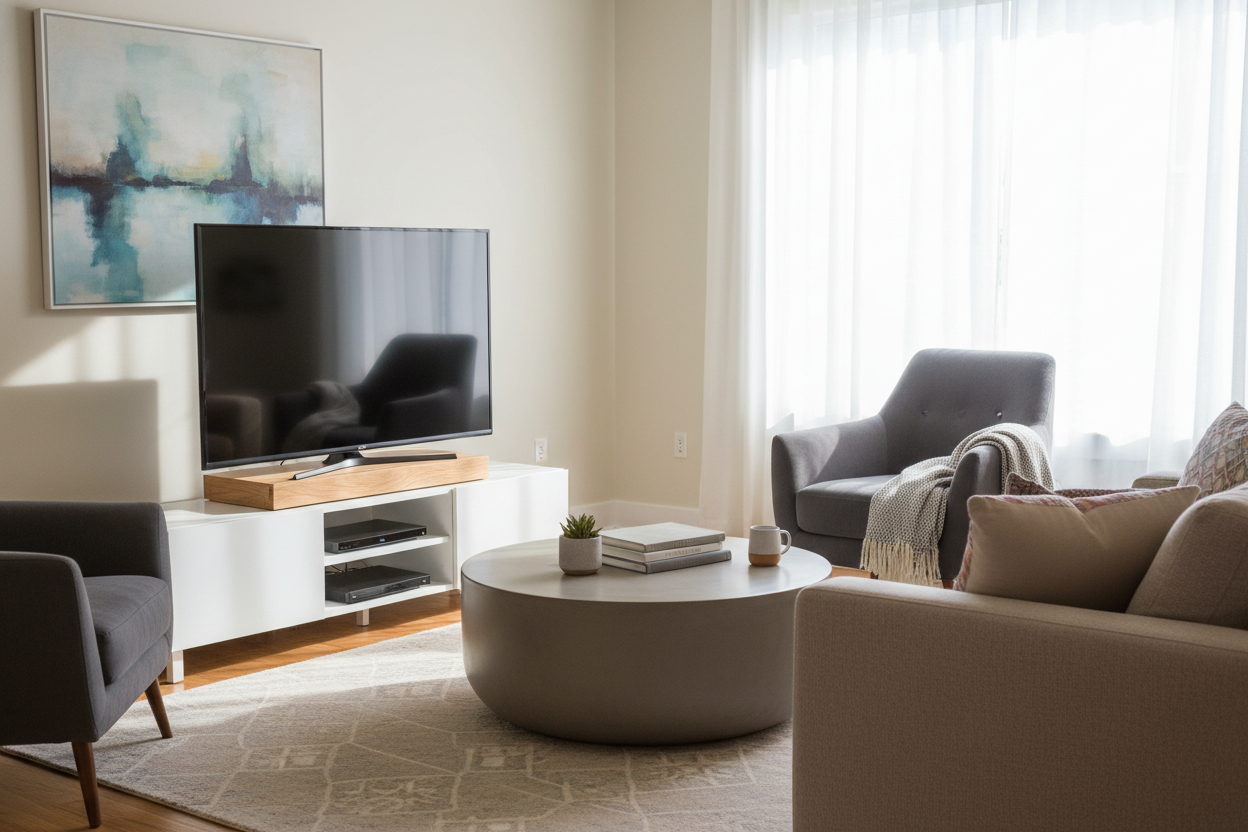
A generic brown box makes your entire space feel like a waiting area at a tire shop. It is functional, sure, but it does zero work to make the room feel like a home. When you opt for a unique tv stand, you are telling the room that the technology is not the only thing worth looking at. You need something with visual weight to balance that giant glass screen.
What Actually Makes an Awesome TV Stand?
An awesome tv stand needs to do more than just hold weight. It needs visual tension. I am a sucker for tactile details that catch the light throughout the day. For instance, a mid century modern tv stand with slatted doors creates a rhythmic shadow pattern that adds depth without adding clutter. It is about finding pieces that feel like furniture first and 'tech storage' second.
Look for asymmetry. A console that has offset shelving or a mix of open and closed storage keeps the eye moving. If everything is perfectly symmetrical and flat, the room feels static. You want tv stands unique enough that they could stand alone as a sideboard in a dining room if you ever decided to mount the TV on the wall instead.
Quirky TV Stands vs. Tacky Novelty Pieces
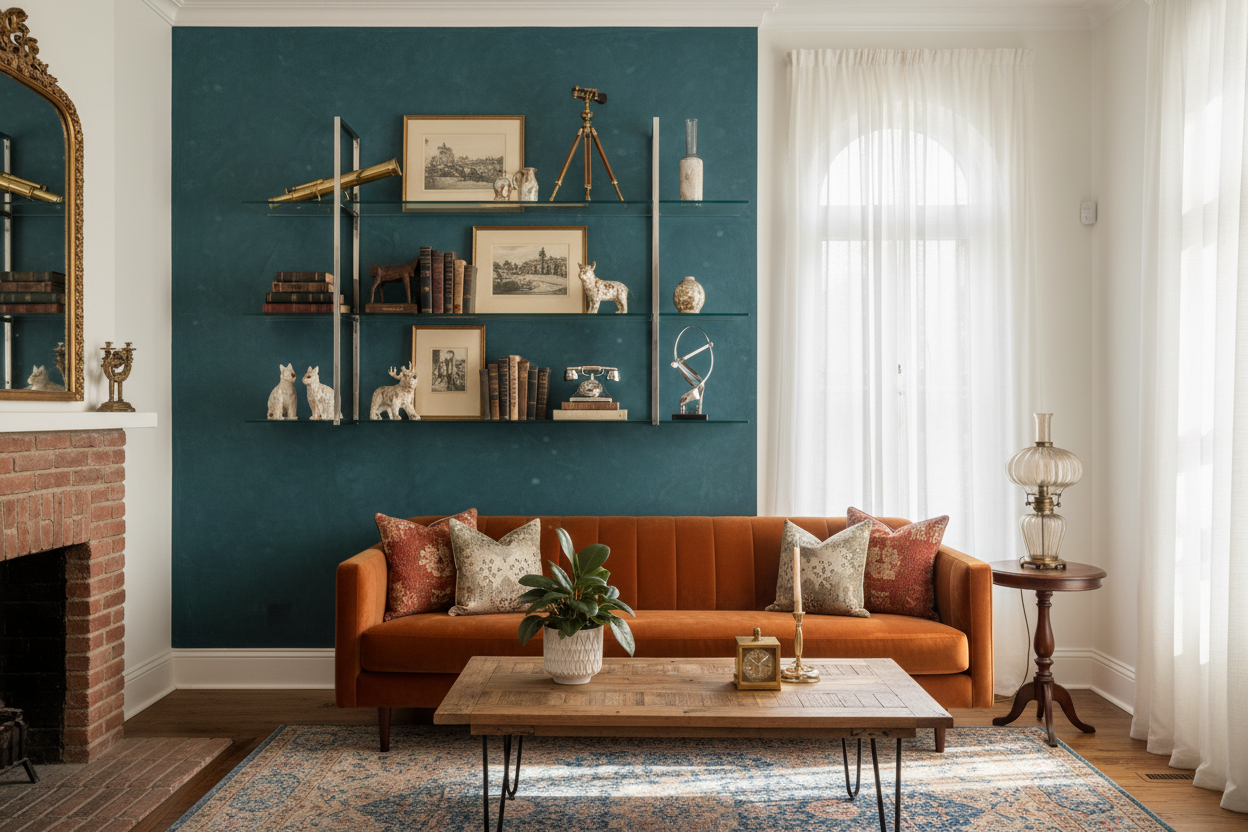
There is a fine line between quirky tv stands and stuff that looks like it belongs in a dorm room. The difference is usually in the hardware and the glass. Avoid the plastic-looking 'LED-lit' units that feel flimsy. Instead, look for heavy-duty fluted glass or a storage credenza with sliding glass doors. It gives you that retro-cool vibe but feels substantial enough to hold a 50-pound screen without bowing in the middle.
Innovative TV Stand Features We Actually Need
Let’s be real: an innovative tv stand has to solve the 'rat’s nest' problem. If I can see your HDMI cables trailing like vines, the aesthetic is dead. I also love pieces that multitask. If you live in a drafty apartment like mine, a tv stand with fireplace for your home is surprisingly cozy. It is not just a gimmick; it is a secondary heat source that happens to look great under your Netflix queue.
Thinking Outside the Box: Unique TV Tables and Vintage Finds
Do not feel restricted to the 'media' section of a furniture store. Some of the most unique tv tables I have ever seen were actually low-slung architectural benches or antique sideboards. Just watch your heights. If you are choosing the perfect tv stand for style, remember that your eye level should ideally hit the middle of the screen when you are seated. A vintage dresser might look cool, but if it is 40 inches high, you are going to need a chiropractor after a weekend binge-watch.
Where to Find TV Stands Unique Enough for Your Space
Finding a unique tv stand takes effort, but it is the ultimate design cheat code. It is the difference between a room that looks 'decorated' and a room that looks lived-in. If you are ready to ditch the boring stuff, browse our collection of tv stands to find something that actually has a pulse. It is an investment in your daily vibe.
Personal Experience: My Particle Board Disaster
I once bought a 'minimalist' white gloss stand from a Swedish retailer for $150. Within six months, the weight of my receiver caused the top shelf to sag by nearly half an inch. It looked pathetic. Now, I only buy solid wood or high-grade MDF with reinforced metal frames. My current setup is a teal-painted vintage credenza I found for fifty bucks and spent a weekend sanding. It is not perfect, but every person who walks in asks where I got it. You can't buy that kind of character in a flat-pack box.
FAQ
How wide should my TV stand be?
It should be at least 3-6 inches wider than the TV on both sides. If the stand is the same width as the TV, it looks top-heavy and precarious.
Can I use a dresser as a TV stand?
Yes, but check the depth. Modern TVs are thin, but the legs often need at least 12-15 inches of clearance. Also, make sure you can drill a hole in the back for cable management.
How do I hide cables on a stand with open shelves?
Use cable management boxes or decorative baskets to tuck the power strips away. You can also use adhesive cable clips to run wires down the back of the furniture legs.

Leave a comment
This site is protected by hCaptcha and the hCaptcha Privacy Policy and Terms of Service apply.