










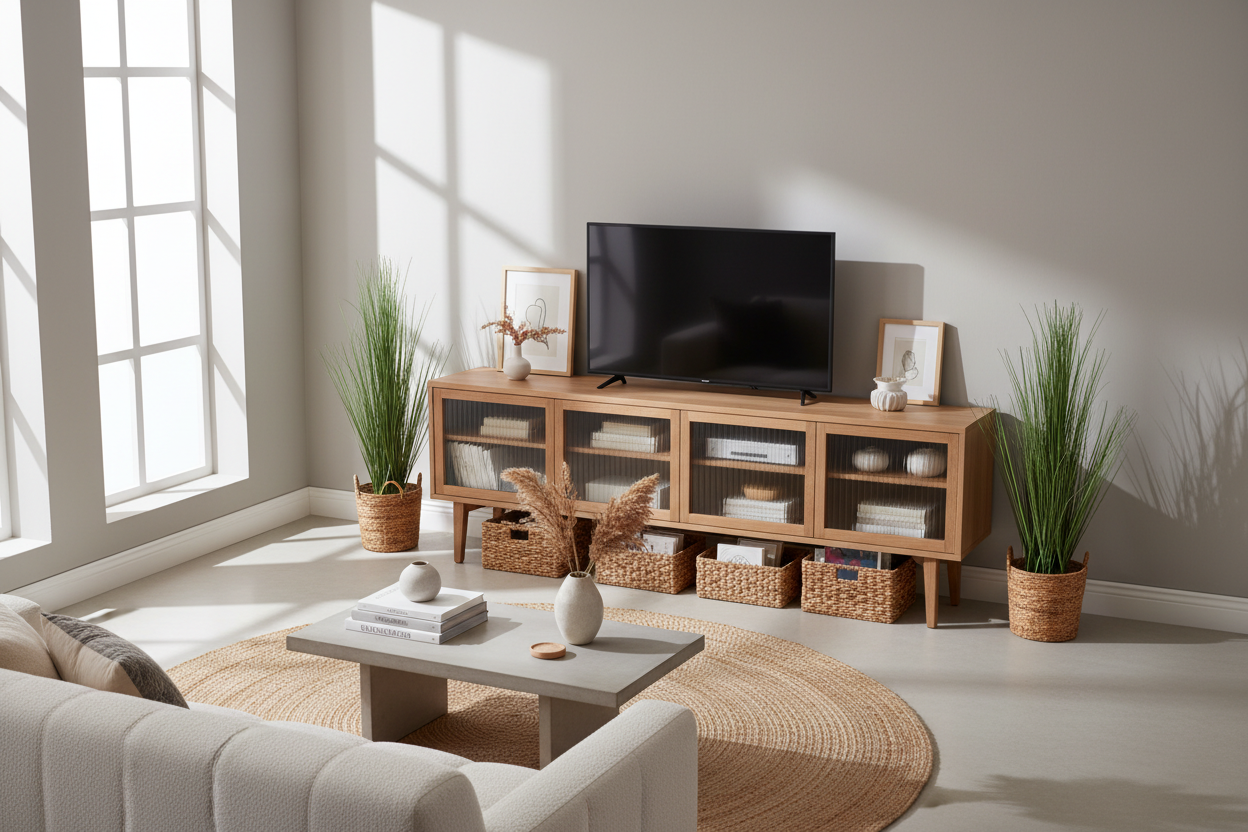
I spent three years staring at a massive, opaque oak block sitting under my TV. It was sturdy, sure, but it felt like a giant boulder anchored in my living room. I finally hit my limit when I realized I was keeping the cabinet door permanently propped open with a coaster just so the remote signal could actually hit my Apple TV. It looked messy, it functioned poorly, and it was time for a change.
Making the switch to a wood tv cabinet with glass doors was the best aesthetic move I have made in a decade. It is not just about the look; it is about how the piece interacts with the light and the tech I actually use every day. If you are currently looking at a heavy, solid-front unit and wondering why your room feels cramped, this is for you.
Quick Takeaways
- Glass fronts allow infrared (IR) signals to pass through, so you can keep doors closed while using remotes.
- Transparent panels create visual depth, making small living rooms feel significantly larger.
- The 'visibility factor' forces you to finally organize your messy cables and outdated tech.
- Sliding glass doors are the superior choice for tight spaces where swinging doors would block traffic.
The 'Heavy Box' Problem in Most Living Rooms
Most people buy media consoles like they are buying a safe—they want something heavy and solid. The problem is that a massive, solid-door piece can often look like a wooden coffin sitting beneath your screen. It creates a visual black hole that sucks the energy out of the room. While a storage cabinet in dark wood can be a great anchor for a large, airy room, putting that much solid mass directly under a large black TV screen often makes the whole wall feel oppressive.
I realized my old console was making my 12x15 living room feel like a closet. By swapping the solid wood doors for glass, I suddenly gained back three feet of visual 'air.' The eye no longer stops at the front of the cabinet; it travels to the back of the shelves, which instantly makes the floor plan feel more open.
Why I Finally Embraced Glass Fronts for My Tech
The primary reason for the switch was pure functionality. I was tired of the 'door dance'—opening the cabinet to watch a movie, then forgetting to close it, then stubbing my toe on it later. Glass panels solve the remote control issue entirely. Most modern remotes still rely on IR signals that cannot penetrate solid wood but glide right through glass.
Beyond the tech, there is the scale of the piece. Much like how a small wood cabinet with glass doors can make a cramped hallway feel intentional rather than cluttered, a glass-front media unit tricks the brain. It says 'this is a display piece' rather than 'this is a box where I hide my junk.'
The Forced Decluttering (A Blessing in Disguise)
I will be honest: my old solid-front console was a graveyard for tech I hadn't used since 2014. I had tangled HDMI cables, three broken Xbox controllers, and a stack of DVDs that I don't even have a player for anymore. Solid doors are an enabler for tech hoarding. You just shove it in and shut the door.
When you move to glass, you are forced to have a 'come to Jesus' moment with your clutter. I spent an afternoon zip-tying cables and donating old hardware. It was painful for twenty minutes, but now, looking through those glass panes and seeing organized, clean shelves is weirdly therapeutic. If you can't see it, you won't clean it. Now that I can see it, I actually keep it tidy.
How to Style the Inside So It Doesn't Look Like a Best Buy
The fear with glass is that your living room will end up looking like a retail electronics store. The trick is to treat the interior of your cabinet like a bookshelf, not just a rack for gear. I keep my router and PlayStation on one side, but I balance them out with a stack of oversized coffee table books and a textured ceramic bowl on the other.
If you are worried about the black plastic look of your electronics, consider the frame of the unit. Choosing a black cabinet with glass doors allows the dark tech boxes to blend into the shadows of the unit, making them almost invisible while your decorative items pop. Use small wire baskets to corral smaller items like extra remotes or charging cables so they look like a design choice rather than a mess.
Sliding vs. Hinged: What Works Best for Media Consoles?
If you have a narrow living room or a coffee table that sits close to your TV, do not buy hinged doors. You will regret it the first time you have to shimmy around an open door to change a disc or reset the router. I opted for sliding glass doors because they stay within the footprint of the cabinet. They offer a much cleaner, more modern profile and you never have to worry about the hinges sagging over time from heavy use.
FAQ
Will glass doors make my electronics overheat?
It depends on the ventilation in the back. Always check if the cabinet has pre-cut cord holes or a recessed back panel to allow heat to escape. If you are running a high-end gaming PC or a heavy-duty receiver, you might want to leave the doors cracked during long sessions, but for a standard Roku or Apple TV, it is rarely an issue.
Is tempered glass worth the extra money?
Yes, 100%. Especially if you have kids or pets. Standard glass can shatter into dangerous shards if a stray toy hits it. Tempered glass is much stronger and, if it does break, it crumbles into small, dull pieces that won't send you to the ER.
How do I hide the messy wires behind the glass?
Use the 'bundle and tuck' method. Group all your wires into one thick cord protector or use velcro ties to secure them to the legs or the back frame of the cabinet. If the wires are still visible through the glass, place a few large books or a decorative box directly in front of the exit hole to block the view.

Leave a comment
This site is protected by hCaptcha and the hCaptcha Privacy Policy and Terms of Service apply.