










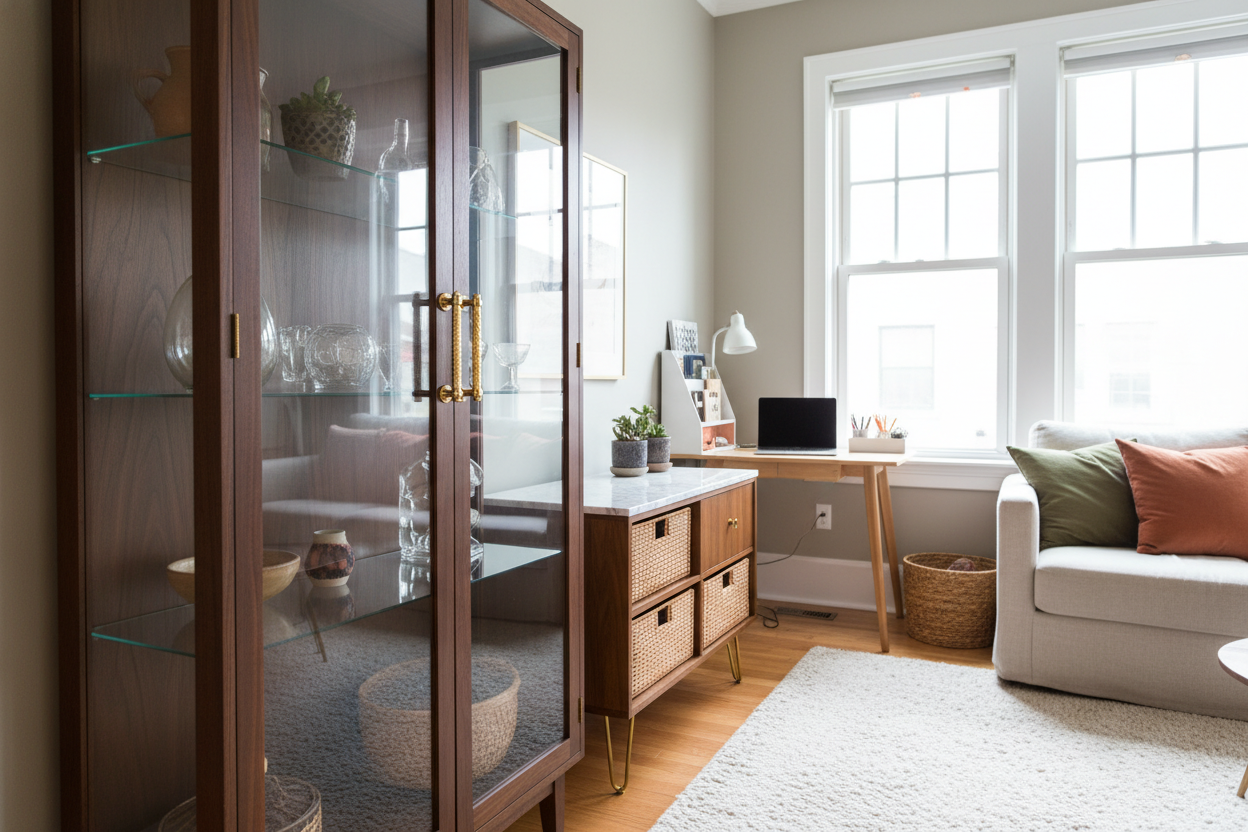
I remember staring at my first 'bargain' curio cabinet at 1 AM, wondering why the doors looked crooked no matter how many times I tightened the screws. It looked great in the staged photos online, but the second I touched it, the whole thing rattled like a box of loose change. The culprit? Cheap, flimsy glass display cabinet hardware that the manufacturer threw in to shave five dollars off the production cost. It was a classic case of 'you get what you pay for,' and I was paying for it in frustration.
Upgrading your hardware isn't just about making things look pretty; it's about the tactile experience of using your furniture. There is a specific kind of satisfaction that comes from a door that closes with a soft 'thud' rather than a glass-on-glass 'clack.' After years of swapping out factory-standard parts for professional-grade glass display case hardware, I've realized that the metal bits are the soul of the piece. If they’re junk, the furniture feels like junk.
- Factory hardware is almost always the weakest link in budget-friendly furniture.
- Aluminum tracks provide a silent, smooth glide that plastic simply cannot replicate.
- Custom hinges prevent the dreaded 'door sag' that ruins the clean lines of your cabinet.
- Upgrading pulls is the fastest way to make a mass-market piece look like a custom commission.
The 'Aha' Moment: Why Factory Hardware Usually Ruins the Vibe
We’ve all been there: you buy a flat-pack cabinet, spend four hours building it, and then realize the hinges are made of something that feels suspiciously like spray-painted tin. Mass-produced furniture brands are notorious for this. They spend their entire budget on the 'face' of the piece—the finish and the glass—while cutting every possible corner on the display cabinet hardware. It’s the furniture equivalent of putting cheap tires on a luxury car; it might look okay in the driveway, but the ride is going to be miserable.
When these brands use the cheapest possible components, they’re betting you won't notice until the return window has closed. But you notice it every time you reach for a plate or show off a collectible. The hinges squeak, the pulls feel hollow, and the locks—if there are any—feel like they could be picked with a paperclip. This low-quality display case hardware drags down the entire aesthetic of your room. It makes a $500 cabinet look like a $50 garage sale find. The moment I realized I could just buy better hinges was the moment my DIY game changed forever.
Solving the Sticky Situation: Display Case Sliding Glass Door Track Upgrades
If you have a cabinet with sliding doors, you know the pain of the 'sticky track.' You pull the handle, the door resists, then it suddenly jerks forward, making everything inside rattle. Most budget cases use plastic glides that collect dust and hair, eventually turning into a gritty mess. Replacing that nightmare with a professional display case sliding glass door track made of extruded aluminum is a revelation. It’s the difference between a gritty grind and a silent, effortless glide.
I recently helped a friend who was complaining about her display setup. She was ready to toss the whole thing until we swapped the tracks for ball-bearing aluminum ones. If you’re looking for a unit that doesn’t need this kind of surgery, something like the 78 7 wide glass door display case is a great example of how it should be done. Premium units like that come with high-spec display case sliding glass door hardware right out of the box, saving you the headache of a retrofit. But if you're stuck with a budget model, upgrading the track is the single most impactful thing you can do for the 'feel' of your furniture.
Hinges, Pulls, and Locks: The Jewelry of Your Cabinet
I like to think of door hardware display pieces as the jewelry for your cabinet. You can have a simple, minimalist box, but if you put solid brass pivot hinges and a heavy, knurled steel pull on it, it suddenly looks like an architectural statement. When choosing the perfect glass door cabinet, I always look at the hardware finishes first. If they’re that overly shiny, fake-looking chrome, I know I’m going to have to replace them.
Pivot hinges are my go-to for glass. They allow the door to swing without a bulky metal plate obscuring the view of your collection. And don't even get me started on pulls. Most stock pulls are too small for the scale of the door. Swapping them for something with a bit of weight—maybe a sleek 12-inch T-bar or a recessed finger pull—instantly elevates the look. It’s about creating a cohesive style. If your home has a mid-century vibe, go for brushed gold. If you’re more into the industrial look, matte black sliding glass display case hardware is the way to go. It’s a small detail that pays massive dividends in the overall design.
How to Swap Display Cabinet Hardware Without Shattering Everything
Working with glass is nerve-wracking. I’ve learned the hard way that one wrong turn of a screwdriver can turn a fun Saturday project into a trip to the emergency room and a pile of shards. First rule: never let metal touch glass directly. Always use rubber gaskets or plastic washers between the display case hardware and the pane. These act as shock absorbers, preventing the pressure of the screw from cracking the glass.
When you're removing the old hardware, have a second person hold the glass. Glass is surprisingly heavy, and the moment you unscrew that last hinge, it’s going to want to meet the floor. Once the new glass display case hardware is in place, don't just crank the screws down. Tighten them until they’re snug, then give them a quarter-turn more. You want enough tension to hold the door steady, but not so much that the glass is under stress. If you're installing a new display case sliding glass door track, use a level. If the track is even slightly tilted, your doors will slide open on their own, which is a great way to give yourself a heart attack in the middle of the night.
Is the Hardware Upgrade Actually Worth the Hassle?
Let’s be real: sourcing individual glass display case hardware components can be a chore. You have to measure everything to the millimeter, find a reputable supplier, and then do the actual manual labor. If you’re buying a $50 shelf, it’s probably not worth spending $100 on new hinges. But if you have a piece you love, or if you’re trying to fit a massive collection into one glass display case, the upgrade is essential. Heavy collections put a lot of strain on the frame and the glass, and cheap hardware will eventually fail under that pressure.
In my experience, the peace of mind you get from knowing your doors are secure and your tracks won't fail is worth every penny. Plus, the aesthetic boost is undeniable. You’re taking something generic and making it yours. It’s the difference between owning a piece of furniture and owning a piece of decor that you’re actually proud to show off. If you have the time and a little bit of patience, go for the upgrade. Your glass—and your collection—will thank you.
Can I use regular cabinet hinges on glass doors?
No. Standard hinges require screws that go into wood or MDF. Glass doors require specialized pivot hinges or clamp-style hardware that grips the edge of the glass or uses pre-drilled holes with protective gaskets.
How do I know what size track to buy?
Measure the internal width of your cabinet opening exactly. Most display case sliding glass door track sets can be cut to size with a hacksaw, but it’s always better to buy the closest size to avoid unnecessary labor.
Why are my glass doors sagging?
Sagging is usually caused by weak hinges that can't support the weight of the glass. Upgrading to heavy-duty display cabinet hardware or adding a third hinge in the center can usually fix this and save your door from hitting the bottom of the frame.



Leave a comment
This site is protected by hCaptcha and the hCaptcha Privacy Policy and Terms of Service apply.