










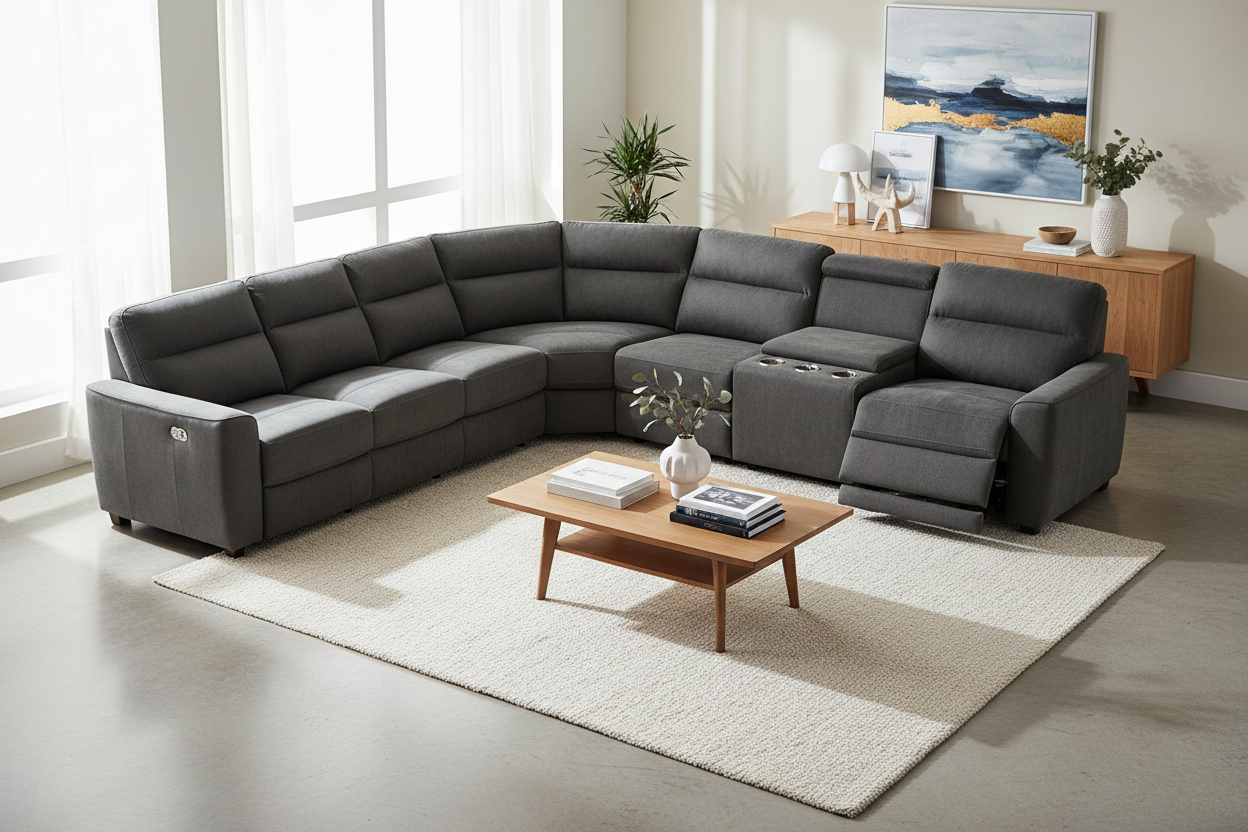
There is often a tension in interior design between high-concept aesthetics and pure, unadulterated comfort. Clients frequently ask me how to achieve a showroom look without sacrificing the ability to kick back on a Sunday afternoon. This is where the 3 piece sectional recliner enters the conversation. Historically, reclining furniture was viewed as bulky or unsophisticated, but modern silhouettes have changed the narrative. The challenge now isn't finding one; it is selecting a piece that offers ergonomic support without dominating the visual weight of your living room.
Key Features to Look For
- Wall-Hugger Mechanisms: Essential for tight spaces, allowing the sofa to recline fully while placed only inches from a wall.
- Kiln-Dried Hardwood Frames: Prevents warping and creaking over time, ensuring the structural integrity of the motion components.
- High-Density Foam (1.8lb+): Ensures the seat cushions retain their shape and do not flatten after months of use.
- Power vs. Manual: Power options offer infinite reclining positions, while manual latches are simpler but limit your angles.
- Modular Connectivity: Heavy-duty metal brackets that keep the three pieces from drifting apart on hardwood floors.
Mastering Space Planning and Layout
Integrating a 3-piece sectional with recliner requires precise floor planning. Unlike a standard stationary sofa, you must account for the "motion footprint." When the footrest is extended, it changes the traffic flow of the room. I always advise clients to leave at least 18 to 24 inches of clearance between the fully extended footrest and the coffee table.
The Configuration Dilemma
Most three piece reclining sectional layouts come in an L-shape, usually consisting of a sofa, a wedge, and a loveseat (or a chaise). Before purchasing, map out your room's focal point. If the sectional faces a fireplace or TV, ensure the reclining segments are positioned directly opposite the screen to avoid neck strain. For open-concept homes, the back of the sectional acts as a room divider; ensure the back paneling is fully upholstered and tailored, as it will be visible from the kitchen or dining area.
Material Selection: Leather vs. Performance Fabric
The choice of upholstery on a 3-piece recliner sectional dictates both longevity and vibe.
Grain Leather
Top-grain leather is the gold standard for motion furniture. Because reclining creates friction between the cushions, leather allows for smooth movement without bunching. However, be wary of "bonded" leather, which tends to peel within a few years of daily friction.
Performance Textiles
If you prefer a softer touch, opt for a heavy-weight performance velvet or a tight-weave chenille. These materials hide the mechanical separation lines better than leather. Just ensure the fabric has a high "double rub" count (over 50,000) to withstand the constant friction of the reclining mechanism rubbing against the adjacent seat.
Balancing Visual Weight
A 3 piece sectional with recliner is inherently heavy. To prevent your living room from feeling crowded, balance the sectional with lighter elements. Pair the heavy sofa with a glass or acrylic coffee table to open up the floor space visually. Use a large area rug—at least 8x10 or 9x12—to ground the furniture. If the rug is too small, the sectional will look like it is swallowing the room.
Lessons from My Own Projects
I learned a hard lesson early in my career regarding a 3 piece sectional sofa with recliner. I specified a beautiful, high-end power recliner for a client with polished concrete floors. While the piece looked stunning, I neglected to check the quality of the connector brackets between the three pieces.
Within a week, the client called to say the pieces were sliding apart every time someone sat down, creating a dangerous gap. We had to retrofit the bottom with heavy-duty rubber non-slip pads and tighter alligator clips. Another detail often overlooked is the power cord. If you choose a power recliner, you are tethered to an outlet. I now always check if a battery pack option is available so the sofa can float in the center of the room without an unsightly cord snaking across the floor. These small logistical details make the difference between a frustrating purchase and a favorite piece of furniture.
Conclusion
Investing in a sectional is a commitment to the way you live. It prioritizes relaxation and gathering. By focusing on the mechanical quality, the upholstery durability, and the flow of the room, you can secure a piece that serves your family for years. Don't settle for comfort alone; demand a design that elevates your home.
Frequently Asked Questions
How much space do I need behind a reclining sectional?
This depends on the mechanism. "Wall-huggers" or "zero-clearance" models require as little as 2 to 4 inches. Standard recliners may need up to 12 inches, which can significantly impact your room layout.
Can I separate the pieces of a 3-piece sectional?
Generally, no. The interior sides of the sectional pieces (where they connect) are often unfinished or lack upholstery. Separating them usually exposes the connecting hardware and lining fabric.
What is the best way to clean the mechanism?
Dust and pet hair can clog the motor or gears over time. I recommend vacuuming the underside and the metal mechanism with a brush attachment every three to six months to prevent squeaking and motor burnout.


Leave a comment
This site is protected by hCaptcha and the hCaptcha Privacy Policy and Terms of Service apply.