










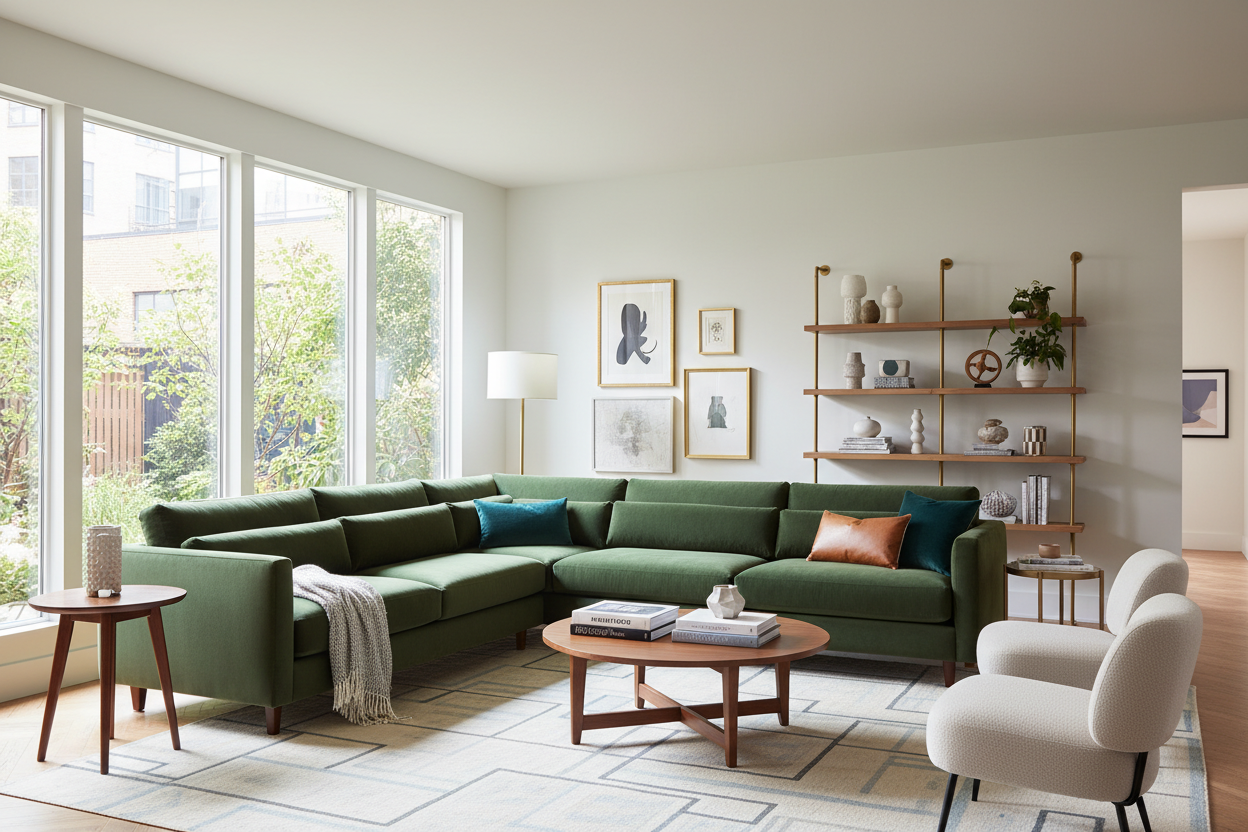
Finding a sofa that successfully bridges the gap between high-design aesthetics and Sunday-afternoon nap capability is a notorious challenge in interior design. Often, you are forced to choose between a rigid, beautiful architectural piece and a shapeless cloud of comfort. This is usually where the joybird.corner sectional enters the conversation. Known for bringing customized Mid-Century Modern (MCM) silhouettes to the mass market, these pieces promise a specific look that anchors a room without overwhelming it. But does the reality match the showroom rendering?
Quick Decision Guide: Key Features to Look For
- Fabric Durability: Look for their "SafeGuard" fabrics if you have pets; the weave is tight enough to resist claw snags.
- Seat Depth: Joybird models tend to run deep (often 24"+). Ensure this fits your ergonomic preference for lounging vs. upright sitting.
- Orientation: Corner sectionals are less flexible than modular ones. Double-check if you need a "Left" or "Right" facing chaise before ordering.
- Frame Construction: Kiln-dried hardwood is the industry standard for longevity, which prevents warping over time.
Analyzing the Silhouette and Visual Weight
When I am space planning for a client, the first thing I assess with a corner sectional is its "visual weight." Many sectionals feel like heavy blocks that suck the air out of a living room. Joybird designs, particularly the Lewis or the Holt collections, utilize tapered wooden legs and a low-profile back.
This negative space created beneath the sofa allows light to travel under the furniture, making smaller urban apartments or modest living rooms feel significantly larger. However, be mindful of the back height. Because the profiles are low to maintain that sleek 1960s aesthetic, they may not offer the neck support required for taller individuals without the addition of throw pillows.
Materiality: Beyond the Swatches
Selecting the Right Upholstery
The allure of a custom piece is the fabric choice, but this is where mistakes happen. While the velvets (like the Royal Cobalt) offer a luxurious, tactile finish that catches ambient light beautifully, they are high-maintenance regarding dust and lint. For high-traffic family rooms, I almost exclusively recommend the flat-woven textures. They offer a more structured look and resist the inevitable "puddling" of fabric that happens on looser weaves after years of use.
Cushion Density and Settling
A common critique of modern furniture is the breakdown of foam. High-resiliency foam wrapped in poly fiber is the standard here. Initially, these seats will feel surprisingly firm—almost stiff. This is intentional. A sofa that feels "cloud-soft" on day one will likely be sagging by month twelve. The break-in period is crucial for ergonomic longevity.
Space Planning and Layout Flow
Placing a corner sectional requires precise geometry. Unlike a standard sofa and loveseat combo, a corner unit dictates the flow of traffic. Ideally, the corner should be placed against the room's focal corner, or used to define a zone in an open-concept floor plan. Ensure you have at least 30 inches of clearance around any walking path. If the back of the sectional is visible (floating in the room), the tailoring becomes paramount. Joybird pieces generally have finished backs, making them suitable for floating layouts.
My Personal Take on joybird.corner sectional
I want to share a specific detail from a project I installed last year that you won't find on the spec sheet. We ordered a large corner sectional in a light grey 'Key Largo' fabric. Aesthetically, it was stunning. However, during the install, I realized that the connector brackets—the metal alligator clips that hold the two sectional pieces together—were incredibly tight.
While this was frustrating during assembly (and required some serious muscle), it actually proved to be a massive benefit later. On many lower-end sectionals, the pieces drift apart when someone flops down on the seam. Six months later, I visited the client, and that gap hadn't budged a millimeter. However, I did notice that the back cushions, which are loose on that specific model, had begun to look a bit "slouchy." My advice? If you buy one, make a habit of fluffing and rotating the back cushions every single week. If you don't, they will develop a permanent "lean" that ruins that crisp architectural line you paid for.
Conclusion
Investing in a semi-custom sectional is a commitment to both style and maintenance. If you prioritize a sharp, mid-century silhouette and are willing to wait for custom upholstery, these pieces offer a sophisticated anchor for your home. Just remember to measure twice, consider the maintenance of your fabric choice, and commit to the weekly cushion fluff.
Frequently Asked Questions
How do I know if a corner sectional will fit through my door?
Most Joybird sectionals ship in multiple boxes (one for the sofa portion, one for the chaise/corner). Check the "shipping dimensions" on the product page, not just the assembled dimensions. Usually, if your door width is 30 inches or wider, you can maneuver the boxes through by angling them.
Can the cushion covers be machine washed?
Even if the fabric is listed as durable, I strongly advise against machine washing cushion covers. It can degrade the backing and cause shrinkage, making it impossible to get the foam back inside. Professional upholstery cleaning or spot cleaning with a water-free solvent is the safest route.
Is the "pet-friendly" fabric actually claw-proof?
No fabric is 100% claw-proof. However, the "SafeGuard" fabrics are tightly woven synthetics. This means there are fewer loops for a cat's claw to hook into, significantly reducing the chance of pulls and snags compared to a linen or loose-weave tweed.


Leave a comment
This site is protected by hCaptcha and the hCaptcha Privacy Policy and Terms of Service apply.