










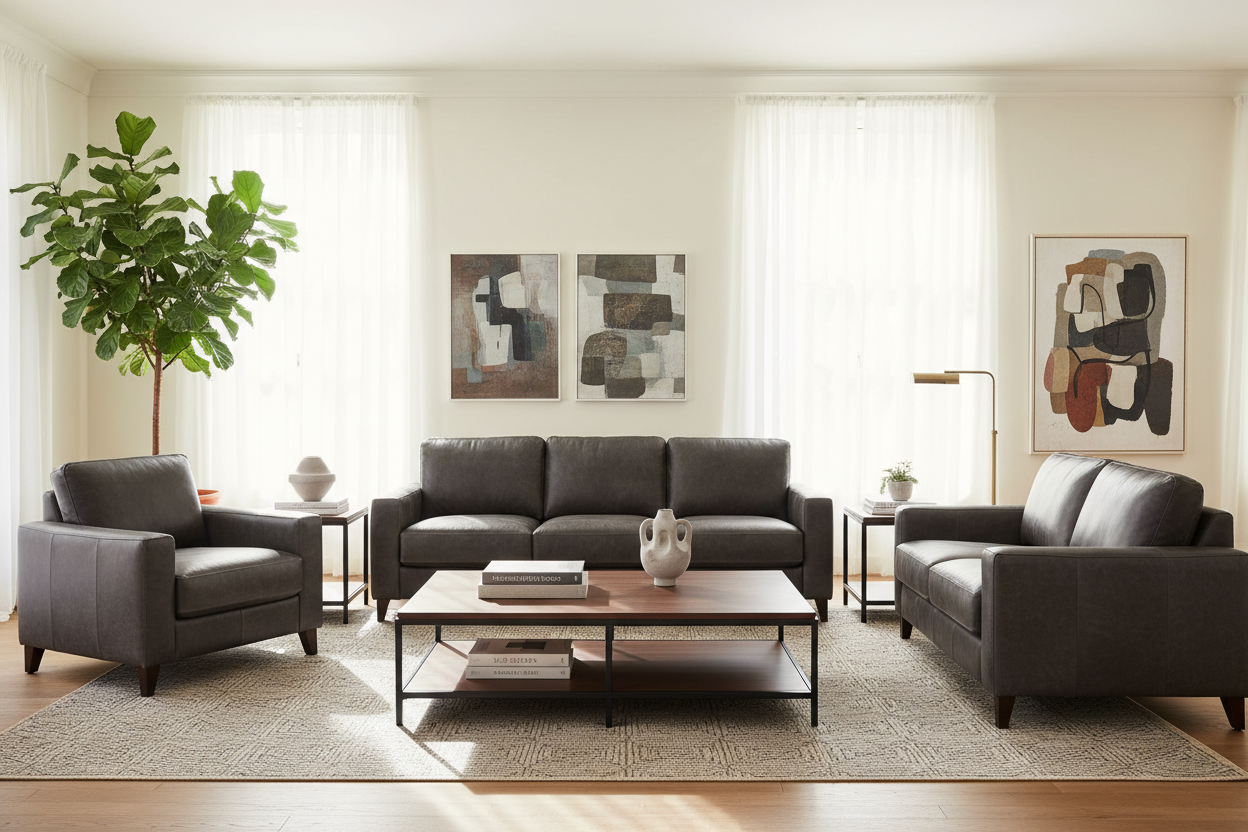
There is a specific gravity that leather furniture adds to a room—a sense of permanence and history that fabric simply cannot replicate. However, walking into a showroom or browsing online often presents a dilemma: you want that timeless aesthetic, but the sheer volume of options and price points is paralyzing. You are likely searching for a leather sofas set for sale because you want durability paired with elegance, yet you worry about overpaying for poor quality or choosing a style that dominates the room rather than anchoring it. This guide cuts through the marketing noise to help you select a piece that ages as gracefully as the home it inhabits.
Quick Decision Guide: Key Features to Look For
If you are rushing to make a purchase, these are the non-negotiable elements you must verify to ensure longevity and comfort:
- Leather Grain: Always prioritize Full-Grain or Top-Grain. Avoid "Bonded" or "Genuine" leather if you want the piece to last more than a few years.
- Frame Construction: Look for kiln-dried hardwood frames. This prevents warping and creaking over time.
- Suspension System: Eight-way hand-tied springs are the gold standard for support, though sinuous springs are a respectable runner-up for modern silhouettes.
- Cushion Density: A high-resiliency foam core wrapped in down or dacron ensures the seat recovers its shape after you stand up.
Decoding Material Quality and Price
When analyzing the sofa set leather price, you are paying for the hide's integrity. In my years of sourcing for clients, I have seen "bargain" sets peel within eighteen months because they were bonded leather—essentially leather scraps glued together with polyurethane.
For a true investment piece, look for aniline or semi-aniline dyes. These allow the natural markings of the hide to show through, creating a unique patina over time. While pigmented leather offers more resistance to stains (great for high-traffic homes), it can sometimes feel colder and more plastic-like to the touch. The goal is to find a balance where the material feels organic yet robust.
Space Planning and Visual Weight
A common mistake homeowners make is underestimating the visual weight of a living room leather couch. Leather is dense and opaque; it absorbs light rather than filtering it. If you have a smaller living area, a chunky, rolled-arm Chesterfield might make the room feel claustrophobic.
The Silhouette Matters
For tighter spaces, opt for a sofa set with raised legs. Being able to see the floor beneath the sofa creates an illusion of more space. Conversely, if you have a grand room with high ceilings, a blocky, low-profile sofa grounds the space effectively. When you find a sofa set for sale leather enthusiasts recommend, always tape out the dimensions on your floor first. Ensure there is at least 30 inches of walking clearance around the furniture to maintain flow.
Color Coordination and Texture
Gone are the days when leather only came in black or espresso brown. While those are classics, a cognac or saddle tan leather brings warmth and works beautifully with navy blues, forest greens, and neutral linens. If you choose a dark leather set, balance it with lighter textiles—think cream wool throws or a jute rug—to soften the masculine edge and prevent the room from feeling too sterile.
My Personal Take on Leather Sofas
Lessons from My Own Living Room
I want to share something you won't read in a standard catalog. A few years ago, I bought a high-end, full-grain Italian leather sectional for my own home. In the showroom, it was buttery soft. When it arrived, however, it was stiff and slippery. I actually had a moment of panic thinking I had made a mistake.
Here is the reality: high-quality leather requires a "break-in" period, much like a good pair of boots. For the first three months, throw pillows kept sliding off, and the leather felt cool to the touch in the winter mornings. But by month six, the heat from daily use had softened the hide, and it began to mold to our bodies. Now, it has developed a rich patina where we sit most often, and it is arguably the most comfortable seat in the house. If you buy quality, patience is part of the price tag. Do not judge the comfort of your new set by its first week in your home.
Conclusion
Investing in a leather sofa set is a commitment to quality and enduring style. By focusing on grain integrity, proper scaling, and patience during the break-in period, you can secure a centerpiece that elevates your home’s aesthetic for decades. Don't settle for the first option you see; look for the details that promise longevity.
Frequently Asked Questions
How do I maintain a leather sofa set to prevent cracking?
Hydration is key. Leather is skin, and it can dry out. Dust it weekly with a microfiber cloth and apply a high-quality leather conditioner every 6 to 12 months. Keep the furniture away from direct sunlight and heat sources like radiators, as these accelerate drying and fading.
What factors influence the sofa set leather price the most?
The origin of the hide (European hides generally have fewer insect bite marks and scars), the tanning process (vegetable tanning takes longer and costs more), and the construction of the frame are the biggest cost drivers. Labor-intensive details like tufting or nailhead trim also add to the final cost.
Is a leather couch suitable for homes with pets?
Surprisingly, yes. While claws can scratch leather, high-quality full-grain leather often looks better with a bit of "distressing." Unlike fabric, leather does not trap pet hair or odors, making it much easier to clean. Look for "protected" or semi-aniline leathers if you are concerned about scratch visibility.

Leave a comment
This site is protected by hCaptcha and the hCaptcha Privacy Policy and Terms of Service apply.