










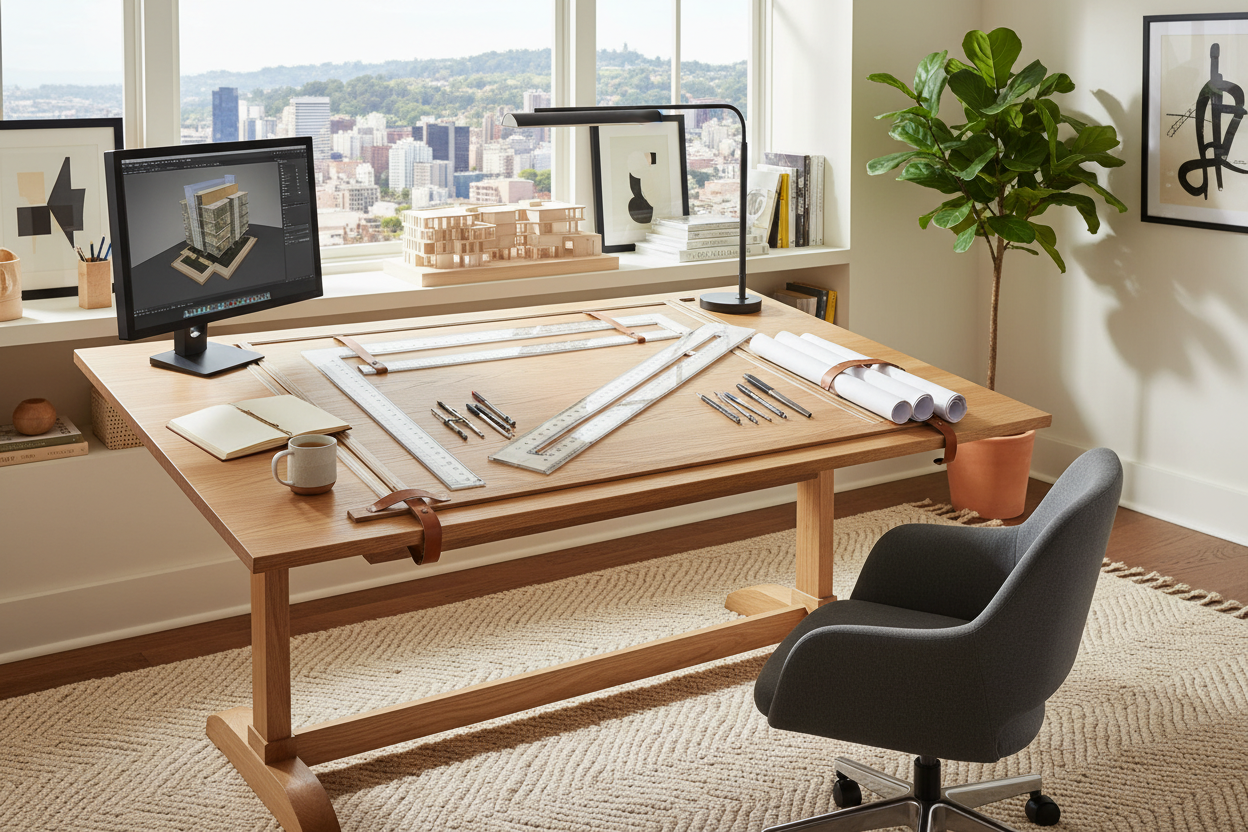
Ever tried spreading out a full set of 24x36 blueprints, a laptop, and a cup of coffee on a standard 48-inch home office desk? It usually ends in a precarious balancing act. For creative professionals and serious hobbyists, the standard flat-pack desk simply lacks the real estate and ergonomic flexibility needed for deep, physical work. Enter the archi desk. Whether you are sketching floor plans or just need a massive, tiltable surface for crafting, I am going to walk you through exactly what makes these specialized workstations worth the investment—and what to avoid.
Quick Decision Guide
- Surface Area is King: Look for a minimum width of 60 inches if you plan to use dual monitors alongside physical paper drafts.
- Tilt Mechanisms Matter: A high-quality architects desk should offer smooth, locking angle adjustments up to 45 degrees without wobbling.
- Beware the Glass Top: While a modern architect desk with a glass surface looks sleek, it creates glare and shows every smudge. Opt for matte wood or laminate.
- Factor in Drawer Clearance: An architect desk with drawers must still allow at least 28 inches of vertical legroom to prevent knee-banging when the top is flat.
Space Planning for a Creative Studio
Dropping an architecture studio desk into a spare bedroom requires more than just measuring the footprint of the furniture. These pieces have significant visual weight and demand breathing room.
The Golden Rules of Clearance
If you are setting up a desk for architect use, you need to account for movement. I always advise clients to leave a minimum of 36 inches behind the desk for chair roll-back, but ideally 42 to 48 inches if you use a drafting stool and stand up frequently. Because an architectural desk often features a tilting top, you also need to ensure there is nothing mounted on the wall directly behind it that the rising edge might hit.
Material Quality and Work Surface
The best desk for architects isn't just about size; it is about how the surface handles daily abuse. When you are pressing down hard with a 4H pencil or rolling out heavy vellum, a flimsy engineered wood top will bow over time.
Choosing the Right Finish
Solid wood, particularly hardwoods like oak or maple, offers incredible longevity and a beautiful silhouette. However, many professionals actually prefer a high-grade melamine or laminate for their architect's desk. Why? Because it provides a perfectly smooth, non-porous surface that resists ink stains and scratches from metal rulers. If you lean toward a modern architect desk with a metal frame, ensure the steel is powder-coated rather than painted to prevent chipping.
Storage and Ergonomics
A beautiful workspace is useless if it destroys your posture or leaves your tools scattered across the floor.
Taming the Clutter
Finding an architect desk with drawers that don't compromise legroom can be tricky. Traditional drafting tables often skip built-in storage entirely. If your desk architecture includes under-mount drawers, verify that the bottom of the drawer bank sits at least 25 inches off the floor. Otherwise, you will be knocking your thighs every time you shift your weight. I often recommend pairing a minimalist architect office desk with a separate, rolling flat-file cabinet to keep the main silhouette clean.
Designer's Honest Take
A few years ago, I designed a high-end home studio in a converted attic. The client fell in love with a stunning, vintage-inspired archi desk featuring a heavy cast-iron base and a tempered glass top. It looked incredible in the natural light—a true focal point. But I learned the hard way that aesthetics don't always translate to function.
Within a week, the client called me frustrated. The glass surface was freezing cold to the touch in the mornings, the glare from the skylight was blinding, and every single fingerprint was visible. Worse, the heavy manual tilt mechanism required two people to safely adjust. We ended up swapping the glass for a custom matte walnut top and adding hydraulic lifts. The lesson? Never prioritize a magazine-ready look over the physical comfort of your daily workflow.
Frequently Asked Questions
What makes an archi desk different from a standard desk?
An archi desk typically features a wider, deeper work surface and a top that can tilt to various angles. This ergonomic design prevents neck and back strain when drawing, drafting, or reviewing large documents for extended periods.
How much space do I need for an architectural desk?
Plan for a footprint of at least 5 by 7 feet. This accommodates a standard 60-inch wide desk, a comfortable drafting chair, and the necessary 36 to 42 inches of clearance behind the desk to move around freely.
Is an architect desk with drawers worth it?
It depends on your tools. If you use a lot of small instruments like compasses, scales, and pens, shallow built-in drawers are fantastic. However, if you primarily need to store large paper sheets, a separate flat-file cabinet is usually a better investment than forcing bulky drawers into the desk's frame.

Leave a comment
This site is protected by hCaptcha and the hCaptcha Privacy Policy and Terms of Service apply.