










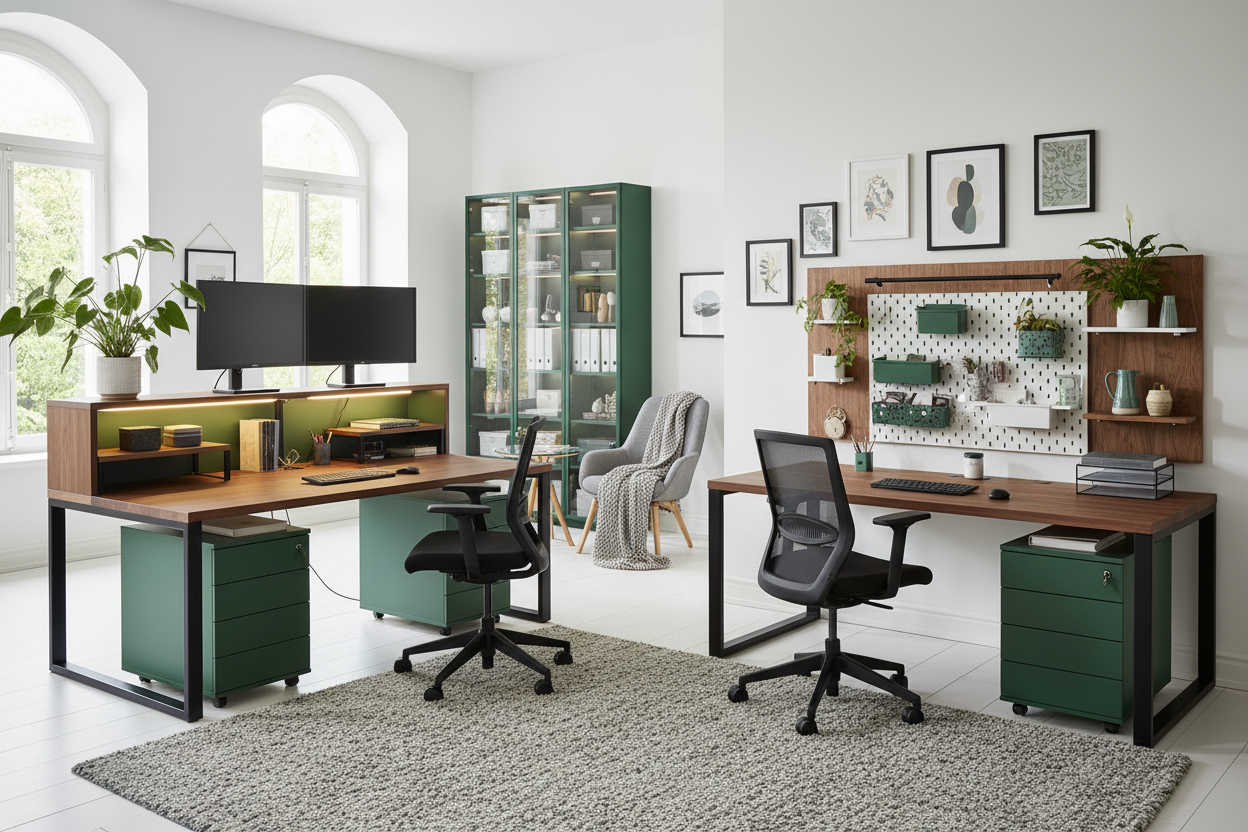
Finding a workspace solution that balances architectural integrity with budget constraints is a common dilemma for many of my clients. You want the sleek, expansive look of a custom built-in, but you are working with a ready-made budget. This is where ikea office desks often bridge the gap between functionality and high-end aesthetics—if you know how to select and style them correctly. In this guide, we will move beyond the basic catalog setups and explore how to curate a professional, ergonomic, and visually stunning workspace using these accessible modular systems.
Quick Decision Guide: What to Look For
- Core Material: Distinguish between hollow-core (honeycomb structure) tops like the Lagkapten for light use, and solid veneer or particleboard options like the Karlby or Bekant for heavy monitor setups.
- Modularity: Look for systems that allow you to swap legs for drawer units (like the Alex series) to maximize storage without increasing the footprint.
- Ergonomics: Prioritize frames that offer height adjustability, even if it is just a manual Allen-key adjustment, to ensure your elbows sit at a 90-degree angle.
- Cable Management: Check for under-frame netting or pre-drilled grommets to keep visual clutter to a minimum.
Elevating the Material Palette
As a designer, the first thing I scrutinize is texture. Many entry-level work desks ikea offers are finished in flat melamine. While functional, this can sometimes read as "institutional." To elevate the aesthetic, I often steer clients toward tabletops with wood veneers or tactile finishes. Using a kitchen countertop (like the walnut or oak veneer options) placed over office drawer units creates a warm, substantial silhouette that mimics a custom joinery piece.
When selecting your surface, consider the light reflectance value (LRV). A matte, dark finish absorbs light and creates a moody, executive feel, while a pale birch or white finish reflects natural light, making a small room feel more expansive.
Spatial Planning and Layout
The placement of ikea office tables defines the flow of the room. A common mistake is pushing the desk flush against a wall in a large room, which can feel uninspired. If space permits, try "floating" the desk in the center of the room or perpendicular to a window. This command position improves the visual weight of the furniture.
The L-Shape Configuration
For those needing substantial surface area, modular IKEA systems excel at L-shape configurations. By connecting two rectangular surfaces with a corner joiner, you create distinct zones: one for computer work and one for analog tasks like sketching or reviewing documents. This zoning is crucial for maintaining focus and reducing desktop clutter.
Ergonomics Meets Aesthetics
We cannot discuss design without addressing the human form. Many stylish desks lack proper ergonomic support. When browsing IKEA's range, pay close attention to the Idåsen or Bekant underframes. These often provide superior stability compared to the standard screw-in legs. A wobbly desk is not just annoying; it disrupts your workflow and diminishes the perceived quality of the furniture.
My Personal Take on IKEA Office Desks
I want to share a bit of unfiltered reality from a project I worked on last year—and frankly, from my own home office. I used a matte black IKEA desk surface for a client who wanted a "sleek, monochrome" look. Visually, it was stunning on install day.
However, within two weeks, I realized a specific nuance of that finish: it is an absolute fingerprint magnet. No amount of microfiber cloth wiping kept it looking pristine for more than an hour. It taught me a valuable lesson I now pass to you: if you choose a dark, matte finish from the budget range, you must use a desk mat. Not only does it ground the design visually, but it also protects that unforgiving surface from oils and scratches. Furthermore, if you are hacking a long countertop (over 70 inches) as a desk, do not skip the middle support leg. I once saw a heavy dual-monitor setup bow a particleboard top by half an inch in just six months because we underestimated gravity. Support the span, and the piece will last for years.
Conclusion
Creating a luxury workspace doesn't require a four-figure desk investment. By selecting the right materials, paying attention to stability, and styling with intention, you can transform standard components into a bespoke workspace. It is about looking past the price tag and seeing the potential for structure and style.
Frequently Asked Questions
Can I paint IKEA laminate desks to match my room?
Yes, but preparation is key. You must use a high-quality bonding primer (like a shellac-based primer) before painting, as standard paint will peel off the slick melamine surface. A light sanding beforehand also helps the primer adhere.
How do I stop my lightweight IKEA desk from sliding on wood floors?
This is a common issue with the honeycomb-structure desks because they lack mass. I recommend applying high-grip rubber furniture pads to the bottom of the legs. Alternatively, anchoring the desk to a heavy rug can ground the furniture effectively.
What is the best way to hide cords on an open-leg desk?
Since many open-leg designs lack modesty panels, cable management is vital. I recommend using adhesive cable raceways mounted to the underside of the tabletop and running cables down a single leg using velcro ties or a dedicated cable spine.

Leave a comment
This site is protected by hCaptcha and the hCaptcha Privacy Policy and Terms of Service apply.