










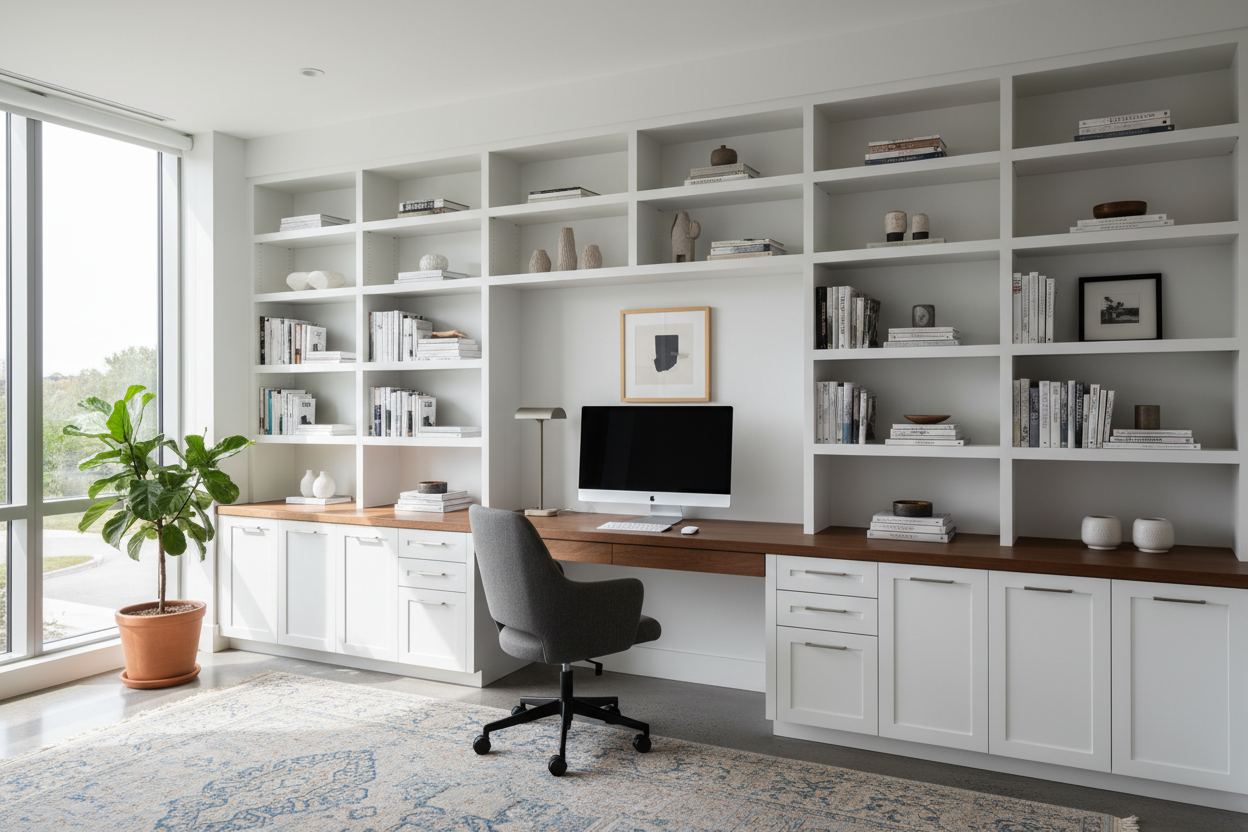
Visual noise is the enemy of productivity. When I walk into a client's workspace, the first thing I notice isn't the view or the chair; it's the piles of paperwork and tangled cords that disrupt the room's energy. While freestanding bookcases have their place, built in office storage offers a level of architectural integration that simply cannot be matched by off-the-shelf furniture. It creates a seamless transition between your work tools and the room's structure, turning necessary clutter into a design feature.
Key Features to Consider Before Committing
- Custom Dimensions: Ensure the depth accommodates your largest equipment (printers often require 20+ inches).
- Cable Management: Look for integrated grommets and hidden channels behind the joinery to route power cords invisibly.
- Material Durability: High-pressure laminates offer scratch resistance for desktops, while painted MDF creates a smooth, integrated wall look.
- Lighting Integration: Plan for routed channels to hide LED strip wiring for under-shelf task lighting.
- Hardware Quality: Soft-close hinges and heavy-duty drawer slides are non-negotiable for longevity.
Analyzing the Spatial Layout
The success of custom millwork lies entirely in the planning phase. Unlike a movable cabinet, this is a permanent fixture. When I review home office ideas built in to a specific niche, I always start with the "triangle of reach." Your storage should be zoned: immediate access (drawers within arm's reach), reference access (shelves above eye level), and archival storage (lower cabinets or high upper shelves).
Consider the visual weight of the unit. Floor-to-ceiling cabinetry can feel oppressive in a small room if it is too dark or lacks negative space. I often recommend a mix of closed cabinetry at the bottom to hide unsightly binders, transitioning to open shelving at the top to display curated objects, which keeps the room feeling airy.
Material Selection: Veneer vs. Paint Grade
Choosing the right finish is about balancing budget with the desired aesthetic. Paint-grade millwork (usually Maple or high-quality MDF) is excellent for achieving that "always been there" look, matching your existing trim and baseboards. It reflects light and makes small offices feel larger.
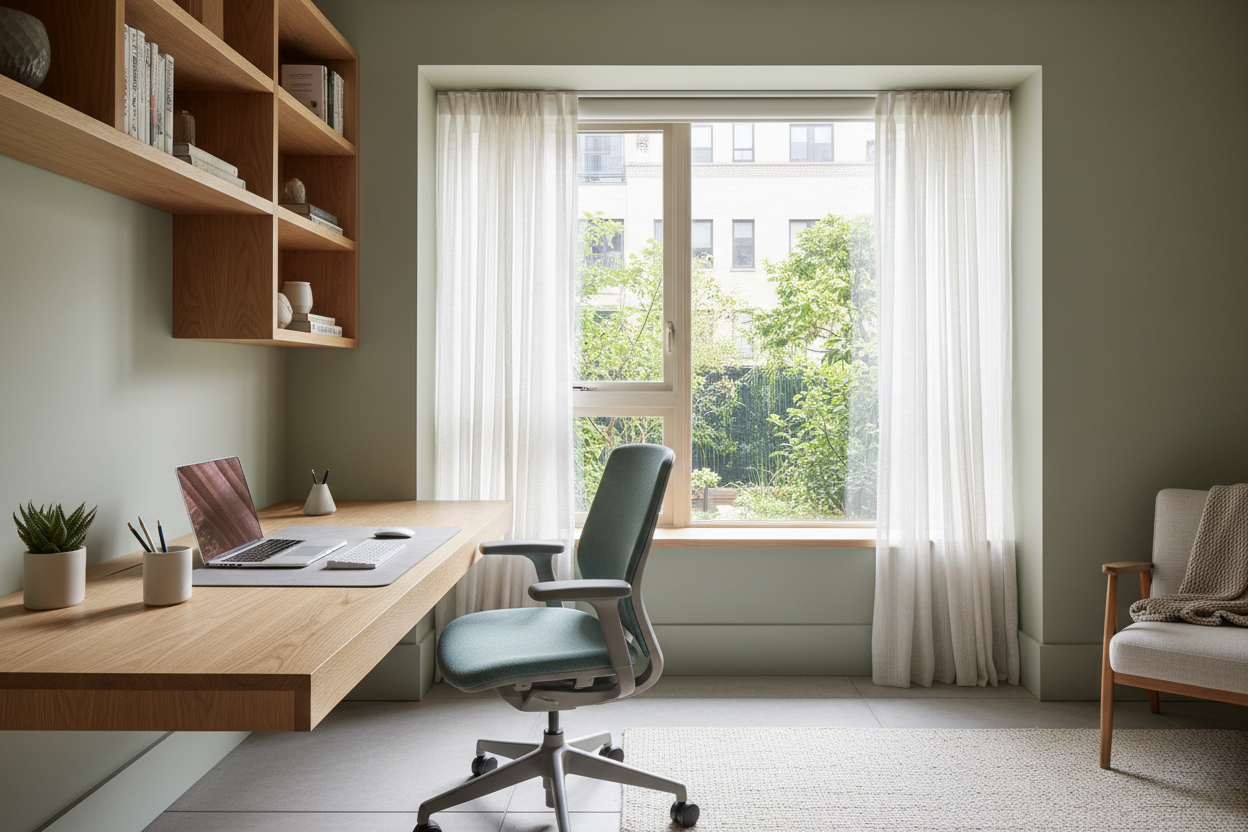
However, for a more executive, warm feel, wood veneers like Walnut or White Oak are superior. They introduce organic texture that prevents the office from feeling sterile. Just be wary of "thermofoil" finishes found in budget cabinetry; in my experience, they tend to peel near heat sources, such as computer towers or vents.
Styling and Aesthetics
Functionality drives the design, but styling sells it. When developing built in office shelving design ideas, I focus on the rhythm of the shelves. Adjustable shelving is practical, but fixed shelving often looks more high-end because the thick front edges can align perfectly with window mullions or other architectural details.
The Art of the Backdrop
Don't ignore the back panel of your built-ins. Leaving it open to the painted wall creates depth, while adding a contrasting backing—like a grasscloth wallpaper or a dark wood veneer—creates a stunning focal point. This is particularly effective for video conference backgrounds, adding a layer of sophistication without being distracting.
My Personal Take on Built In Office Storage
I want to share a specific lesson from a project I managed in a pre-war apartment. We designed a gorgeous wall of built-ins, floor to ceiling. It looked perfect on paper. However, once installed, we realized we had made a critical error regarding the hardware.
We used "push-to-open" latches to keep the look ultra-minimalist and handle-free. It looked sleek, but three months later, the client called me. The mechanism was frustrating to use daily; fingerprints were accumulating on the matte paint right where you had to push, and the spring loaded release was too loud during quiet phone calls. We ended up retrofitting edge-pulls. Now, I always warn clients: unless you are incredibly disciplined with cleaning, physical hardware is almost always a better choice than push-latches for high-traffic drawers. It protects the finish and offers a more tactile, satisfying interaction with your furniture.
Conclusion
Investing in custom joinery transforms a room from a temporary workspace into a permanent asset for your home. It requires upfront planning and a higher budget than flat-pack furniture, but the payoff in organization, workflow, and property value is undeniable. Focus on the details—cable management, hardware feel, and material longevity—and you will build a space that works as hard as you do.
Frequently Asked Questions
How deep should built-in office shelves be?
Standard book depth is 10 to 12 inches. However, for office storage holding binders or printer paper, I recommend at least 14 inches. Lower cabinets intended for printers or scanners usually need a depth of 18 to 24 inches.
Does built-in storage increase home value?
generally, yes. High-quality, neutral built-ins are seen as a premium upgrade. They suggest a home is well-maintained and maximize the utility of the square footage, which is a major selling point for buyers looking for dedicated workspaces.
Can I install built-ins over carpet?
It is not recommended. For a stable, professional installation, the carpet and pad should be cut away so the cabinetry sits directly on the subfloor or tack strip. Installing over carpet can lead to settling over time, causing doors to misalign and caulk joints to crack.

Leave a comment
This site is protected by hCaptcha and the hCaptcha Privacy Policy and Terms of Service apply.