










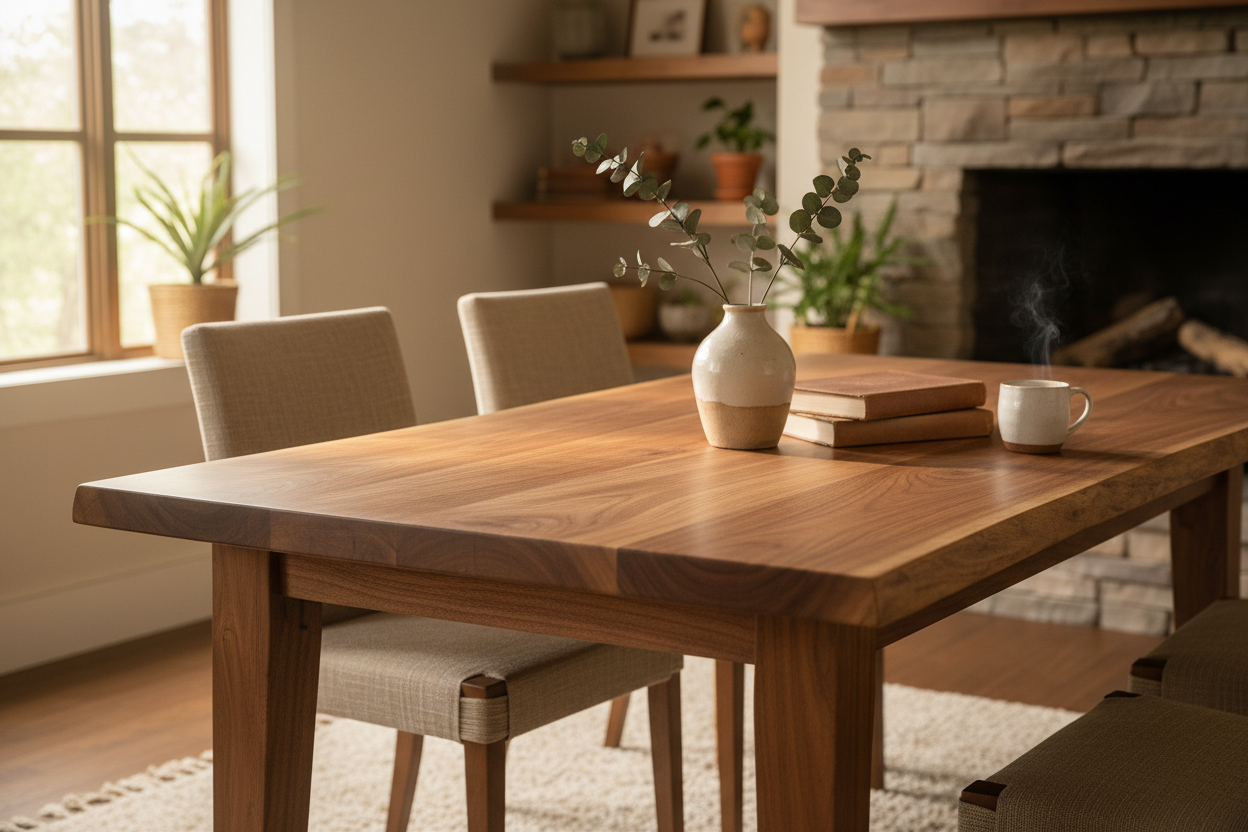
There is a specific gravity to a real wooden table that synthetic materials just cannot replicate. It anchors a room, serving as the landing pad for homework, holiday feasts, and morning coffee. If you are looking for furniture that survives trends and toddlers alike, wood remains the gold standard. However, the market is saturated with terminology that can confuse even savvy shoppers. The key to making a purchase you won't regret lies in understanding the difference between timber types, joinery, and finish quality.
Choosing the right piece involves balancing your budget against longevity. While veneers offer a sleek look for less money, they rarely survive a sanding block if you get a deep scratch. Solid lumber, particularly when crafted into a hardwood dining room set, offers the ability to refinish the surface decades down the line. This renewability is why we still see Victorian-era oak tables in antique shops today, looking as sturdy as the day they were built.
Deciphering Wood Types: Hardwood vs. Softwood
Not all lumber behaves the same way under the stress of daily life. The botanical distinction between hardwood and softwood usually dictates how much abuse a table can take. Hardwoods come from deciduous trees like oak, maple, walnut, and cherry. These grow slower, resulting in denser fibers.
If you buy a hardwood dining room set, you are paying for resistance to dents and dings. Oak is a perennial favorite because its prominent grain pattern hides crumbs and fingerprints exceptionally well. Maple is harder but has a smoother grain, meaning scratches might be more visible if you catch the light just right. Walnut offers a rich, dark aesthetic but is actually softer than oak, requiring a bit more care with heavy centerpieces.
Softwoods, primarily pine, are common in farmhouse styles. They offer a rustic charm and are generally more affordable. The trade-off is that pine dents easily. If you enjoy the "lived-in" look where every mark tells a story, pine is fantastic. If you want a pristine surface that looks brand new five years from now, stick to the harder species.
Matching the Table to the Room
Context determines the best material and finish. Formal spaces often benefit from the darker, polished look of mahogany or cherry dining room table sets wood finishes tend to elevate. These areas usually see less daily traffic, allowing for more delicate, high-gloss finishes that might scratch too easily in a high-traffic zone.
Conversely, breakfast nooks and open-concept areas demand resilience. Wood kitchen table sets are the workhorses of the home. Here, a matte or satin finish is superior because it disguises wear. You might also consider lighter woods like ash or rubberwood for these spots. Rubberwood, often found in budget-friendly options, is technically a hardwood and is eco-friendly, though it doesn't have the heirloom prestige of white oak.
The Case for the Dinette
Apartment living or smaller eat-in kitchens require a different approach. This is where wood dinette sets shine. A dinette is typically smaller, often round or square, and designed to seat two to four people. In tight quarters, a round wooden pedestal table is a smart maneuver. Without corners to bump into, the flow of a small kitchen improves immediately. A drop-leaf timber table is another versatile option for these spaces, allowing you to expand the surface area only when guests arrive.
My Experience with the "Bargain" Table
Years ago, I thought I had found the deal of the century on a table set wood looked authentic, but the price tag was suspiciously low. It looked fantastic in the showroom. Six months later, a glass of water sat on the surface for an hour during a dinner party. The moisture seeped into the seam of the veneer, causing it to bubble and lift. Underneath was particle board, which swelled like a sponge. It was impossible to repair without stripping the entire top and realizing there was no real wood to sand down. That experience taught me that saving money upfront often costs more in the long run. I replaced it with a solid quarter-sawn oak table from a local estate sale. It has since survived hot plates, spilled wine, and crayon art, requiring nothing more than a little oil once a year to look vibrant.
Construction Quality and Joinery
The stability of any table set wood or otherwise, depends on how the pieces are connected. When shopping, look underneath the table. You want to see corner blocks reinforcing where the legs meet the apron. If the legs are held on only by a single bolt and a washer, the table will eventually wobble.
Mortise and tenon joinery is a hallmark of quality craftsmanship. This involves fitting a projecting piece of wood into a hole cut into another piece. It creates a bond that is stronger than screws alone. If you are investing in a heavy wood kitchen table set, ensure the base is substantial enough to support the top without swaying when someone cuts a steak.
Finishes and Maintenance
The finish is the shield that protects the timber. Polyurethane is the most common modern finish; it sits on top of the wood and creates a plastic-like barrier against water and heat. It is durable but can look a bit artificial if applied too thickly. Oil finishes (like tung or linseed oil) penetrate the grain, offering a more natural look and feel. However, oil finishes require maintenance and don't offer the same level of liquid resistance.
To keep your furniture pristine, control the environment. Wood expands and contracts with humidity. Keeping a table next to a radiator or a drafty window can cause warping or cracking over time. Use placemats to prevent heat rings, which are essentially moisture trapped under the finish. If you do get a white heat ring, a common trick involves gently ironing a towel over the spot or using a hairdryer to draw the moisture out, though results vary based on the finish type.
Final Thoughts on Selection
Buying furniture is rarely a snap decision. Whether you are hunting for expansive dining room table sets wood enthusiasts would envy, or compact wood dinette sets for a first apartment, the goal is the same: stability and character. Don't be afraid to ask sellers about the species of the wood and the construction method. A heavy table is usually a good table. Trust your hands—run them over the surface and edges. If it feels smooth, solid, and substantial, it will likely serve your home well for years to come.
Frequently Asked Questions
What is the most durable wood for a dining table?
Hardwoods like maple, oak, and hickory are among the most durable options for dining tables. Their dense grain structure makes them highly resistant to deep scratches and dents compared to softer woods like pine or walnut. For families with young children, oak is often the best choice because its busy grain pattern hides minor imperfections well.
Can I mix different wood tones in my dining room?
Yes, mixing wood tones creates a layered, designer look, provided you keep the undertones consistent. Try to match warm undertones (reds, yellows) with other warm woods, and cool undertones (grays, ashes) with cool woods. To tie the look together, you can use a rug or tabletop accessories that bridge the different shades.
How do I fix a scratch on a solid wood table?
For minor surface scratches, rubbing a walnut meat (the actual nut) over the scratch can often hide it, as the oils darken the wood. For deeper scratches in a solid wood table, you can lightly sand the area with fine-grit sandpaper and re-apply a matching stain or finish. This repairability is the main advantage of solid wood over veneer.


Leave a comment
This site is protected by hCaptcha and the hCaptcha Privacy Policy and Terms of Service apply.