










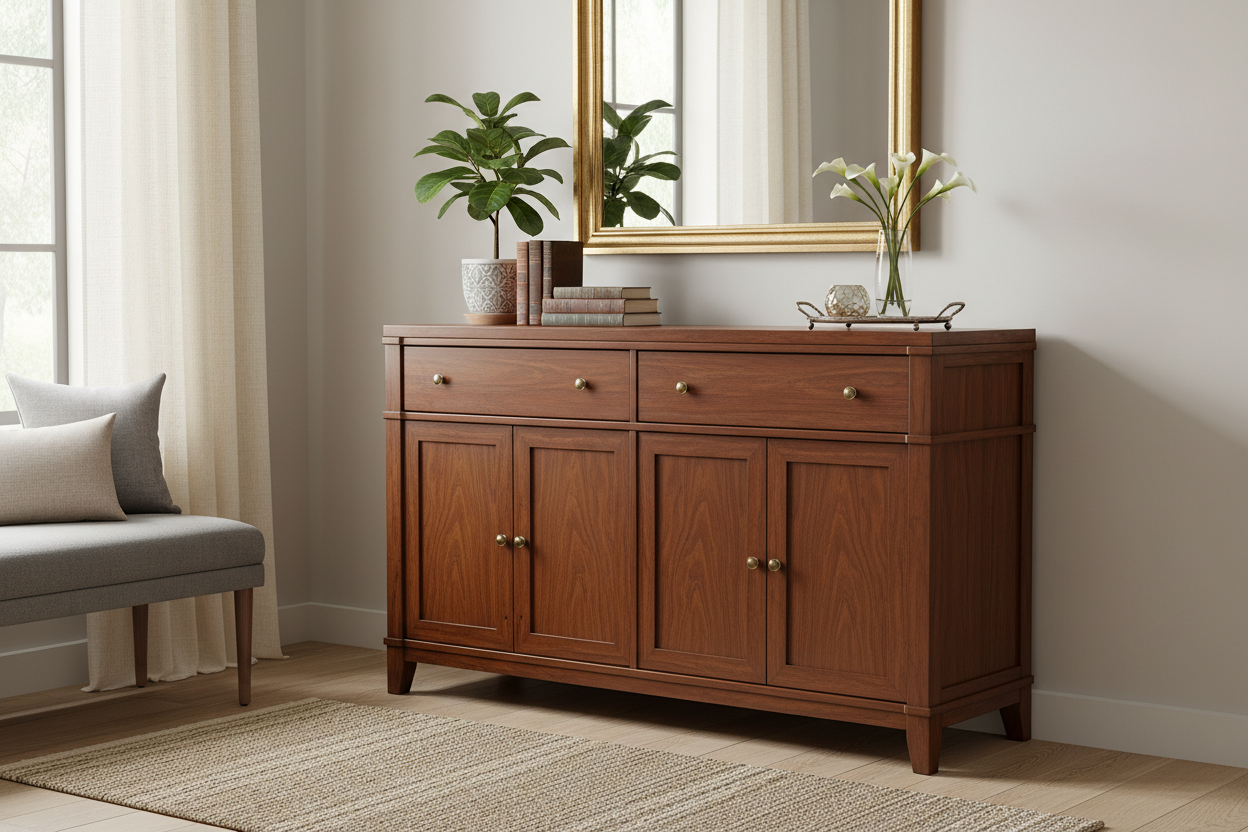
Your front door opens, and the first thing you see sets the mood for your entire home. For many, that view is a chaotic pile of shoes, a scattering of mail, and keys that never seem to have a permanent home. The solution isn't just about cleaning up; it is about anchoring the space with the right piece of furniture. A well-chosen wooden hall cabinet acts as the command center of your entrance, hiding the clutter of daily life while offering a warm, inviting texture that only natural materials can provide. It transforms a transient walkthrough area into a functional room that welcomes you back.
I learned the value of this specific piece of furniture the hard way. In my first apartment, the hallway was narrow and dark. I tried using open shelving, thinking it would keep the space feeling airy. Instead, it just put my mess on display. Every muddy boot and crumpled flyer was visible. Eventually, I invested in a vintage oak console with deep drawers and solid doors. The difference was immediate. The visual noise vanished behind the wood grain, and suddenly, the hallway felt like a deliberate part of the design rather than a dumping ground. That experience taught me that closed storage in an entryway isn't hiding; it's curating.
Why Wood Remains the Gold Standard for Entryways
Entryways take a beating. They endure wet umbrellas, muddy paws, heavy grocery bags, and the constant friction of people passing by. While metal or laminate options exist, a wood hallway cabinet offers a resilience that synthetic materials struggle to match. Wood has a unique ability to age gracefully. A small dent in a pine cabinet adds character, whereas a chip in a laminate surface just looks broken.
Beyond durability, wood brings necessary warmth to what can often be a drafty or utilitarian part of the house. Whether you choose the deep, reddish hues of mahogany or the blonde, Scandi-style lightness of ash, the organic texture softens the transition from the outdoors to the indoors. It bridges the gap between the architectural structure of your home and the softer furnishings of your living room.
Selecting the Right Timber for Your Traffic Level
Not all woods behave the same way in a high-traffic zone. Hardwoods like oak, maple, and walnut are dense and resistant to dings, making them excellent choices for busy family homes where the cabinet might get bumped frequently. Softwoods like pine are beautiful and often more affordable, but they will show wear much faster. If you enjoy a rustic, lived-in look, pine works well. If you want pristine lines and surfaces that resist impact, stick to the harder varieties.
Functionality: More Than Just a Surface
When shopping for hall cabinet furniture, the interior configuration matters as much as the exterior finish. A beautiful cabinet that doesn't fit your boots is useless. You need to assess exactly what lands in your hallway. If you are a "shoes off at the door" household, look for a cabinet with adjustable internal shelves. Standard fixed shelves often lack the height for winter boots or high-tops, leading to a pile-up on the floor next to the cabinet, which defeats the purpose.
For those who struggle with smaller items—keys, sunglasses, dog leashes—drawers are non-negotiable. A cabinet for entrance hall organization should ideally have a top drawer or a dedicated shallow shelf. This creates a "drop zone" that keeps surfaces clear. Without drawers, the top of your beautiful cabinet will inevitably become cluttered, hiding the wood grain you paid for under a layer of receipts and loose change.
Sizing Up the Space
One of the most common mistakes people make is underestimating the impact of depth. Hallways are often narrower than we perceive. A standard cabinet depth is often around 40 to 50 centimeters, which works fine in a dining room but can cause a bottleneck in a corridor. In a hallway, every centimeter counts.
You should aim to leave at least 90 centimeters of clear walking path. If your hall is tight, look for "slimline" vintage pieces or modern designs specifically built for corridors, often ranging between 30 to 35 centimeters in depth. These narrower pieces usually secure to the wall to prevent tipping, a crucial safety feature if you have children or pets. Visually, a cabinet raised on legs can also make a narrow hall feel wider. Seeing the floor extend underneath the furniture tricks the eye into perceiving more floor space than there actually is.
Styling Your Entryway Anchor
Once you have your wooden hall cabinet in place, it becomes a stage for setting the tone of your home. Since the cabinet handles the storage, the surface remains free for decor. A large mirror placed above the wood surface serves a dual purpose: it allows for a final outfit check before leaving, and it bounces light around, brightening what is often a windowless area.
Lighting plays a massive role here as well. A table lamp on the cabinet adds a glow that overhead lights can't replicate. It highlights the grain of the wood and makes the entry feel cozy rather than clinical. If space is tight, wall sconces flanking the cabinet or a picture light above it can achieve a similar effect without taking up valuable surface area.
Don't be afraid to mix materials. If you have a heavy, dark oak cabinet, style it with glass vases, metallic trays, or a light-colored runner rug nearby. The contrast keeps the wood from feeling too heavy or imposing. Plants also pair exceptionally well with wood, bringing a bit of life to the entrance and reinforcing the natural aesthetic.
Maintenance and Care
The entryway exposes furniture to temperature fluctuations and moisture. If your front door opens directly to the elements, your cabinet might face cold drafts in winter and humidity in summer. To protect the finish, ensure the wood is properly sealed. A wax finish offers a soft, natural look but requires re-application once or twice a year. A lacquer or varnish finish is more "set and forget," offering a harder shell against water drips from raincoats.
Be mindful of rubber feet on lamps or trays placed on top of the cabinet. Over time, some plastics can react with wood finishes, leaving permanent marks. Using felt pads under accessories is a simple way to preserve the top surface. Regular dusting and immediately wiping up water spills will keep the piece looking sharp for decades, eventually allowing it to become an heirloom rather than just another piece of disposable furniture.
Frequently Asked Questions
How do I stop my hallway cabinet from looking cluttered?
The key is to designate a specific place for everything inside the cabinet and use a tray on top. A tray catches keys and wallets, keeping them contained rather than spread out. If items don't have a designated spot inside the drawers or shelves, they will inevitably end up on the surface.
Can I mix different wood tones in the hallway?
Yes, mixing wood tones can add depth and interest to your space. The trick is to keep the undertones consistent; for example, mixing warm walnut with warm cherry works well. You can also use a rug or a painted wall to create a visual buffer between a wood floor and a wood cabinet if you are worried about them clashing.
What is the ideal height for a hallway cabinet?
Most console cabinets stand between 75 and 90 centimeters high. This is roughly hip height for most adults, making it comfortable to drop keys or check mail without bending down. If you plan to hang a mirror above it, ensure the cabinet isn't so tall that the mirror ends up too high for practical use.

Leave a comment
This site is protected by hCaptcha and the hCaptcha Privacy Policy and Terms of Service apply.