










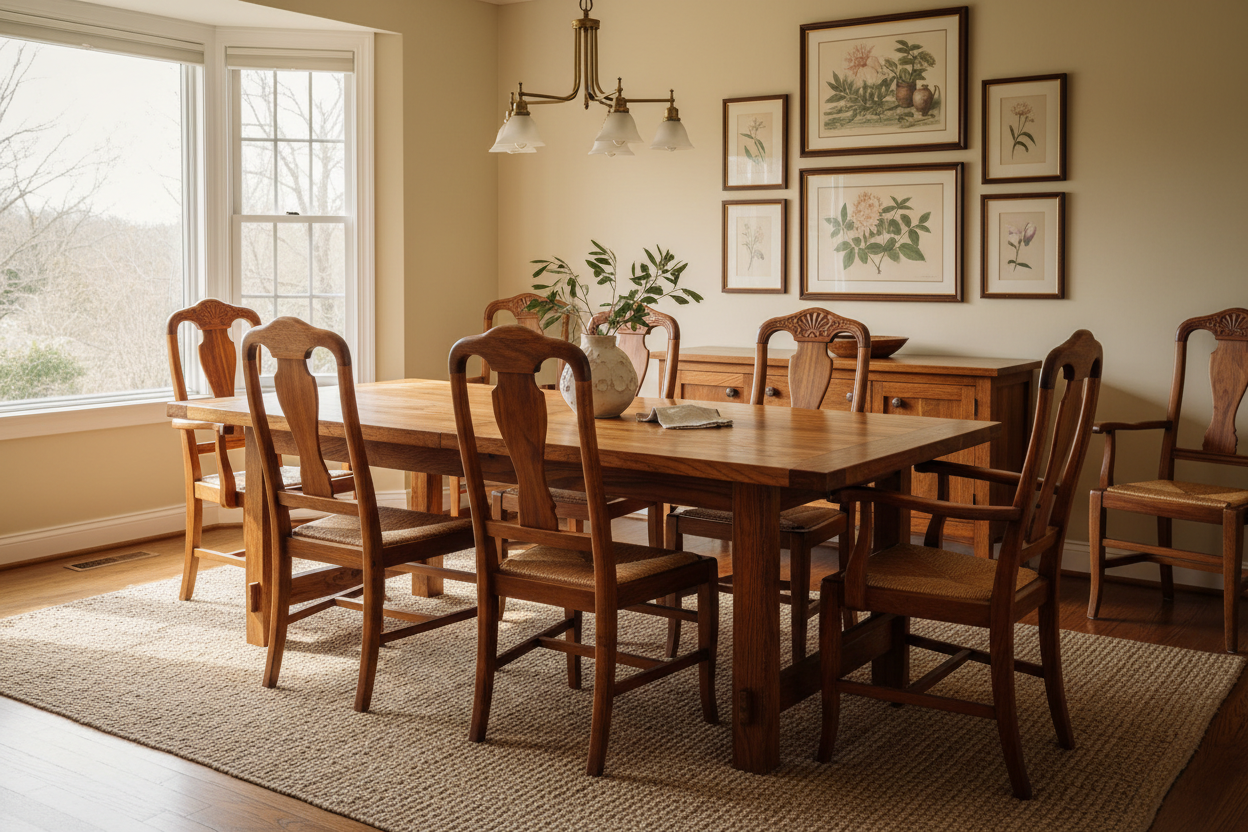
The dining table is rarely just a place to eat. It is the command center of the home. It is where taxes are filed, homework is battled over, and late-night conversations happen over a second bottle of wine. Because this piece of furniture commands so much space and attention, selecting the right one requires looking past the price tag and understanding the material itself. A truly beautiful wooden dining table combines structural integrity with a grain pattern that tells a story, acting as an anchor for your entire interior design.
Many buyers get distracted by the silhouette of a table without inspecting the bones. If you want a piece that lasts decades rather than seasons, you have to look at the joinery, the finish, and the species of the timber. The goal is to find a balance where the table is robust enough to handle daily abuse but elegant enough to elevate the room.
My Lesson in "Good Enough" vs. Heirloom Quality
Years ago, I made the mistake of buying a dining table based solely on a catalog photo. It looked fantastic online—a sleek, dark walnut finish that seemed perfect for my apartment. When it arrived, it looked okay, but it felt hollow. Within six months, a water glass left a permanent bubble in the surface because the "wood" was actually a paper-thin veneer over particleboard. The legs started to wobble every time someone cut a steak.
I eventually replaced it with a second-hand solid oak farm table I found at an estate sale. It was heavy, scratched, and stained, but it was solid. After spending a weekend stripping the old varnish and applying a fresh coat of tung oil, the transformation was incredible. The grain popped in a way the factory-made veneer never could. That table survived two moves and three toddlers. It taught me that imperfections in real wood add character, whereas imperfections in cheap materials just look like damage. That experience completely shifted how I view furniture; I stopped looking for perfection and started looking for life in the wood.
Understanding the Wood: Hardness and Grain
Not all beautiful wood tables are created equal. The species of lumber used dictates not just the color, but how the table will age. Softwoods like pine are popular for that rustic, farmhouse look, but they dent easily. If you have energetic children or use the table as a craft station, pine might start looking beat-up rather than distressed a little too quickly.
Hardwoods are generally the smarter investment for a high-traffic surface. White Oak and Maple are incredibly durable and resist deep scratching. Walnut is softer than oak but is prized for its rich, chocolate tones and intricate grain swirls. When you run your hand across the surface, it should feel substantial. The grain shouldn't just be a printed pattern; it should have depth.
The Visual Impact of Grain Patterns
The cut of the wood changes the vibe of the room. Quarter-sawn oak reveals "ray flecks" that catch the light, a staple of Arts and Crafts style furniture. Flat-sawn boards offer those large, cathedral-like arches that feel more casual and organic. When you are hunting for that perfect piece, look closely at how the boards are arranged. A well-constructed top will have boards that are color-matched and arranged so the grain flows naturally from one plank to the next, rather than looking like a patchwork quilt.
Construction Matters More Than Style
You can find a beautiful wooden dining table in any style, from Mid-Century Modern to French Provincial. However, the prettiest table is useless if it racks or sways. The underside of the table tells you more than the top. Get underneath and look at how the legs attach to the apron and the top.
Avoid tables held together primarily by staples or simple glue. You want to see corner blocks—triangular pieces of wood reinforcing the corners where the legs meet the frame. Ideally, these are screwed and glued. For even higher quality, look for mortise and tenon joinery, where one piece of wood fits into a hole in another. This type of mechanical connection can last for centuries.
Allowing for movement is another critical factor. Wood breathes. It expands in humid summers and contracts in dry winters. If a table top is screwed directly into the frame with no room to move, it will eventually crack. Quality craftsmanship involves using "buttons" or metal clips that hold the top down but allow it to slide slightly as humidity levels change.
Finishes: Oil vs. Film
The finish is what stands between your dinner and the raw timber. This is often where people get confused. A film finish, like polyurethane or lacquer, sits on top of the wood. It creates a hard, plastic-like shell. This is great for protection against spills, but it can sometimes make the wood look distant or plastic. If it gets scratched, it is difficult to repair without sanding down the whole top.
Oil finishes, such as linseed or tung oil, penetrate the fibers. They harden within the wood rather than on top of it. This leaves the texture of the timber accessible to the touch, making for arguably more beautiful wood tables because the tactile experience is preserved. The trade-off is maintenance. You might need to re-oil the table once a year, and you have to be quicker about wiping up red wine spills. However, if you get a scratch, you can usually just sand that small spot and rub in some more oil.
Integrating the Table into Your Space
Size and scale are the final hurdles. A common error is buying a table that physically fits in the room but chokes the flow of traffic. You generally want at least 36 inches of clearance between the edge of the table and the nearest wall or piece of furniture. This allows a person to scoot their chair back and stand up without hitting the wall.
Consider the visual weight as well. A thick, slab-style table with chunky legs looks magnificent in a large, airy room with high ceilings. In a smaller dining nook, that same table might feel oppressive. Conversely, a delicate, tapered-leg table might get lost in a cavernous open-concept living area. The table anchors the room, so its visual mass should balance with the surrounding space.
Choosing the right table is about playing the long game. It is about accepting that the wood will darken or lighten with UV exposure, that it will gain a patina from elbows and dishes, and that these changes make it better, not worse. When you choose solid materials and sound construction, you aren't just buying furniture; you are setting the stage for the next twenty years of memories.
Frequently Asked Questions
What is the difference between solid wood and veneer?
Solid wood furniture is made from lumber cut directly from trees, meaning the same grain runs all the way through the board. Veneer consists of a very thin slice of premium wood glued onto a cheaper core like plywood or MDF. While solid wood can be sanded and refinished multiple times, veneer cannot be deeply sanded without exposing the core material underneath.
How do I protect my wood table from water rings?
The best defense is using coasters and placemats to prevent moisture from touching the finish. If a white ring does appear, it usually means moisture is trapped in the finish; you can often draw it out by gently applying a hair dryer on a low setting or rubbing the spot with a specialized wood polish. For oil-finished tables, a light sanding and re-application of oil will usually remove the mark.
Which wood species is best for a family with young children?
Hardwoods with a high Janka hardness rating, such as Hard Maple or White Oak, are excellent choices because they resist denting from dropped toys or silverware. Additionally, choosing a table with a distressed or matte finish can help hide the inevitable scratches and dings better than a high-gloss, pristine finish.

Leave a comment
This site is protected by hCaptcha and the hCaptcha Privacy Policy and Terms of Service apply.