










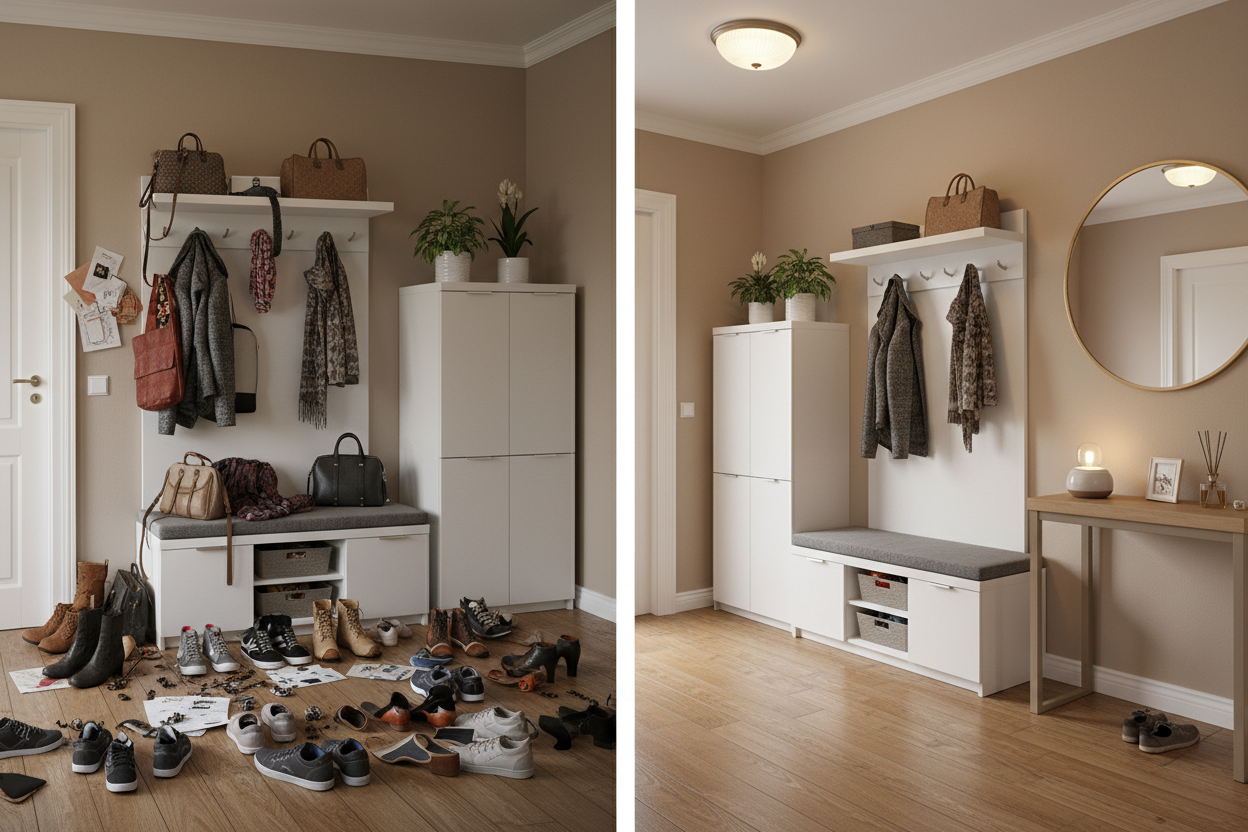
Walking through your front door should feel like a relief, not an obstacle course. Yet, for many of us, the foyer becomes a dumping ground for mail, muddy boots, and an endless tangle of coats. The solution isn't just about trying harder to be tidy; it is about having the right infrastructure. An entryway set provides a cohesive, functional foundation that forces organization on even the most chaotic households. Rather than hunting for a separate mirror, a mismatching bench, and a coat rack that tips over, a coordinated set creates an immediate sense of order and design intent.
Why Cohesion Matters in High-Traffic Zones
The foyer sets the tone for the entire home. When you piece together furniture over time—a shoe rack from college, a console table from a thrift store—the visual clutter can make the space feel smaller and more stressful. A dedicated entryway set solves this by unifying the aesthetic. Whether it is a three-piece ensemble with a console, mirror, and sconces, or a heavy-duty storage combination, the uniformity of materials and scale tricks the eye into seeing a larger, cleaner space.
Beyond aesthetics, buying a set ensures that the pieces actually fit together physically. A bench that is too tall for the coat rack above it renders the hooks useless. A console table that is deeper than the accompanying mirror is wide looks top-heavy. Manufacturers design these sets with ergonomics in mind, ensuring that the flow of movement—putting down keys, taking off shoes, hanging a jacket—feels natural rather than disjointed.
Navigating the Different Types of Sets
Not all foyers are created equal, and neither are the furniture solutions designed for them. Understanding the layout of your space dictates which type of furniture will actually work.
The Hall Tree
This is the powerhouse of mudroom organization. Usually a single, tall unit, it combines a bench, shoe storage, and coat hooks into one footprint. It is ideal for renters or those who don't want to drill into walls. While often bulky, a hall tree is the most efficient use of vertical space.
The Bench and Shelf Combo
If you have a narrow hallway, a massive hall tree might block traffic. A better alternative is a two-piece entryway storage set consisting of a low bench and a wall-mounted shelf with hooks. This configuration keeps the floor visible, which maintains an airy feel, while still providing a designated spot to sit and remove shoes.
The Console and Mirror
For homes where the front door opens directly into the living room, or where there is a coat closet nearby, you might not need heavy storage. In this case, a decorative set featuring a slim console table and a matching mirror or artwork serves as a landing strip for keys and mail without dominating the room.
Lessons From My Own Hallway Overhaul
I learned the importance of proper sizing the hard way. A few years ago, I moved into a house with a deceptively narrow entry hall. I fell in love with a wide, farmhouse-style bench and a separate oversized mirror. Individually, they were beautiful. Once I got them into the space, however, the bench protruded so far that the front door could barely open past 90 degrees. We spent months squeezing past the corner of that bench, shin-busting our way into the house every evening.
I eventually replaced those mismatched pieces with a streamlined entryway storage set designed specifically for narrow spaces. It included a shallow shoe cabinet (the kind where the drawers tilt out) and a flush-mounted coat rack. The difference was night and day. The cohesive dimensions meant the door swung freely, and the designated shoe compartments meant the floor was finally clear. It taught me that measuring depth is just as critical as measuring width.
Prioritizing Function: The Entryway Storage Set
While style is lovely, the primary job of this furniture is to hold things. When evaluating an entryway storage set, look closely at the capacity. Open cubbies are fantastic for adults who will place shoes neatly, but they often become clutter magnets for kids who just shove things in. Closed cabinets or drawers hide the visual noise effectively.
Consider the "drop zone" aspect as well. A good set should have a flat surface at waist height. If you buy a hall tree that is all hooks and bench, you will inevitably end up putting your mail on the floor or the dining table. Look for sets that incorporate a small ledge or shelf specifically for the items you carry in your hands, not just the ones you wear on your body.
Materials and Durability
The entryway sees more abuse than almost any other part of the house. Wet umbrellas, muddy paws, and heavy school bags take a toll. Particleboard with a thin paper veneer might look good in a catalog, but it swells and bubbles the moment it meets a wet raincoat.
Solid wood or metal frames are superior choices for longevity. If you prefer the look of wood but are on a budget, look for high-pressure laminates or melamine finishes, which offer better water resistance than standard veneers. For the seating portion of an entryway set, consider stain-resistant fabrics or, better yet, wood or leather that can be wiped down. A velvet cushion might look luxurious, but it won't survive a single winter of slushy boots.
Styling Your Set for Maximum Impact
Once you have the furniture in place, the styling brings it to life. Lighting is often overlooked in these sets. If your console or hall tree creates a shadow, add a small lamp or battery-operated puck lights under the upper shelves. This makes the space welcoming and helps you find your keys at night.
Baskets are your best friend here. Even the most organized entryway storage set can look messy if it is filled with loose gloves and scarves. assigning a matching basket to each family member hides the chaos and makes cleanup easy. Finally, adding a runner rug in front of the set anchors it to the floor and protects your flooring from the heavy traffic this area will inevitably see.
Frequently Asked Questions
How do I choose an entryway set for a very small apartment?
Focus on vertical space rather than floor width. Look for a tall, narrow hall tree or a wall-mounted shelf combined with a shallow shoe cabinet. Floating furniture keeps the floor visible, creating the illusion of more space.
What is the standard depth for entryway furniture?
Standard console tables and benches usually range from 14 to 18 inches deep. However, for tight hallways, you can find slim-profile sets that are as shallow as 10 to 12 inches to prevent blocking the walkway.
Can I mix and match pieces if I can't find a pre-made set I like?
Absolutely, but aim for a common element to tie them together, such as matching wood tones, identical metal finishes, or similar leg styles. Keeping the scale consistent is crucial so one piece doesn't dwarf the other.


Leave a comment
This site is protected by hCaptcha and the hCaptcha Privacy Policy and Terms of Service apply.