










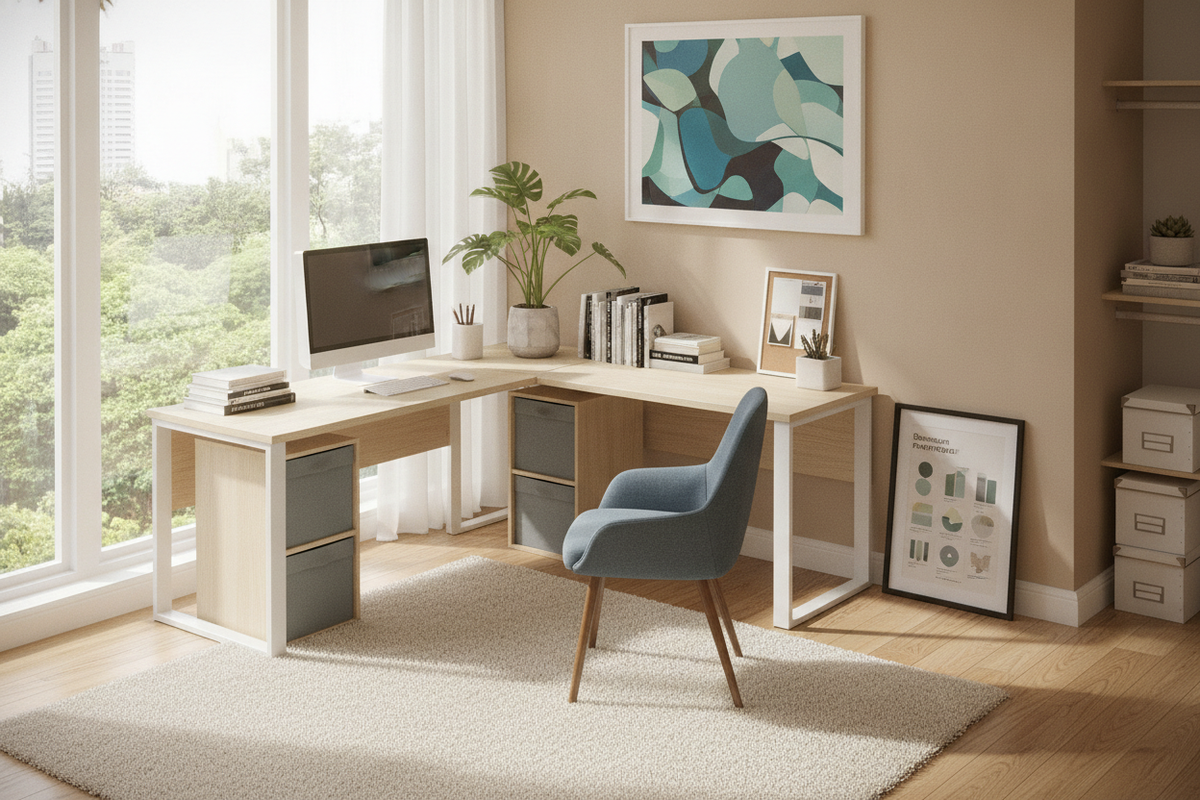
Evaluating Value in Budget L-Shaped Desks
Finding the right workstation requires balancing functional surface area with practical spending limits. An l shaped desk under $200 represents a versatile sweet spot for home offices, student quarters, and creative workspaces. In this price bracket, workstations typically provide generous top surfaces, reliable steel-tube frames, and practical storage integrations without requiring a substantial financial commitment.
When exploring entry-tier alternatives, an l shaped desk under $150 generally focuses on minimalist structures, featuring streamlined open frames, compact return wings, and essential hardware. For shoppers considering basic setups, exploring styling ideas like an elevate your home office styling a computer desk under 150 guide helps illustrate how minimalist desks can be arranged cleanly on an economical budget. On the other hand, evaluating options in the tier of an l shaped desk under 300 introduces broader surface depths, thicker structural panels, integrated power strips, and multi-tier shelving units. Understanding how your daily routine interacts with tabletop real estate helps pinpoint whether a sub-$200 model delivers the optimal blend of utility and value.
Dimension Categories and Room Fit Planning
L-shaped desks excel at converting awkward corners into productive hubs, but calculating room proportions before buying prevents crowded layouts. Standard budget corner desks typically fall into three primary dimension brackets:
- Compact Corner Profiles: Sized for small bedrooms and shared studio spaces, these desks prioritize vertical efficiency with shorter side wings to preserve open floor area.
- Balanced Mid-Size Workstations: Offering comfortable depth for computer monitors along one side while leaving the adjoining wing open for paperwork, these configurations suit dedicated home offices. A dedicated option like a 55 1 wide l shaped corner desk white fits neatly into modern residential corners while keeping walkways clear.
- Extended Dual-Wing Desks: Featuring balanced lengths on both sides, these units provide expansive room for multi-screen arrangements, creative supplies, or shared collaborative tasks.
When measuring your room, account for desk perimeter clearance. Maintaining sufficient distance between the edge of the desk and nearby walls or furniture ensures smooth office chair swivel motion and effortless standing transitions.
Storage Architecture and Under-Desk Organization
Integrated storage plays a decisive role in keeping tabletop surfaces organized. Affordable corner desks approach storage through diverse design strategies, each serving different equipment configurations and work styles.
Open side shelving tiers provide convenient landing zones for books, storage bins, and printing equipment without closing off visual space. Many layouts also include lower platforms designed to hold computer towers off the floor, promoting ventilation and reducing dust accumulation. For users who prioritize integrated storage solutions, considering a 55 inch l shaped corner desk with storage ensures accessories stay organized right at arm's reach.
Another valuable feature in this category is a reversible wing configuration. Reversible engineering allows you to position the longer or storage-equipped wing on either the left or right side during assembly, adapting easily to room doors, window placements, and electrical outlet locations.
Material Formats and Frame Stability in Entry-Level Workstations
The structural longevity of budget-friendly corner workstations depends on thoughtful material combinations and frame construction. Manufacturers typically pair engineered wood tops with metal support structures to achieve dependable daily performance.
Desktop surfaces are commonly constructed from high-density engineered wood boards coated with protective melamine or textured laminate veneers. These coatings provide resistance against daily scuffs, moisture rings, and light abrasions while maintaining an easy-to-clean finish. Below the tabletop, powder-coated steel tube frames deliver rigidity. Many models incorporate diagonal back braces or corner gusset reinforcements to prevent lateral swaying during typing or vigorous tasks. Additionally, adjustable leveling feet underneath the leg columns allow you to compensate for slight dips or irregularities in uneven flooring surfaces.
Workflow Zoning: Dual-Monitor and Hybrid Use Cases
Planning designated task zones across an angled tabletop can make hybrid workflows more manageable. Arranging distinct areas along each section helps prevent essential office items from encroaching on central writing and typing areas.
A practical method involves placing primary display equipment and keyboard accessories along the main wing aligned with standard seating. The connecting side wing can remain available for non-digital items, reference materials, or supplemental organizers. In rooms where corner dimensions exceed spatial limits, alternative layouts such as a compact desk shaped product provide straight-line surfaces suited for narrower wall spans.
Assembly Strategies, Cable Management, and Longevity
Proper assembly technique contributes significantly to the overall stability and lifespan of flat-pack corner desks. Following a systematic assembly routine ensures that panels align evenly and joints remain rigid over time.
- Loose-Fit Alignment: Fasten all frame screws loosely during initial assembly steps before tightening them securely once the full framework is squared and true.
- Cable Routing Discipline: Utilize adhesive cable clips and tie wraps along the underside steel rails to keep power cords, monitor cables, and charger lines elevated and organized.
- Periodic Hardware Checks: Inspect frame bolts periodically and tighten any fasteners that may have relaxed from everyday desk movement and shifting loads.
By assessing dimension requirements, frame materials, and storage layouts ahead of time, selecting an L-shaped desk under $200 becomes a straightforward process that upgrades your daily productivity and complements your interior decor.

Leave a comment
This site is protected by hCaptcha and the hCaptcha Privacy Policy and Terms of Service apply.