










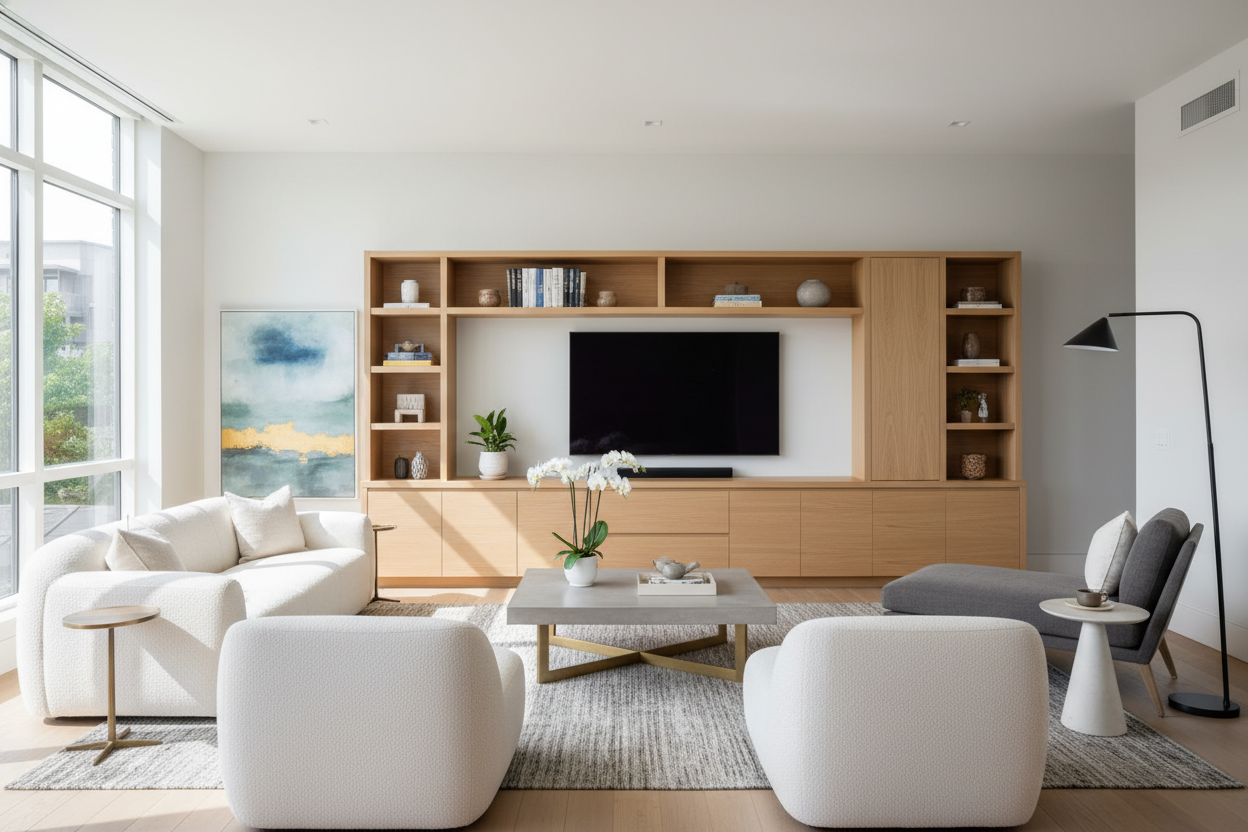
We have all seen it: a massive 75-inch flat screen floating awkwardly over a tiny, spindly media stand. The proportions are off, the cords are a tangled nightmare, and the entire living room feels unbalanced. If you want to anchor your viewing area while reclaiming your sanity from stray remotes and gaming equipment, a large tv console with storage is the hardest working piece of furniture you can buy.
But choosing the right one isn't just about picking a finish you like. Scale it wrong, and it swallows the room. Skimp on construction, and the doors will sag under the weight of your receiver within a year. By the end of this guide, you will know exactly how to size, select, and style a media unit that actually works for your home's footprint.
Quick Decision Guide
- Width rules all: Your console should be at least 4 to 6 inches wider than your TV on both sides to maintain proper visual weight.
- Check the depth: Standard consoles are 15-16 inches deep, but if you have heavy-duty AV receivers, you will need an 18 to 22-inch depth.
- Prioritize closed storage: Open shelves demand constant styling. Opt for doors or drawers to hide routers, controllers, and board games.
- Look for IR-friendly fronts: If you use infrared remotes, solid wood doors will block the signal. Look for slatted wood, glass, or mesh panels.
Space Planning: Nailing the Proportion
The Golden Ratio of Media Walls
In North American homes, living rooms often feature expansive, empty walls that beg for a focal point. A common mistake is buying a console that perfectly matches the width of the TV. Visually, this creates a top-heavy, precarious look. Instead, aim for a piece that is roughly 25% wider than the screen. If you have an 85-inch television, you need a substantial piece—often 96 inches or longer—to ground the arrangement.
Clearances and Traffic Flow
Even a large tv cabinet with storage needs room to breathe. When mapping out your floor plan, leave a minimum of 36 inches of walkway clearance between the front of the console and your coffee table or seating arrangement. If the unit features swing-out doors rather than sliding ones, ensure you have enough room to fully open them without hitting the rug or bruising your shins.
Material & Build Quality
Wood vs. Engineered Composites
Because media consoles hold expensive, heavy equipment, structural integrity matters. Solid wood offers superior longevity and can be refinished, but it is heavy and sensitive to the dry winter heating typical in North American homes. High-quality engineered wood with a real wood veneer is often the smarter choice for a large piece, as it resists warping and cracking while providing the same premium aesthetic.
The Hardware Tells the Truth
You can spot a cheap console by its hinges. A substantial unit requires heavy-duty, soft-close European hinges to keep wide doors aligned over time. Before buying, check the back panel as well. It should not be a flimsy piece of cardboard. Look for a screwed-in back panel with generous, strategically placed cutouts for cord management and ventilation.
Lessons from My Own Projects
Early in my career, I sourced a breathtaking, custom 100-inch matte black oak console for a client's suburban family room. It had a sleek, minimalist silhouette and push-to-open solid doors. It looked incredible on installation day.
I learned the hard way that aesthetics cannot trump technology. The solid oak doors completely blocked the signals for their cable box and Apple TV. We had to leave the doors awkwardly ajar just to change the channel, ruining the clean look we worked so hard to achieve. Furthermore, the matte black finish acted like a magnet for dust and dog hair; it required wiping down daily. I now strictly specify slatted, mesh, or IR-friendly glass fronts for clients who house active media equipment, and I steer clear of flat black finishes in homes with pets.
Frequently Asked Questions
How do I hide cords in a large TV console with storage?
Look for consoles with built-in wire management channels in the back panel and interior shelves. Use zip ties or velcro straps to bundle cords together, and mount a surge protector directly to the inside back wall of the cabinet so only one plug goes to the wall outlet.
Is a large TV cabinet with storage too bulky for a small living room?
Not necessarily. In a smaller space, one large, cohesive piece actually makes the room feel bigger than several small, cluttered pieces. To reduce the visual bulk, choose a floating (wall-mounted) console or one with tall, tapered mid-century legs to show more floor space underneath.
What is the ideal height for a TV console?
Ergonomics dictate that the center of your TV screen should be at eye level when seated—typically about 42 inches from the floor. For large screens (65 inches and up), this means you actually need a lower console, usually between 20 and 24 inches tall, to prevent neck strain.


Leave a comment
This site is protected by hCaptcha and the hCaptcha Privacy Policy and Terms of Service apply.