










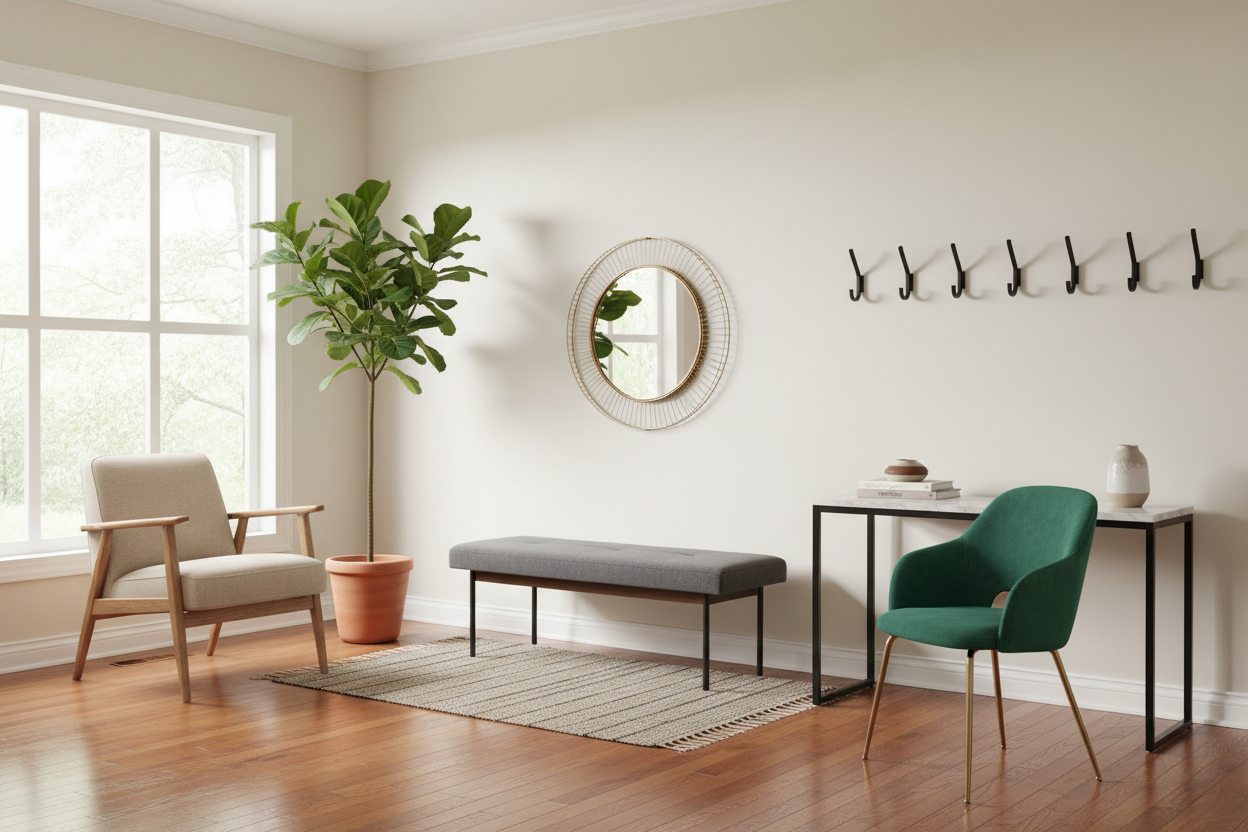
Your front door opens, and the first thing guests see sets the tone for the entire house. Yet, the entryway often becomes a chaotic drop zone for mail, keys, and kicked-off boots. Adding seating isn't just about aesthetics; it is about solving the daily struggle of hopping on one foot while trying to tie a sneaker. The right seating anchors the space, offering a moment of pause before rushing out or settling in. Whether you have a sprawling grand hall or a tight apartment corridor, finding the right entryway chair ideas comes down to balancing three things: available square footage, durability requirements, and your personal design signature.
Defining the Function of Your Foyer Seating
Before falling in love with a vintage velvet armchair, look at how your household actually uses the entrance. If this is the main vein of traffic for kids and muddy dogs, a delicate antique is a recipe for disaster. For high-traffic zones, you need workhorses. Benches with hidden storage or sturdy wooden seats that can handle heavy backpacks are ideal. Conversely, if you are styling a formal foyer that is rarely used for daily ingress, you have the freedom to prioritize form over function. Here, sculptural accent chairs or delicate fabrics can shine without the risk of ruin.
I learned this lesson the hard way in my first home. I bought a beautiful, cream-colored linen slipper chair for the front hall. It looked magazine-ready for exactly three weeks. Between wet raincoats and guests placing their bags on it, the fabric was dingy within a month. I eventually swapped it for a leather mid-century modern bench. It aged beautifully, and the scratches from daily use only added character rather than making it look dirty. That experience taught me that the best foyer chair ideas are the ones that survive real life.
Solutions for Narrow and Tricky Spaces
Most people do not have a double-height atrium. Dealing with narrow hallways is the most common challenge when hunting for foyer chair ideas. You cannot block the flow of traffic, or you will find yourself bruising your hip every time you walk by. In these instances, depth is your most critical measurement. Look for seating with a depth of 18 inches or less.
The Slim Bench
A backless bench is often the savior of the narrow hall. Because it lacks visual bulk above the waist, it keeps the sightlines open, making the hallway feel wider than it is. You can tuck baskets underneath for shoe storage, keeping the floor clear of tripping hazards.
The Folding or Wall-Mounted Seat
For truly tight apartments, consider theater-style seating or wall-mounted drop seats. These flip up when not in use, sitting flush against the wall. It is a nod to nautical or industrial design that is incredibly practical. If installation isn't an option, a slender console table paired with two small ottomans tucked completely underneath offers seating that vanishes when you don't need it.
Styling Your Seating: Material and Vibe
Once you know the size constraints, the fun part begins: selecting the style. Your choice here acts as a preview for the rest of the home.
Modern and Minimalist
If your home leans contemporary, look for sculptural pieces. A chair with a wire frame or clear acrylic legs takes up very little visual weight, keeping the area feeling airy. Leather sling chairs are also excellent candidates here; they offer a relaxed, organic texture that warms up stark white walls without feeling cluttered.
Farmhouse and Rustic
This style begs for natural wood. A church pew is a classic choice for a farmhouse entryway. It provides ample seating for multiple people and creates a charming, gathered feel. Pair it with a few throw pillows in ticking stripe or buffalo check to soften the hard wood. If a pew is too large, a Windsor chair or a simple wooden stool can achieve the same effect on a smaller scale.
Traditional and Glam
For a touch of elegance, upholstery is key. A wingback chair creates a sense of grandeur and height. If you want to make a statement, velvet is a go-to texture. A jewel-toned emerald or navy velvet chair immediately signals luxury. Just ensure the fabric is performance-grade if the door opens directly to the outdoors.
Creating a Vignette
A chair rarely looks good floating in isolation. To make the space feel designed, you need to anchor the seating within a vignette. If you are using a single accent chair, place a small side table next to it. This provides a surface for a lamp or a tray for keys. A mirror hung above the chair is a classic trick; it allows for a last-minute outfit check and reflects light to make the foyer appear larger.
Rug selection also plays a role in grounding your furniture. If you have a bench, a runner rug should extend slightly beyond the length of the seating to create a cohesive zone. For a corner chair, a round rug can define the nook distinct from the rest of the hallway floor.
Durability and Maintenance
The entryway is the barrier between the clean sanctuary of your home and the dirty outside world. Your furniture needs to acknowledge this reality. If you choose upholstery, look for Crypton fabrics or outdoor-rated textiles that resist water and stains. Slipcovers are another brilliant workaround. A white cotton duck slipcover offers a relaxed, coastal vibe and can be bleached when muddy paws inevitably make contact.
Wood and metal are naturally more forgiving. However, be mindful of water damage on wood legs if you live in a snowy climate. Salt and melting snow can eat away at finishes. Metal legs or a rug buffer can save your furniture from premature aging.
Ultimately, the best entryway chair ideas are the ones that make you sigh with relief when you walk through the door. Whether it is a spot to drop your bag or a beautiful object that makes you smile, the right chair transforms a pass-through space into a proper room.
Frequently Asked Questions
How much clearance do I need around an entryway chair?
You should maintain at least 36 inches of walking path width to ensure comfortable traffic flow. If your chair or bench protrudes into this zone, the space will feel cramped and you risk bumping into furniture when carrying groceries.
Can I mix different wood tones in the foyer?
Absolutely. Mixing wood tones adds depth and prevents the space from looking like a showroom set. Try to keep the undertones (warm vs. cool) consistent, or use a rug to break up the visual transition between a wood floor and a wood chair.
What is the best fabric for a high-traffic entryway chair?
Performance velvet, microfiber, or solution-dyed acrylics (often marketed as outdoor fabric) are top choices. Leather is also excellent as it wipes clean easily, though it may show scratches over time.

Leave a comment
This site is protected by hCaptcha and the hCaptcha Privacy Policy and Terms of Service apply.