










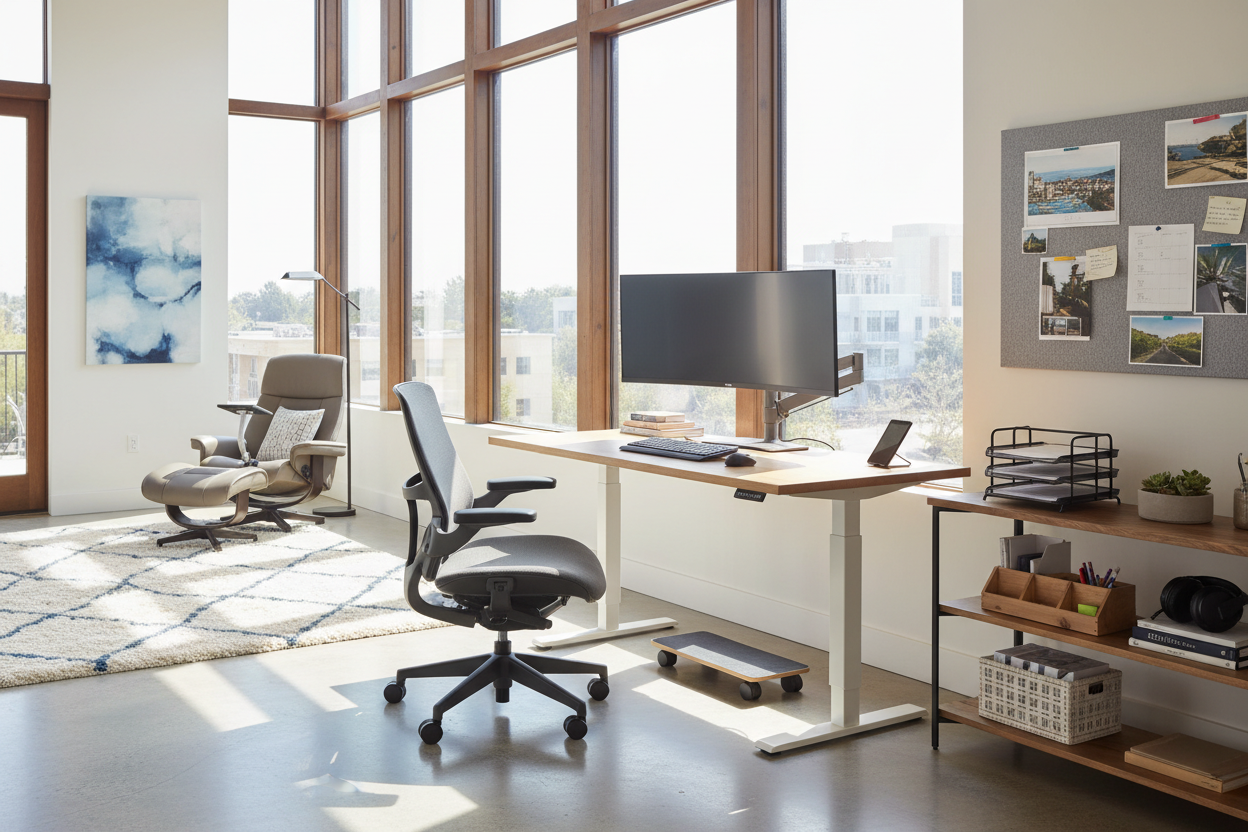
We have all found ourselves trying to answer emails from a kitchen island or a dimly lit corner of the living room, only to end the day with back pain and a cluttered mind. The challenge isn't just finding a spot to sit; it is curating a space that supports deep focus without disrupting the aesthetic flow of your home. Whether you are setting up a permanent home office or a flexible nook, understanding everything you need to know to master working from anywhere begins with intentional design.
Key Features to Look For
- Ergonomics & Posture: Prioritize chairs with adjustable lumbar support and seat depth over purely sculptural shapes.
- Material Durability: Opt for matte, high-pressure laminates or solid hardwoods (like white oak) to resist heat marks and scratches.
- Lighting Layers: Ensure a mix of 3000K ambient lighting and focused, adjustable task lighting to reduce eye strain.
- Spatial Efficiency: Look for floating desks or nesting tables to maintain floor space in multi-use rooms.
- Acoustic Control: Incorporate soft textiles (wool rugs, upholstered panels) to dampen echo during calls.
Establishing the Foundation: Layout and Flow
When clients ask me how to create a work environment at home, I always start with the floor plan. The biggest mistake is treating the workspace as an island. Instead, consider the visual weight of your furniture. If you are integrating a workspace into a living area, avoid heavy, dark mahogany desks that dominate the room. Instead, opt for a writing desk with a slender metal silhouette or a glass top that allows light to pass through, keeping the room feeling airy.
Positioning is equally critical. Never face a wall if you can avoid it. Floating your desk perpendicular to a window not only manages glare but also provides a 'command position,' which psychologically enhances feelings of control and focus.
Selecting Materials: The Balance of Form and Function
One of the most vital things to make working from home better is the tactile experience of your surfaces. While a glass desk looks sleek, it is cold to the touch and amplifies the sound of typing. For a luxury feel that aids productivity, I recommend natural walnut or oiled oak. These materials warm to the skin and develop a patina over time.
Be wary of cheap veneers. In a high-use zone, edges are the first to fail. Look for 'solid wood edging' or chamfered edges on desks; this detail prevents the peeling often seen on lower-quality furniture and makes the resting position for your wrists much more comfortable.
Lighting: The Invisible Design Element
Lighting is often the afterthought, yet it is one of the main things that make working from home easier on your physical health. A single overhead pendant causes shadows on your keyboard. To master the environment, layer your lighting:
- Ambient: General room light to soften contrasts.
- Task: An architectural desk lamp with an articulating arm.
- Accent: LED strip lighting behind a monitor or under a shelf to reduce contrast glare.
Organization as Decor
Clutter is the enemy of a peaceful interior. When looking for things to make working from home easier, focus on vertical storage that mimics high-end cabinetry. Open shelving should be styled with a 60/40 rule—60% functional storage (books, files in linen boxes) and 40% decorative objects to keep the space feeling residential, not clinical.
My Personal Take on everything you need to know to master working from anywhere
I learned a hard lesson about finishes early in my career while designing my own home studio. I fell in love with a high-gloss, black lacquer executive desk. It was visually stunning—a true statement piece. However, within two weeks, I regretted it. Every fingerprint showed, the dust was visible ten minutes after cleaning, and the reflection from my monitor caused unexpected eye fatigue.
Furthermore, the 'thud' of placing a coffee mug down broke my concentration constantly. I eventually swapped it for a desktop with a matte FENIX nanotech surface and a leather inlay. The difference was night and day. The matte finish absorbed the light rather than reflecting it, and the leather provided a soft, silent landing zone for my tech. It taught me that in a workspace, how a piece performs is just as important as how it looks in a catalog.
Conclusion
Mastering your workspace isn't about buying the most expensive chair; it's about selecting pieces that harmonize with your lifestyle and your home's architecture. By focusing on quality materials, proper lighting, and ergonomic support, you can build an environment that inspires efficiency without sacrificing style.
Frequently Asked Questions
How do I fit a workspace into a small bedroom?
Utilize vertical space. A wall-mounted ladder desk or a floating shelf system draws the eye upward and keeps the floor clear, making the room feel larger while providing a dedicated work surface.
What is the best desk depth for a laptop setup?
Aim for a minimum depth of 24 inches (60 cm). This allows enough distance between your eyes and the screen to prevent strain, while leaving room for a keyboard and a notepad.
Is a standing desk worth the investment for home use?
Absolutely, but ensure you choose one with a dual-motor system for stability. To maintain a luxury aesthetic, look for standing desks that conceal the telescoping legs with wood cladding or offer premium desktop finishes.

Leave a comment
This site is protected by hCaptcha and the hCaptcha Privacy Policy and Terms of Service apply.